A smoothie is an unusually efficient disguise for a complicated business. The customer sees fruit, a cup, a familiar swirl. Behind the counter sit staffing decisions, leases, borrowed money and the question of whether enough people will come back tomorrow. Jamba Juice SF makes that hidden business visible. Its story begins with a family buying into a name the Bay Area already knew.
- The Redmons entered with a block of 16 stores, then added acquisitions and new builds.
- Local catering and fundraising turn the same menu toward groups.
- Valley Juice filed Chapter 11 in 2025; an asset-sale agreement received court approval in 2026.
Sixteen stores, one leap
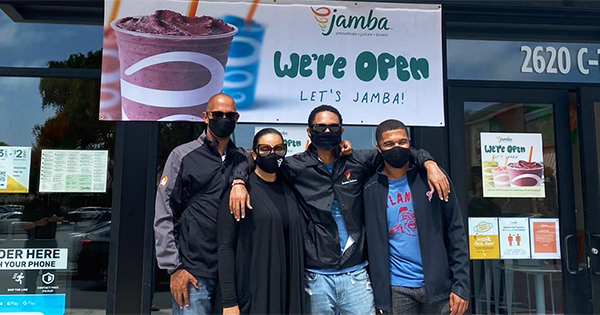
Charlayne and Dwayne Redmon came from financial consulting. Their company, CFO to Small Business, brought Dwayne into a working relationship with Jamba. Ownership became a subject of conversation. When corporate stores became available, the family had a chance to bid. The sequence matters: a service relationship preceded the purchase. They had found a way into the business before they owned a blender.
The family later described an initial block of 16 locations, followed by two bought from private owners and two built from scratch. Those are three different kinds of work. An acquisition transfers an existing operation; a new store must establish one. Counting locations makes growth look tidy. Running them is less tidy.
A Jamba securities filing puts a price on the October 2015 transaction: $3.3 million, plus cash on hand and marketable inventory. The transfer included equipment, point-of-sale hardware, furniture, signs and goodwill. It was the purchase of working businesses, down to the things needed to take an order.
20 locations in the historical account. Three routes to getting there.
In their 2020 interview, Charlayne explained that existing cash flow supported borrowing, while an investment partner helped with financing. Their aim included enough stores to justify a director of operations. That is a useful way to think about scale: how many locations can support the management the business needs? A bigger count creates obligations as well as possibilities.
The part the logo cannot do
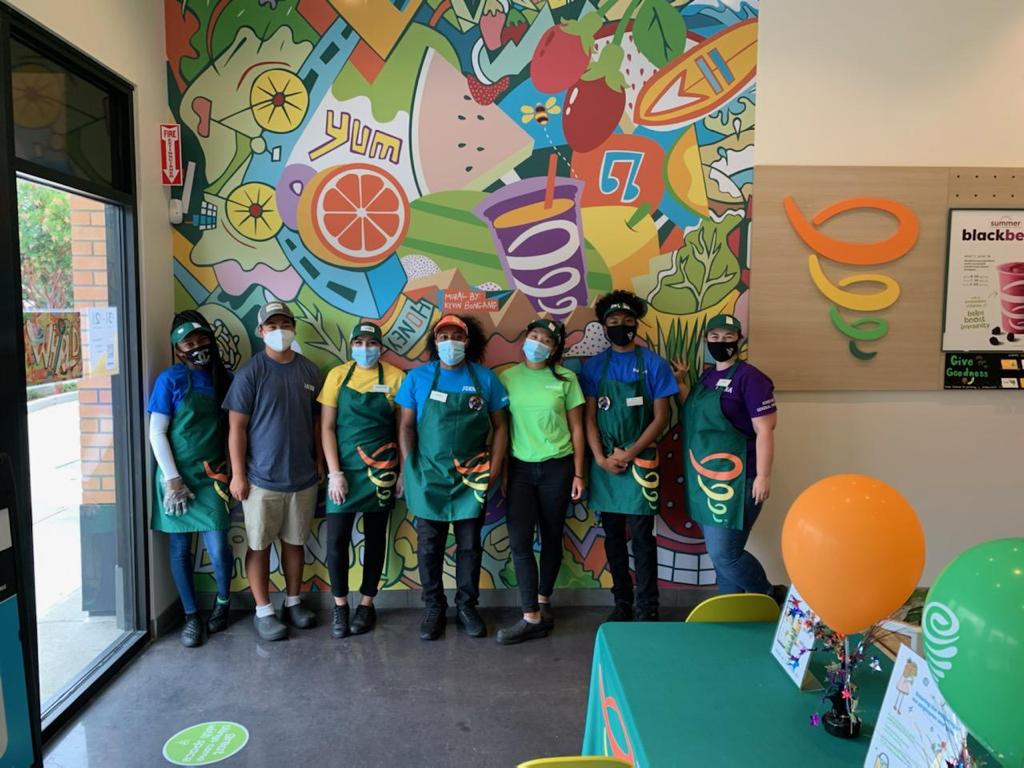
The early surprise was operational. The family had not worked inside a Jamba. Their operations director brought experience from a hamburger franchise, but the transition still required learning. Charlayne described replacing employees when performance fell short. Buying a known system had not removed the need to understand its everyday work.
“None of us had ever worked at a Jamba Juice.”
Charlayne Redmon · 2020 interview
There were harder decisions, too. The family described closing an underperforming San Francisco location before COVID-19, followed by six temporary closures during the pandemic. A brand cannot create customers where there are none. The practical lesson is to learn the operation before committing to its economics, then judge each location by what it can actually sustain.
By 2020, seasonality had also entered their thinking. Charlayne said the family was considering other healthy-food brands that could perform better during winter. The attraction of a proven concept had met a more specific question: what happens to demand across the year? For a prospective owner, that suggests looking beyond an annual sales total. Timing matters when a business has bills to pay every month.
A cup becomes a group order
For customers, the proposition is straightforward: smoothies, juices, bowls and accompanying food, sold through a quick-service restaurant. The local website offers pickup and delivery through the Jamba app. Someone planning a meeting or school event can request catering instead of assembling individual orders. The problem being solved is partly hunger and partly coordination.
The catering menu makes that distinction clear. Smoothie bundles sit alongside bowls topped with fruit and granola, and six-packs of shots. The inquiry form asks about the occasion, guest count, timing, budget and pickup or delivery. A drink becomes an event purchase. The buyer is now organizing a roomful of people.
Independent juice bars and cafes offer alternatives. Jamba’s place in that market rests on a recognizable menu and the convenience of an established ordering system. The local operator adds neighborhood relationships. Its expertise is making a national restaurant concept function across different Bay Area locations and buying occasions.
The five-dollar introduction
The clearest example of that local work fits on a fundraising card. Eligible Bay Area schools, teams and nonprofits buy cards for $5 and sell them for $10 or more. At the suggested price, each sale leaves a $5 difference before the group’s expenses. The purchaser receives six buy-one-get-one smoothie offers.
$5 difference per card sold, before expenses. Illustrative arithmetic, not guaranteed proceeds.
The terms deserve attention. Offers require the Jamba app, expire six months after loading and allow one redemption per card per visit. Participating-store restrictions apply. Unsold cards cannot be returned, so a group must estimate demand before buying. The program also stays within the franchise’s Bay Area territory.
In a January 2018 Chamber spotlight, the operator reported raising more than $21,000 for San Francisco schools and nonprofits during 2017. The number gives substance to the community language. For another local business, the copyable idea is a simple exchange with an understandable benefit for each participant. The obligation is to make the terms equally understandable.
The next owner, and the same local test
The later timeline complicates the growth story. Valley Juice, LLC filed Chapter 11 on October 8, 2025. In October 2026, the public docket recorded an order approving a purchase and sale agreement with Fresh Dining-Concepts, LLC and authorizing an asset sale. Approval is a legal milestone; it does not itself establish a completed handover of every store.
That proceeding belongs to the local franchisee, a separate business from the national Jamba chain. The distinction is also the point of this profile. A customer can recognize the cup instantly while knowing little about its operator. The Redmons’ story supplies the missing detail: behind a repeatable menu, each location still needs people who can run it and customers who want to return.