Jack Kendall had a proposal for brain-inspired hardware. A grant reviewer wanted to know how it would learn. It was an inconvenient question, in the way that discovering a missing staircase is inconvenient after admiring the upstairs view. The architecture needed an algorithm. Kendall took the criticism seriously and went back to work.
That early episode offers a way into a career spent crossing the boundaries between materials, circuits and intelligence. Kendall co-founded Rain AI, served as its chief technology officer and later became CEO. By May 2026, his research carried a Zyphra affiliation. Across those changes, the recurring problem has been how to make the physical machinery of computing participate in learning.
A garage, a book, a different sort of wiring
He grew up in Belleview, Florida. His father ran a masonry business, and the garage offered tools and opportunities to make things. Steve Irwin was a childhood favorite. Later, studying chemical engineering and physics, Kendall read Jeff Hawkins’s On Intelligence. The brain became an engineering interest, with all the complications that invitation implies. He recalled these beginnings in a 2018 conversation.
His academic route gave him several ways to approach the subject. Chemical engineering asks how materials and processes behave. Physics asks which rules govern that behavior. Computing adds another demand: make the arrangement carry out a useful operation. Bringing those questions together gives a researcher plenty to do before anyone asks about a business model.
At the University of Florida, Kendall worked with materials science professor Juan Claudio Nino. By October 2017, their startup Rain Neuromorphics was a Cade Museum Prize finalist. The university presented it as a company using technology developed at UF. A research project was acquiring the obligations of a company: people would expect it to work beyond the laboratory that produced it.
An invention has to do something
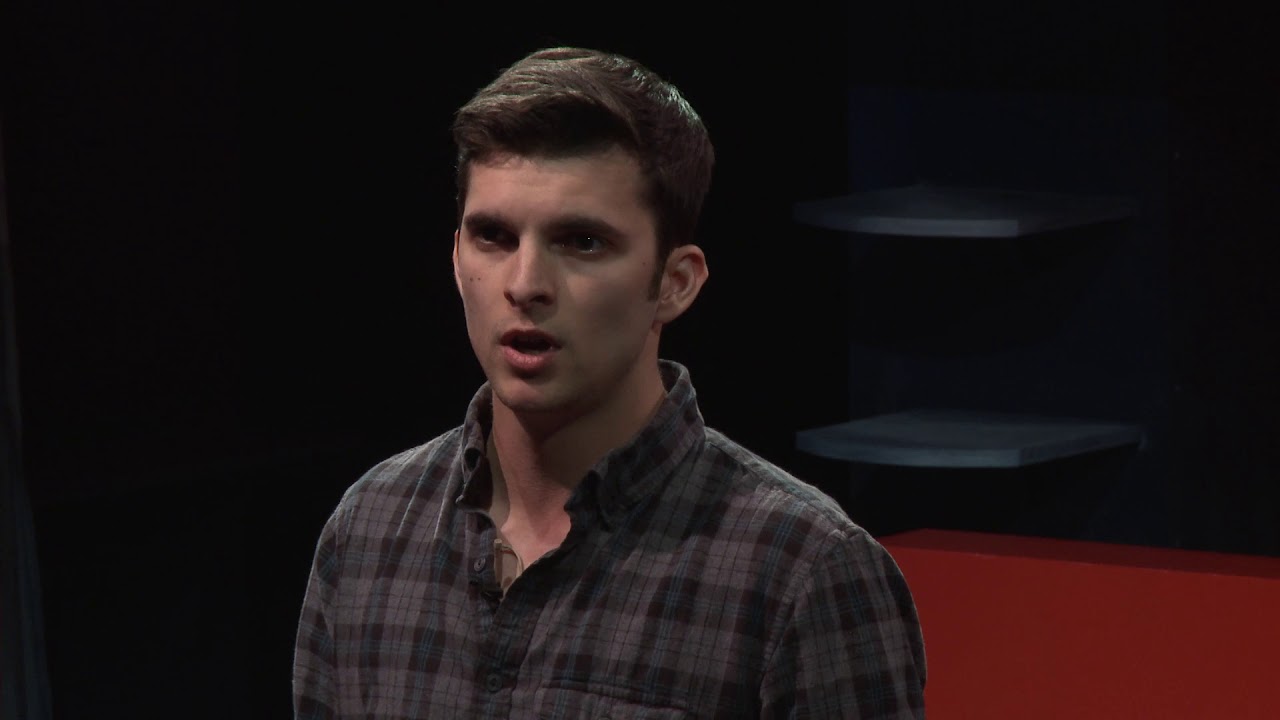
Kendall’s TEDxUF appearance in March 2018 put the brain and computer processing on the same public stage. His speaker biography described an engineer working at the intersection of nanomaterials and AI, pursuing processors that could make machine intelligence more accessible. It is a demanding place to work: the object you can manufacture and the behavior you want can be separated by several disciplines.
Consider one concrete piece of his invention record. Granted in October 2019, US10430493B1 names Kendall as inventor and describes efficient matrix multiplication using sparse connections and analog techniques. Voltages represent inputs; currents supply outputs. Coaxial nanowires provide connections in the network. The calculation is tied to what the circuit physically does.
That makes the engineering unusually intimate. The material properties belong in the computational discussion. So does the pattern of connections. In this approach, a circuit’s arrangement helps determine which operations it can perform efficiently. A beautiful drawing of artificial neurons leaves plenty of practical questions: what gets connected, what changes during learning, and how do you read the answer?
The patent’s later history adds a commercial turn. Its public record shows an assignment from Rain Neuromorphics to OpenAI Opco, effective October 21, 2025. That is a documented transfer of an invention. The research career extends further, through papers and collaborations that keep returning to the relationship between physical systems and learning.
The circuit gets a teaching problem
In 2020, Kendall and Suhas Kumar published The building blocks of a brain-inspired computer. They examined computing across materials, devices and architectures, including combinations of analog and digital approaches. Memristors, components whose resistance depends on their history, figured in the discussion. The attraction was processing information close to where it is stored.
Think of the distinction as a question of travel. When stored information must repeatedly move to a separate processor, moving it becomes part of the job. Bringing computation into memory changes that arrangement. The prospect is attractive; making it dependable asks for work at several levels of the machine.
Learning introduces another requirement. A network needs a way to adjust its connections according to its errors. A design that performs a calculation efficiently still has to support the operations used to improve that calculation. This was the territory Kendall discussed in a July 2022 seminar at Argonne: the advantages of analog in-memory computing, alongside the difficulties that remain.
Separate storage and processing require information to travel.
In-memory approaches make the physical network part of the calculation.
Conceptual illustration - no performance scaleA 2020 account of Rain’s research described work with Yoshua Bengio and Benjamin Scellier on equilibrium propagation. The aim was to let analog systems participate in their own training. For Kendall, the learning problem had become part of a wider collaboration. The chip and the mathematical rule were now being considered together.
Twenty-five million dollars, and the same question
In February 2022, Rain announced a $25 million Series A led by Prosperity7 Ventures. Its announcement identified Kendall as co-founder and CTO and said the company had taped out a working prototype the previous year. The team planned to grow across device physics, circuit design, software and algorithms. The hiring list was almost an outline of the problem.
“Our team views the brain as a physical circuit for processing information.”
Jack Kendall, February 2022
The wording gives his ambition a specific shape. A brain-inspired computer demands an account of physical behavior as well as intelligence. The company’s description of Kendall’s mission is brief: building a brain. His collaborations turn that broad aim into smaller questions that can be studied, compared and sometimes implemented.
He also discussed the larger future of AI. In a December 2023 interview with Doug Clinton, Kendall argued for distinguishing general intelligence from human-level intelligence. He described an architecture able to handle different kinds of data, learn rapidly from previous experience, and reason through unfamiliar tasks. Using that definition, he predicted AGI by 2025.
Read as a prediction made in 2023, it shows what he considered important: the abilities a system can combine, rather than a simple resemblance to a person. In the same discussion, he put hardware near the center of future progress and described the appeal of devices that could adapt locally. Intelligence would need somewhere practical to live.
Seven algorithms walk into an experiment
The published work supplies a quieter counterpart to those forecasts. With Benjamin Scellier, Maxence Ernoult and Suhas Kumar, Kendall co-authored a comparison of seven energy-based learning algorithms. The team evaluated them on five image tasks using deep convolutional Hopfield networks. The study made competing learning methods face common tests.
Its findings reward attention to detail. Methods that behaved similarly on the simplest dataset separated as tasks became more difficult. Negative perturbations performed better than positive ones in the reported experiments, and centered equilibrium propagation led the comparison. Small choices in how a network is nudged could matter to the outcome.
One comparative study. Shared models and datasets made the differences visible.
There is a useful discipline here. An algorithm’s promise depends on the conditions under which it is tested. The comparison gives researchers a reason to choose among alternatives, and an account of where those choices begin to matter. An easy benchmark can make a roomful of methods look equally agreeable. Harder homework changes the seating plan.
Kendall also co-authored a cookbook for hardware-friendly implicit learning with Ernoult and Rasmus Kjær Høier. The guide breaks learning into underlying ingredients, aiming to help researchers explore combinations without inheriting every design choice attached to an existing algorithm. The title has a welcome practicality. Before inventing a new machine, it helps to know which ingredients the recipe actually needs.
The old university crowd comes back
The company’s Florida connections continued to matter. In March 2024, UF described a $950,000 investment in Rain from OneSixOne Ventures. Its founders, Justis Mendez and Pablo Casilimas, had met Kendall at the university. Rain had moved to San Francisco; the relationships traveled well enough to become part of a later funding story.
By 2025, Kendall had taken the CEO role at Rain. That brought the business responsibilities closer to the researcher whose earlier job had been directing the technology. Rain later nearly ceased operating; OpenAI bought some of its patents after a wider acquisition effort failed. A company built around unfamiliar computing has to explain itself to several audiences: researchers, engineers, investors and prospective customers. Each has a different question to ask of the same circuit.
Another project gave the scientific agenda a public description. In October 2025, ARIA’s Scaling Compute programme identified a Rain AI UK effort led by Kendall, developing computational primitives based on energy minimisation in coupled resistive networks. A separate Rain project led by Scellier addressed scaling learning algorithms. The programme placed circuit behavior and learning alongside other approaches to computing’s energy demands.
A new affiliation, a familiar problem
In May 2026, Zyphra published research under Kendall’s name extending equilibrium propagation beyond its usual class of energy-based models. The associated preprint lists Zyphra as his affiliation and notes that the work was performed primarily at Rain Neuromorphics. The acknowledgment makes the continuity explicit.
The work examines skew-gradient systems, including networks built from the Fitzhugh-Nagumo neuron model. Its result broadens the mathematical setting in which equilibrium propagation can apply. This is a research extension with implications for possible architectures. A product still requires its own engineering and evidence; equations give the next experiment a direction.
For Kendall, the trajectory is recognisable. A proposed network raises a question about learning. Answering it leads into mathematics, then back toward what a physical system can do. Years after a reviewer pointed out the missing staircase, he is still working on the connection between the floors. The view has acquired more equations. The question remains usefully stubborn.
Keep following the question
Watch Kendall at TEDxUF or the UF Cade Prize film. Listen to the 2018 conversation and 2023 AI discussion.
Explore Rain AI, his Zyphra research, LinkedIn and ResearchGate.