An executive goes away. An agreement waits in an inbox. Someone at the other company assumes the signatures are complete, and business proceeds. Much later, when the numbers disagree, everybody discovers that they have been working from different versions of the deal. J. Scott Nelson described this scene in a 2017 conference talk. After years spent examining commercial transactions, he had found a remarkably durable piece of business infrastructure: the email that nobody remembered to answer.
Nelson founded Trax Technologies in 1993 and ran it for 22 years. Freight auditing gave him a close view of the distance between an agreement and its execution. A shipment could make its way through a complex network of businesses while the information accompanying it accumulated omissions, inconsistencies and errors. The physical world carried on. The accounting needed attention. For a software founder willing to stay with the details, there was a business in that difference.
His later move into blockchain followed those transactions further, into payment, borrowing and the records companies keep about one another. The continuity matters. Nelson arrived at Sweetbridge with a long apprenticeship in what happens when businesses exchange information and discover that agreement is harder than transmission. A computer can deliver a mistake with admirable punctuality.
A city name, a bill, a business
In January 2015, Nelson wrote about a modest error with consequences beyond its size: a misspelled city name. Depending on where it appeared, the mistake could interfere with freight pricing, the allocation of costs or an analysis of the transport network. The problem grew as information passed through different organizations, each with its own systems and habits. An error could travel downstream without anyone recognizing that they had become its courier.
His proposed answer was a data refinery. Information would come in from disparate places, acquire a common structure, undergo correction and enrichment, and be assessed for how confidently it could be used. The sequence reveals his priorities. The quality of a report depended on the material underneath it. A more elaborate view of inconsistent records could still leave a manager making an expensive decision with considerable confidence.
By 2014, Nelson was describing another consequence of bad information: slower collection and higher administrative costs for carriers. Trax’s Certified Invoice work sought to improve the record for both sides of a transaction. The buyer needed a bill it could validate. The carrier needed payment without a prolonged expedition through disputed details. Nelson’s commercial territory lay between those needs, where an apparently clerical problem could become a financing problem simply by lasting long enough.
Collect → standardize → reconcile → use.
A simplified view of Trax’s data-refinery approach.
A 2016 account of Trax’s work with equipment manufacturer Blount gives that territory a recognizable shape. Blount had spent almost eight months considering more than a dozen providers. Its international operations required someone with a presence across regions. Trax helped connect logistics spending with the business activity generating it, improving the company’s ability to see costs and make decisions. The assignment brought Nelson alongside rules architect Kelvin Jones: the founder and the person translating commercial requirements into something a system could actually enforce.
Twenty-two years, then a handover
The business had started as a small logistics consulting and software firm. Over Nelson’s tenure, it developed into a software and services company operating on four continents. A conference biography puts its recurring revenue at $20 million. That figure belongs to the Trax chapter of his career, rather than a claim about his personal wealth. It describes the scale of an operating business built around recurring work that customers needed done again.
In March 2015, Strattam Capital completed a majority investment in Trax in partnership with the management team Nelson led. The transaction’s financial terms were undisclosed. Nelson framed the investment around further development, deployment and support for products serving buyers and sellers of logistics services. By then, the company had offices in the United States, Europe, Asia and Latin America. Its problem had crossed borders; so had the organization required to address it.
The leadership change followed in April 2016. Don Baptiste, who had co-founded and led Bloomberg Government, became Trax’s CEO. Nelson moved to vice chairman. The company described the appointment as part of a long-term succession plan. For a founder who had spent more than two decades leading the business, that was a material change in the job: someone else would now carry responsibility for its next operating chapter.
The contract stranded in an inbox
Nelson’s 2017 account of stalled agreements explains something about the ideas he carried into the next venture. He described counterparties using different versions of contracts and internal approval processes that had never quite finished. Those failures did not require elaborate misconduct. They could emerge from ordinary office life: travel, competing messages, a signature postponed until it disappeared beneath other work. The transaction had a history, but the participants had different copies of it.
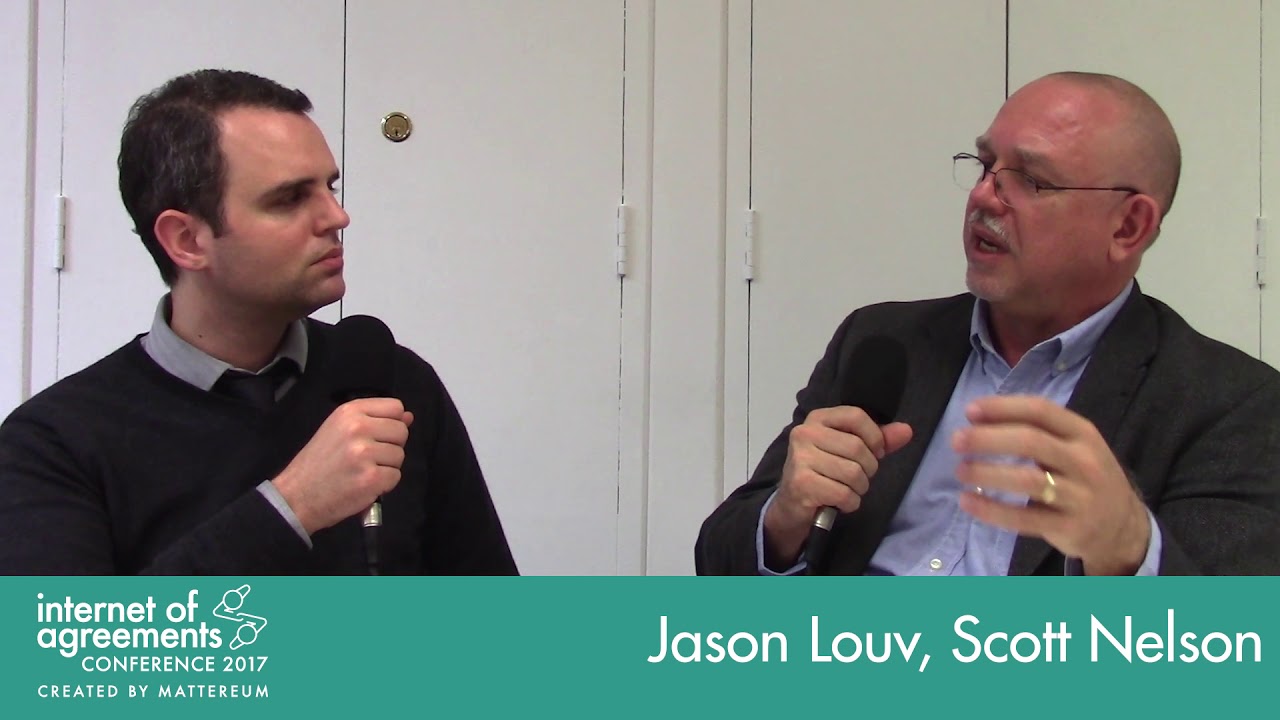
In an interview that year, Nelson described his background as an intersection of logistics, software development and finance. Years of looking closely at how supply chains worked had left him incredulous about the way the system operated. Sweetbridge, founded in 2016, grew from that frustration. His interest extended to the capital tied up while businesses waited, the equipment that could be used more effectively, and the expertise needed to improve an evolving network.
He also had reservations about the fashionable celebration of disruption. “When did breaking stuff become a great idea?” he asked in the same conversation. There is some dry comedy in a blockchain founder questioning the enthusiasm for breaking institutions. His discussion allowed a place for existing banks’ skills, including custody and relationships. He illustrated the latter with his mother’s enjoyment of having coffee with someone at her local bank. A financial system, in his telling, still contained people who wanted someone to talk to.
“They now understand the importance of starting with high-quality data.”
Scott Nelson, 2015
Four records, one transaction
In 2018, Nelson described the fault line more precisely. Identity, contracts, accounting and payment could fall out of step. Sweetbridge’s ambition was to coordinate them within a transaction that required agreement between its parts. His explanation returned to experience at Trax, where the business had earned money by finding discrepancies. The new venture sought to change the conditions that allowed those discrepancies to accumulate.
Four connected records. Agreement at the point of exchange.
The proposal had a particular audience in smaller businesses. In a July 2018 interview, Nelson identified access to liquidity as a central problem for small and midsize organizations in supply chains. Work, assets and expected receipts could exist while spendable funds remained scarce. His route into cryptocurrency, as he explained it, began with that financing question. The practical attraction was the possibility of giving a business more use of the value it already held.
By January 2019, he was describing synchronized accounting and continuous assurance: information shared across companies, with corrections visible to the participants and accounting treatment connected to contractual terms. His examples included disputed invoices and records that misrepresented assets. He wanted auditing to become more immediate, with problems reported as transactions occurred. These were statements of what the system was intended to accomplish, alongside plans for pilots with banks and accounting firms.
There was technical work behind the vocabulary. Nelson appears as a co-author of Sweetbridge papers on digital currency and the mathematical specification of its liquidity protocol. The latter describes a collateral-backed system and separates formalized mechanisms from work reserved for later analysis. That distinction is useful when reading his second act: a financing architecture, its mathematical description and a widely adopted service each require their own kind of evidence.
The sandwich and the balance sheet
Some of the people around him had travelled a long professional distance together. Sweetbridge EMEA’s team biographies describe Alan Chute as having worked alongside Nelson at Trax for more than 20 years. Bill Baird’s biography records another two-decade connection. Chute’s work spanned finance, architecture and process improvement; Baird’s covered software and systems architecture. Their presence gives the later projects a connection to the accumulated practical work of the earlier company.
The projects also acquired rather less abstract names. Digital Sandwich applied supply-chain digitization to prepared foods, including product information and traceability. KnowRisk addressed supply-chain risk and disruption. The sandwich made a useful unit of attention: a familiar finished product with several businesses and records behind it. The underlying ambition remained coordination across organizations that had reasons to cooperate and systems that made cooperation laborious.
In June 2021, Innovate UK Business Connect featured Nelson in its AI for Services podcast as Sweetbridge’s CEO and founder of the KnowRisk Consortium. The project combined accounting and audit information, enterprise systems, insurance and legal information to manage risk across supply chains in real time. It was another expression of his preference for bringing separate records into a shared view. Earlier, in January 2018, he had also taken blockchain into an Arizona House Commerce Committee hearing, alongside Desert Blockchain’s Jay Carpenter.
The April entry
The later business record contains a difficult turn. On April 27, 2026, administrators were appointed to Sweetbridge EMEA Ltd, the UK company incorporated in November 2018. By October 26, the company register continued to list it as in administration. Hilco’s page offering its intellectual property and project materials was marked sold. That page identified assets associated with Digital Sandwich, No Risk and KnowRisk, including technical documentation and development work.
That outcome belongs alongside the earlier achievements and ambitions. The UK company’s administration is a specific event in a specific entity; it supplies no shortcut to a judgment about every organization Nelson has worked with. It does put a firm date after years of proposals and research. His Trax record and his Sweetbridge plans occupy different chapters, with different kinds of results.
Across them runs a question that ordinary business paperwork makes unusually concrete. A company has delivered something. Another company has recorded it. Somewhere between the agreement, the invoice and the payment, their understandings diverge. Nelson spent years building a business that investigated the divergence, then pursued ways to reduce it at the start. The executive’s unsigned email is a small scene. The number of people waiting for it gives the scene its scale.