The trucks had done their part. The payment machinery had not. In a case published by Trax, a Fortune 500 manufacturer accumulated $65 million in overdue carrier bills. Its freight process ran across 12 business units and more than 20 ERP systems. Approvals lived in Excel. Some carrier setups bypassed controls. Eventually, carriers began shutting off service. A financial problem had acquired wheels.
- Trax checks freight bills and turns the records into usable transportation-cost data.
- Its customers are enterprises whose carriers, countries and financial systems multiply the complexity.
- The practical prize is accurate payment, clearer product costs and better carrier decisions.
Trax says it integrated the manufacturer’s systems, took on exception work and cleared the backlog. Invoice first-pass yield rose from roughly 20% to more than 90%; 80% of invoices became automated. These are the vendor’s reported results for one customer. They nevertheless reveal something worth examining: a supply chain can come unstuck in the approval queue, far from a port or warehouse.
The invoice is where the promises meet
A freight contract describes what should happen. A shipment record describes what moved. An invoice asks to be paid. Those three accounts ought to agree. Across carriers, currencies and business units, agreement becomes a substantial administrative project. A duplicate bill, an expired rate or an unexplained extra charge can turn a routine transaction into a small investigation.
Trax works at this junction. Its freight-audit service checks bills against negotiated rates and shipment information. Its data layer makes differently formatted carrier records comparable. Cost allocation assigns charges to the financial dimensions that matter to the customer. Payment workflows then carry approved amounts toward settlement. The work is deliberately unromantic. Romance is an expensive quality in an accounts-payable process.
- 01 / CAPTURECarrier invoice + shipment record
- 02 / RECONCILENormalize data + check the rate
- 03 / ACTAllocate, approve, pay, analyze
This places Trax between logistics operations and finance. The people booking a shipment need service and capacity. The people closing the books need a trustworthy expense. Procurement needs to know whether the carrier delivered the agreed bargain. One audited transaction can inform all three, provided its identifiers and charges survive the journey between systems.
When the estimate misses by 40%
A separate Trax consumer-goods case begins with an awkward delay: final freight invoices arrived well after the shipments. Cost estimates could vary from actual charges by as much as 40%. For a financial planner, that is a generous margin for unpleasant surprises. Waiting for the bill meant waiting to understand the economics of goods already received.
Trax combined purchase-order data and carriers’ advance shipment notices, then applied the customer’s negotiated rates. It allocated freight to individual SKUs by weight. The company reports that estimate variance fell to 2%, with estimated spend visible by the second day of the following month. The change came from connecting records that described the same movement at different stages.
The SKU detail matters. A low manufacturing cost can be undone by a high import cost. Once freight is attached to the product, a manager can compare delivered economics rather than admire the factory price alone. The case reports regular savings of 2-4% from choices about where products should be made. The invoice becomes evidence for a decision upstream of the invoice.
Prizma gives the paperwork a second life
Prizma.AI is Trax’s current platform for this work. Its product materials describe an invoice-to-payment environment with historical audit trails, reporting and a carrier hub for submitting and tracking bills. The promise is continuity: the record being investigated by an auditor should remain intelligible to the carrier, the payment team and the analyst who later asks what happened.
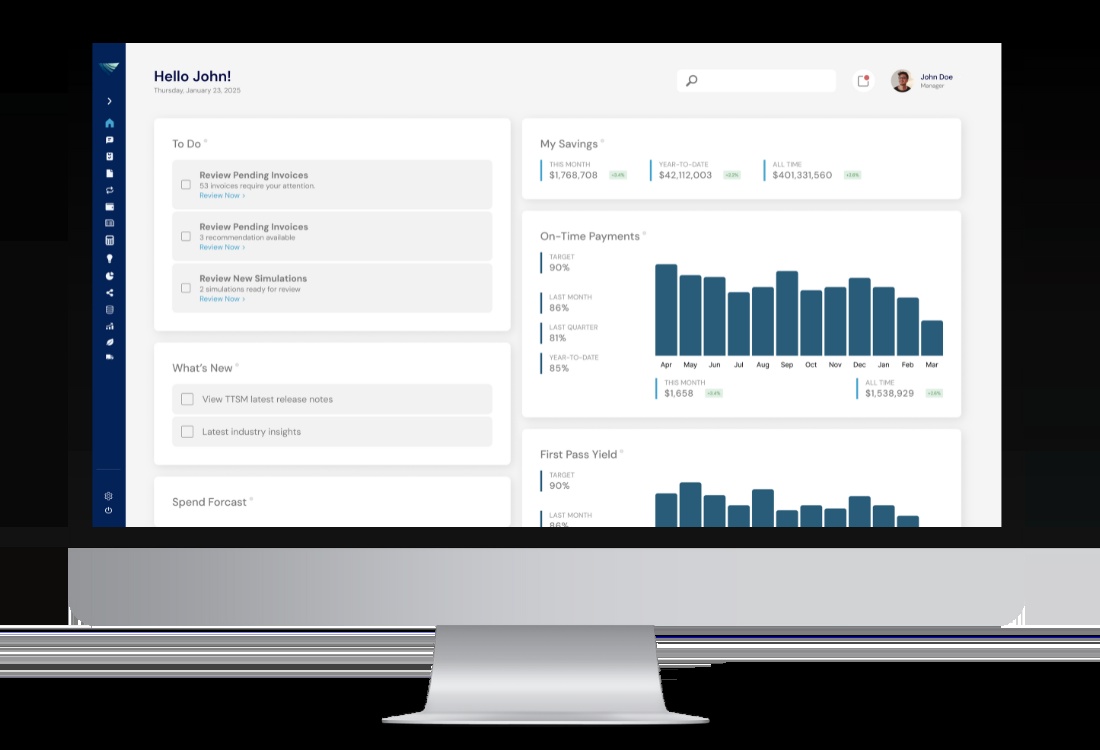
The AI Audit Optimizer looks for patterns in exceptions and recommends resolutions. Trax describes approved actions being applied automatically to recurring cases. Its AI Extractor handles documents such as PDFs. These are specific jobs with specific outputs. Their value depends on whether the system extracts the right information and handles the exception according to the customer’s rules.
The neighboring modules address less fashionable necessities. Rate Control keeps contracts, amendments and spot quotes together, with version histories and expiration alerts. Payment Control schedules workflows around payment terms and close dates. It supports payments through a customer’s ERP or direct carrier disbursement. A clever audit still needs a current contract and a reliable route to payment.
Big customers, awkward questions
Trax’s public customer displays include Pfizer, Dell, HP, Nike and Starbucks. Its market spans life sciences, technology, manufacturing, retail and consumer goods. These businesses have different products, but can share the same difficulty: transportation records scattered across a large organization, each accurate enough locally and troublesome when someone asks for the global picture.
The company reports more than $25 billion in managed transportation spend, over 125 global customers and support in more than 120 countries. Managed spend is the freight expenditure running through its work, rather than Trax’s own sales. Confusing the two would be a particularly unfortunate error in a story about financial clarity.
Other cases show how far the analysis can travel. Trax reports more than $100 million in validated savings in 2023 for an unnamed pharmaceutical customer it had supported since 2006. A technology-manufacturer case describes over $2 billion in annual freight spend processed and approximately 10.01% savings. Neither figure is a sensible promise to a new buyer. They are reasons to ask how the baseline, interventions and savings were established.
A business built around the unglamorous middle
Founded in 1993, Trax attracted a majority investment from Strattam Capital in 2015, alongside the management team led by founder J. Scott Nelson. In June 2018, Trax and Veraction combined to form Trax Group. That history helps explain the offering today: software, data work and operational services bundled around an enterprise problem that refuses to fit neatly into a single application.
The business sells enterprise technology and managed services through sales-led engagements. For a buyer, the relevant cost is the contracted service plus the internal effort of integrating systems, maintaining rates and assigning decision owners. A useful evaluation would separate recovered overcharges from staff time saved and subsequent procurement improvements. Adding all three together without checking for overlap creates a very flattering spreadsheet.
In June 2023, TBK Bank, doing business as TriumphPay, invested $9.7 million for a minority position. The announced relationship would connect Trax with TriumphPay’s payments network. In November 2025, Trax acquired European freight-audit provider EM6 to deepen regional capabilities. The common thread is reach: across the payment process in one deal, across geography and operating expertise in the other.
The competition also understands invoices
Trax operates in an established market. Cass Information Systems offers freight audit, payment, accounting and business intelligence, with bank-level controls as part of its positioning. Intelligent Audit combines invoice validation, data matching, rate review and expert oversight. Both offer overlapping capabilities. AI and dashboards alone therefore make a poor basis for declaring a winner.
Trax’s distinctive proposition is the combination of global data normalization, an integrated spend platform and freight-operating expertise. Buyers can test that proposition with their own difficult invoices: multiple currencies, amended contracts, disputed extras and incomplete shipment records. They should compare exception ownership, carrier participation and the quality of data returned to finance. A demonstration is most informative when the paperwork is untidy.
Copy the sequence, then buy the software
The transferable lesson is to connect shipment facts, contractual rates and financial outcomes before demanding sophisticated predictions. Start with one recurring discrepancy. Define which record is authoritative. Track how often an invoice passes the first time, how long exceptions remain open and whether carriers are paid on the agreed schedule. These measures make progress visible without requiring a theatrical AI announcement.
“The two most important assets we have are quality and throughput.”Blake Tablak, Trax CEO, in a published company interview
Tablak’s argument favors getting more reliable work through the system before focusing on headcount cuts. It also supplies a useful limit. Missing shipment evidence, stale rates and approvals without accountable owners remain problems after software arrives. A business with simple freight requirements may have less to gain from an enterprise platform than a manufacturer juggling dozens of systems.
The manufacturing case began with carriers refusing service. The forecasting case began with finance unable to trust its estimates. Both make the reason for changing concrete. Trax’s proposition is that the humble freight bill can help settle those arguments - if someone takes the trouble to make it accurate, connected and useful.
Follow the freight trail
Explore Trax’s website, Prizma.AI, the case-study library and company blog.
Watch Blake Tablak’s supply-chain interview or browse the Trax YouTube channel. Follow LinkedIn, X and Facebook.