Somewhere between the fax machine and the GPU, a business has a problem. It owns information. It wants intelligence. Getting from one to the other requires someone to open the files, sort the records, fix the gaps and decide what a model should actually do. Iozera.ai has planted its business in that awkward stretch of road.
- Iozera sells data preparation, storage, management and AI implementation.
- Its AI factory proposition combines computing infrastructure with people supervising models.
- The Houston strategy starts with an existing facility and a planned conversion.
The detail that best explains the company appears on its data management page: faxes. Alongside PDFs and other records, these are among the materials Iozera says it can collect, organize and label. It is a wonderfully ordinary starting point for a company talking about generative AI. Before a business can ask clever questions of its information, somebody has to make that information usable.
The fax comes first
Iozera’s preparation service describes a sequence: gather relevant datasets, correct errors, manage missing values and convert the result into structures a model can accept. That last step matters. A clean file and a usable model input are different achievements. The company’s offer spans both, with consulting to connect the work to a business objective.
Its storage service addresses another part of the same job: keeping growing datasets accessible for training and inference. Management adds classification, labeling and quality checks. Read together, these offerings describe a supplier trying to take responsibility for the passages between systems. The commercial appeal is straightforward: fewer handoffs for the customer to coordinate.

That places Iozera between several familiar purchases. A business can assemble cloud resources, hire data engineers and manage its own deployment. Or it can ask an integrated provider to handle more of the chain. Iozera is selling that second arrangement. Its expertise is presented as a combination of data engineering, machine learning, infrastructure and implementation support.
A factory with people inside
The company calls its broader proposition AI-as-a-Service. In its October 2025 announcement, the AI factory includes workers who supervise, label and refine models alongside the GPU infrastructure. Enterprises and government organizations are the intended buyers. The product being offered is an operated workflow, with human judgment included in the description.
This is a meaningful purchasing distinction. Renting computing capacity still leaves a team responsible for what happens on it. A managed pipeline shifts some of that responsibility to a supplier. For a customer, the useful question becomes specific: which decisions, checks and interventions does the service actually include?
- 01 Collect
& clean - 02 Organize
& store - 03 Customize
& deploy - 04 Monitor
& improve
Iozera Implementation describes needs assessment, customization, integration, staff training and continuing optimization. Its software offering covers analytics and automation, while its GenV collaboration page advertises pay-per-use infrastructure. These are related services with different responsibilities. Buyers should match the promised work to a particular application, rather than treat the entire menu as a single specification.
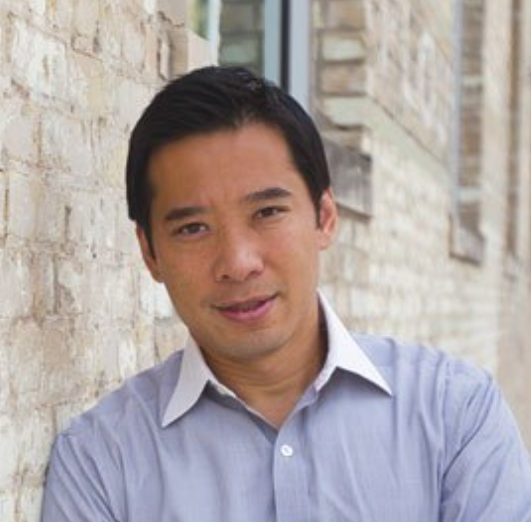
The homepage supplies one concrete example. Co-founder Timothy Ngo describes work for Kriss.ai involving distributed data across multiple clouds and simpler AI deployment. It connects the company’s data-management pitch to an application. The lesson for another business is practical: identify where the records live and how they reach the model before choosing the machinery.
Heat enters the conversation
In July 2025, Iozera announced a memorandum of understanding with ZutaCore, whose HyperCool technology removes processor heat using a waterless, direct-to-chip system. ZutaCore also lists Iozera in its partner ecosystem. The collaboration puts cooling inside the company’s infrastructure design, where it belongs if dense computing equipment is going to run reliably.
“Cooling is no longer a peripheral concern”
Timothy Ngo, co-founder, July 2025
For customers, this is a reminder that AI service delivery has physical dependencies. A model can be software while the service depends on electrical capacity, thermal design and equipment integration. Iozera’s proposed advantage is coordination across those dependencies. Whether that coordination improves a particular deployment depends on the workload and the contract.
Two very different starting lines
Iozera’s infrastructure ambitions first drew attention in May 2024, with a proposed 386 MW campus in Tetouan, Morocco. The Eureka Park concept included computing, data services, startup incubation and education. The reported project cost was $500 million. That number described a proposed development; it was not a disclosed funding round.
There was an early complication. On May 8, Le Desk reported that the planned government agreement signing would not take place. That is a specific setback, rather than evidence that an operating center failed. The distinction matters when reading the company’s history: a proposal, an agreement and a delivered service are separate milestones.
By October 2025, Iozera was describing another route: an agreement to acquire an operational Houston data center and modernize it for AI. DCD identified the site as a former Tailored Brands facility. The proposed move from 4.5 MW to 10 MW starts with an existing asset. It makes reuse central to the strategy without establishing why the founders changed emphasis.
Existing facility capacity → planned expanded capacity.
A plan, not a completion certificate.
Buy the workflow, check the handoffs
The copyable idea is to put preparation, deployment and monitoring on the same page of the buying decision. Ask who resolves a bad input, who checks an output and who maintains the integration. An integrated service is useful when those responsibilities are clearer together. It is less attractive when an organization already runs them well or needs controls the provider cannot accommodate.
Iozera’s place in the market rests on making those connections valuable. The fax, the dataset, the cooling system and the supervised model all belong to the same commercial argument: useful AI requires an operation around it. The customer’s test is whether that operation fits the work.