The carmaker had more than 10,000 devices spread across 55 sites and 124 data halls. It could build automobiles. Knowing exactly which computer was running where proved harder. In a case study published by Serverfarm in 2020, the manufacturer’s asset records were described as roughly 20 percent accurate. Somewhere between the purchase order and the server rack, the map had stopped matching the territory.
- Serverfarm builds and runs data centers, and manages infrastructure inside customers’ facilities.
- Its reuse strategy can avoid construction carbon; its InCommand service tackles operational confusion.
- Its $3.895 billion credit facility backs expansion. Commitments are financing capacity, not project spending.
The first intervention was pleasingly unglamorous: people walked the halls and audited cabinets, racks and devices. Serverfarm says thousands of machines initially lacked serial numbers and host names; that count fell below 150. Before the cloud dashboard could become useful, somebody had to go looking.
The missing inventory
This is the problem Serverfarm understands particularly well. A business can own a room full of expensive equipment and still lack a dependable account of its capacity. Empty rack space tells you little if the electrical supply is exhausted. Available power means little if cooling cannot support the next installation. Each apparent spare resource comes with conditions.
Serverfarm calls its answer InCommand, delivered as Data Center Management as a Service. It combines a cloud portal with operators and procedures: asset tracking, maintenance records, monitoring and work orders belong to the same operating picture. Customers can inspect a digital mirror of their facilities without physically visiting each one.
In the carmaker’s follow-up case study, Serverfarm describes planning down to individual rack units and locating server models for refresh projects. It reports hundreds of person-hours saved each month. Those are vendor-reported results, but the mechanism is intelligible: stop repeatedly rediscovering where the equipment lives. The customer’s identity stays private; the operational headache is familiar.
A landlord with an operating manual
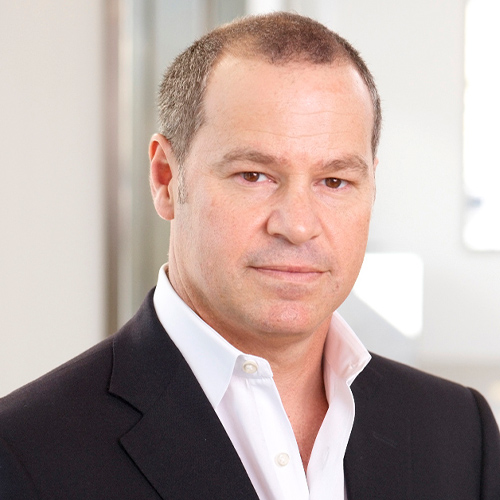
Founder and CEO Avner Papouchado came from real estate. His biography includes a fine arts degree, a pilot’s certification and surfing. The relevant inheritance, though, is a developer’s habit of looking at an existing property and seeing another possible use. Serverfarm applies that habit to buildings and to the systems inside them.
The company sells several things that buyers often purchase separately: colocation capacity, custom data center development and managed infrastructure operations. A customer can need somewhere to put its servers, a facility designed around its requirements, or help running the estate it already has. Serverfarm can enter through any of those doors.
Its customers include enterprises, service providers and hyperscale users. The 2021 acquisition announcement for its El Segundo facility described tenants in transportation, healthcare, government and hyperscale computing. The buyer is usually an organization responsible for keeping consequential workloads available, rather than an individual looking for a web-hosting account.
Commercially, this joins physical capacity contracts with ongoing services. Powered shells, wholesale capacity and build-to-suit projects offer different starting points. InCommand gives Serverfarm a role after construction ends, including at customer sites. For buyers comparing it with operators such as Digital Realty or Equinix, that combination deserves examination alongside location, connectivity and power.
The carbon already poured
Reuse has an unusually concrete climate argument. Concrete and steel carry emissions from their manufacture and construction. Retaining a usable structure avoids making an equivalent structure again. Serverfarm commissioned design firm HKS to compare reuse of its Chicago building with new construction. The modeled embodied-carbon saving was 88 percent.
Keep the structure.
Change the equation.
Embodied-carbon index, new construction = 100. Modeled Chicago comparison; excludes a claim about operating electricity or portfolio-wide emissions.The qualification matters. This is a construction-materials comparison, not a promise that every Serverfarm project uses 88 percent less energy. A retained building still needs electricity, maintenance and suitable cooling. The finding gives buyers a reason to investigate reuse, not permission to skip the engineering assessment.
In a 2020 account of the company’s model, executive Arun Shenoy put the attraction plainly: “We can create capacity in very tight markets, very, very quickly.” Speed and avoided material emissions can pull in the same direction when the building is suitable. That alignment makes the idea commercially interesting.
The AI bill arrives
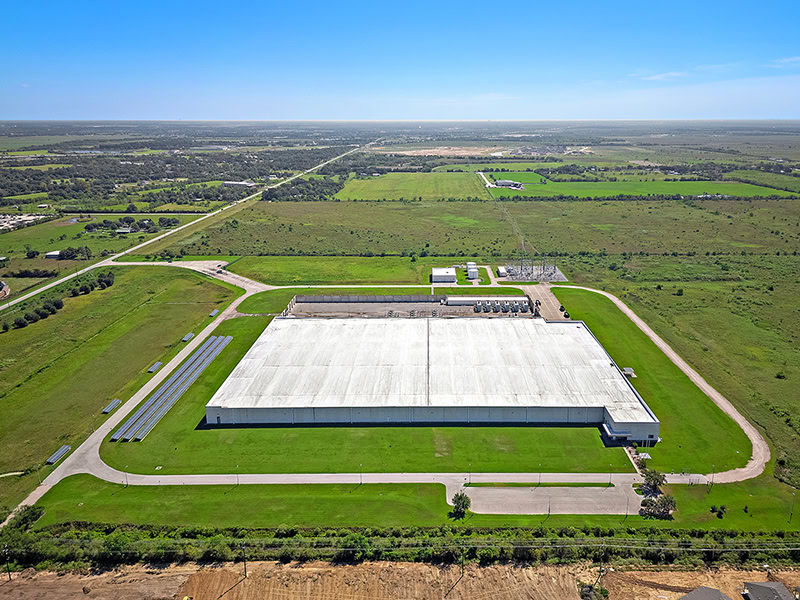
Demand has also pushed Serverfarm toward new campuses. Manulife Investment Management acquired a controlling interest in 2023 for an infrastructure fund and affiliates, with Papouchado remaining CEO. That announcement described eight owned data centers and more than 750 sites managed by InCommand. Owning a facility and managing one were already different measures of its reach.
In January 2026, Serverfarm announced a $3 billion credit facility closed the previous December. In September, it announced an $895 million increase, bringing commitments to $3.895 billion. The expanded financing supports Houston, greenfield projects in Clarksville and conversion of an existing Atlanta-area facility. It is borrowing capacity for development, not a disclosed valuation.
Before ordering more infrastructure, how much of what you own can you actually use?The question behind the operating model
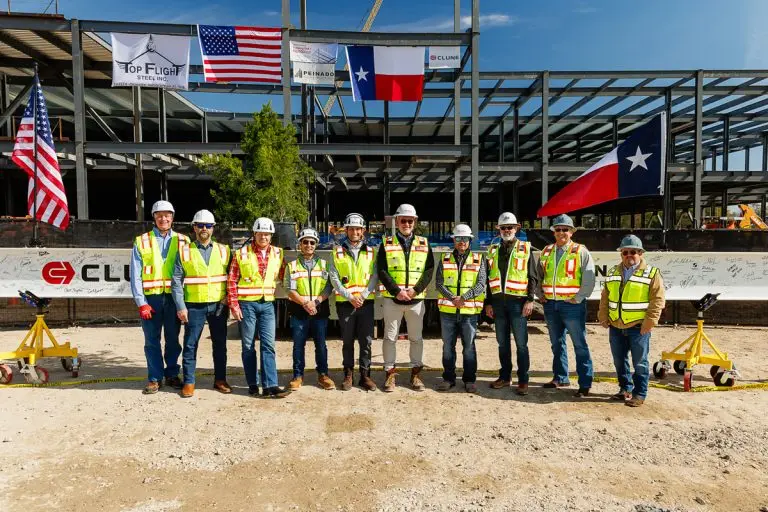
October brought structural completion of Clarksville’s first building, reported as a planned 108MW facility. A final beam is a construction milestone; live computing capacity still requires further work. The mix of new construction and conversion shows that reuse is a tool in Serverfarm’s development strategy, rather than a rule that every project must follow.
Count first. Then decide.
The lesson readers can copy starts smaller than a campus: establish a trustworthy inventory, connect equipment to power and cooling dependencies, and keep those records current when things move. Serverfarm’s carmaker example makes physical auditing the starting investment. Software without that discipline inherits the same uncertainty in a better-looking interface.
Reuse also needs a suitable structure, available electricity and a cooling design that fits the workload. If those conditions fail, an existing building can become a constraint. Serverfarm’s appeal lies in joining that physical judgment to daily operations. The question worth borrowing is simple: before ordering more infrastructure, how much of what you own can you actually use?