Before an organ transplant becomes an operating-room story, it is a communications problem. A hospital must recognize a potential donor and notify its organ procurement organization. Historically, that notification could mean a phone call. The clinical record was electronic; the handoff still depended on someone making time to speak.
InVita Healthcare Technologies has built a business around such seams. Its software recruits blood donors, coordinates donation work, tracks implants and follows forensic samples. The objects differ. The recurring question is wonderfully plain: when something changes hands, does its information arrive with it?
- Hospitals and donation organizations use InVita to exchange potential-donor referrals electronically.
- Blood centers use its tools for recruitment, collections, ordering and related operations.
- Implant and forensic teams use its software to preserve traceability across complicated workflows.
A phone call in the critical path
Consider Corewell Health and Gift of Life Michigan. In September 2023, they first launched an iReferral integration across 18 West Michigan facilities. During 2024, they extended it to 16 more locations. One integration became a 34-location deployment. That sequence matters: establish the connection, then repeat it.
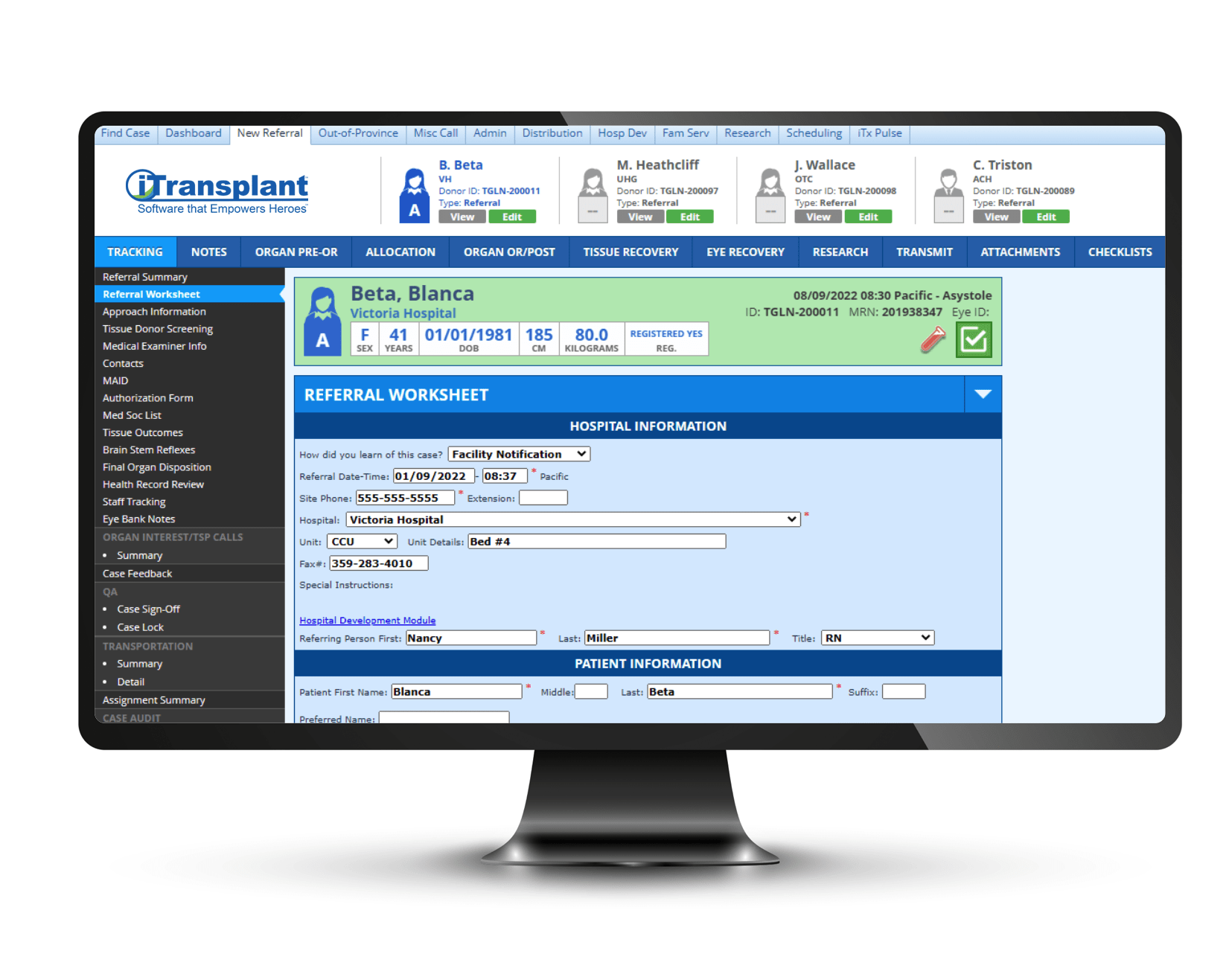
iReferral identifies potential donors using established clinical criteria and sends the referral securely to the donation organization’s iTransplant system. The intervention targets a specific administrative step. A referral begins a process; it does not establish that someone will become a donor.
“The iReferral process also enhances the timeliness of referrals”
Jill Sheipline, Corewell Health · August 2024
The weak point in the older workflow was the notification step: staff had to make a manual referral while managing patient care. Corewell’s nursing leadership described reduced workload and less potential for error and missed referrals. The case illustrates why these organizations adopted automation: a required task could move through an electronic interface.
- 01IdentifyClinical criteria in the hospital record
- 02NotifyiReferral sends the potential-donor referral
- 03CoordinateDonation teams work in iTransplant
The relationship between the two products is useful to understand. iReferral handles the entrance. iTransplant supports the larger operation: donor records, screening, recovery, allocation, coordination and audit tracking. A July 2026 launch at University Health with Texas Organ Sharing Alliance shows that the referral work continues.
An implant comes with paperwork
Now follow a different object: an implant sitting in hospital inventory. It has an identity, an expiration date and a destination. Later, it might acquire a recall notice. If removed, it may qualify for a manufacturer warranty claim. Every stage creates another opportunity for the record to scatter.
UDITracker captures tissue and implant information from receipt through use. It connects with systems including Epic, Oracle Health and VistA, alongside recall and manufacturer data. Implant360 Analytics extends that foundation across facilities, letting a health system examine inventory performance beyond a single storeroom.
WarrantyTracker, co-developed with Mayo Clinic, addresses the work after a device comes out. Teams can follow a claim toward its eventual credit. Clinical staff, supply chain and billing each hold pieces of that story. InVita’s argument is that those pieces belong in a connected process.
The forensic business has a related logic. STACS manages laboratory sample workflows; Track-Kit follows sexual assault kits and newborn screening specimens across participating organizations. Here, custody and status are central to the product. The company sells detailed knowledge of what must be recorded at each step.
Buying the missing links
InVita’s breadth came partly through combination. HemaTerra acquired Champion Healthcare Technologies in 2019; the InVita brand followed in March 2020. STACS DNA joined the portfolio in 2021, and BloodHub followed in 2022. These additions expanded the kinds of records the company could follow.
BloodHub brought ordering and fulfillment capabilities. HemaConnect handles donor engagement; HemaCollect supports drives and staffing. Together, the products address different stages of blood-center work. In May 2026, InVita announced an agreement to acquire IT Synergistics, adding another blood-establishment software business to its strategy.
Then came MAK-SYSTEM. In July 2026, InVita announced that acquisition’s completion. The combined businesses reported serving more than 1,300 healthcare organizations across over 30 countries. That is company-reported customer reach, rather than a measure of how completely every product already connects.
The market is specialized enterprise software. WellSky offers overlapping blood-management products, so buyers have alternatives. InVita’s distinctive pitch is the range of adjacent workflows it can connect. The practical comparison is whether the needed interfaces, records and support fit a particular organization.
The price of keeping track
InVita sells to institutions through cloud and SaaS platforms, supported by implementation and services. Novacap invested in November 2024. Its commercial world includes public procurement: Nevada’s September 2022 contract summary listed $650,000 for ongoing electronic sexual-assault-kit tracking from STACS DNA, doing business as InVita, over July 2022 through June 2026.
That figure describes one contract’s scope and term. It is not a menu price for another product or customer. The economic case depends on the workflow: less repeated administration, better inventory visibility or a warranty claim that reaches resolution. Each requires a different buying calculation.
A buyer evaluating the software should therefore follow an actual case through the proposed system. Can the receiving department see its status? Can staff find the relevant record without entering everything again? Those questions turn an abstract promise about efficiency into something an operations team can inspect.
Start where the record changes hands
There is a practical lesson to borrow. Pick a handoff, define what triggers it, connect the receiving team and establish a repeatable process before expanding. Corewell’s phased rollout makes that approach concrete. For another example of customer involvement, Gulf Coast Blood helped develop HemaConnect 2.5’s cell and gene therapy recruitment capabilities.
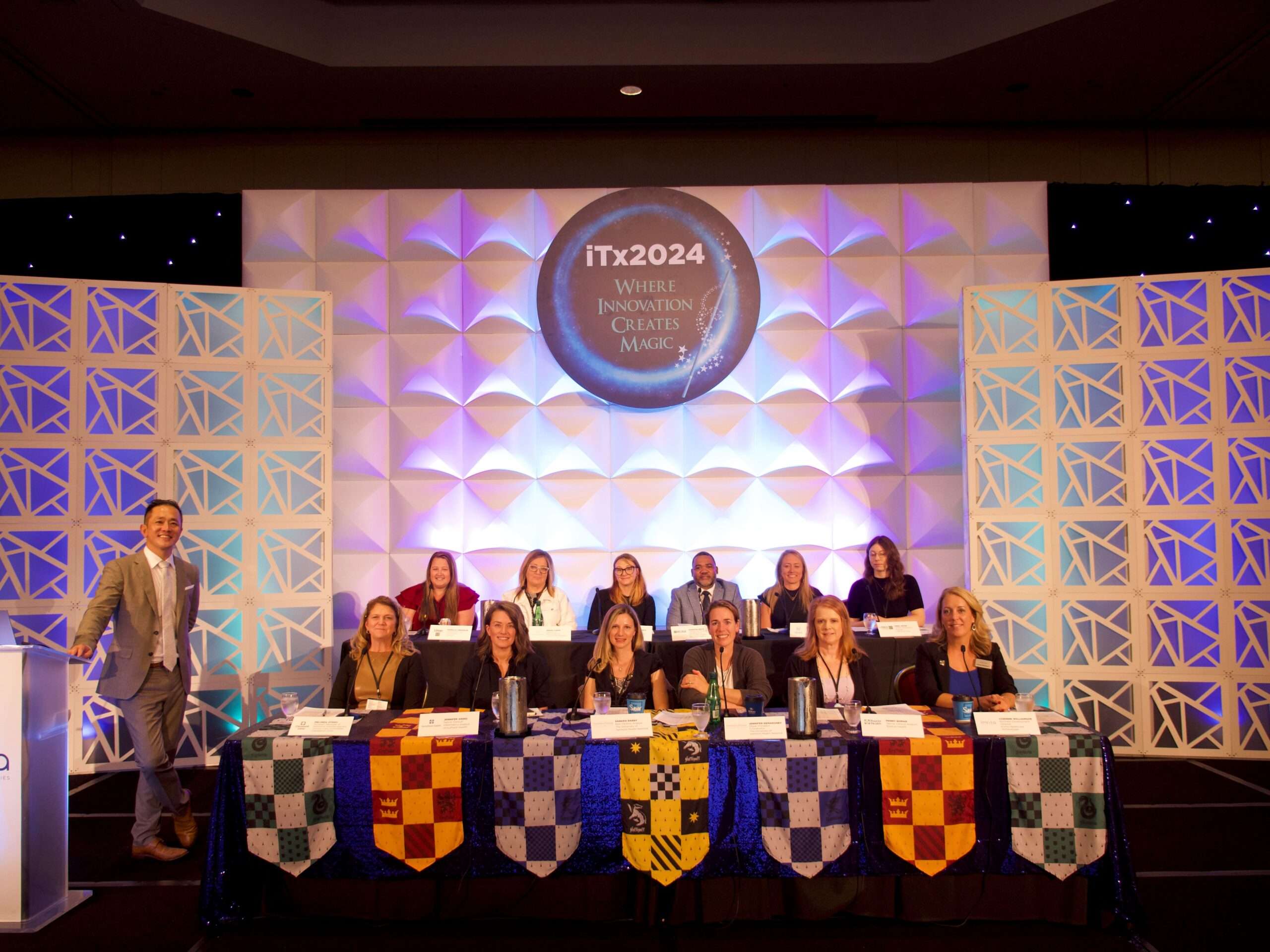
InVita also gives that collaboration a social setting. Its iTx2024 partner conference included user groups and design workshops alongside a House Cup competition. The winners were the Bouncing Broomsticks. Even in a market defined by documentation, people apparently appreciate a little spectacle with their software discussions.
The conditions matter. This approach depends on usable data, functioning interfaces and people prepared to act on what arrives. Tracking software cannot replenish a blood supply or perform an organ recovery. Its contribution is narrower and tangible: give the next team a record it can use, while there is still time to use it.