A founder making equipment to protect concrete infrastructure has a peculiar advantage: he knows that deterioration begins before anyone notices it. A startup’s finances can behave much the same way. BlueSpine, an industrial venture incubated at INNOVACT in Reims, chose to establish its proof of concept and first sales before asking equity investors for money. The sequence is the interesting part.
- INNOVACT helps innovative ventures build businesses in the Marne.
- Its Starter Class combines market testing, financial planning and pitching over three months.
- Research links and fundraising preparation extend through Quest for Change.
Startup culture enjoys a fundraising announcement. It has a number, a photograph and usually several people looking pleased. INNOVACT’s work concerns the less photogenic interval before that announcement: deciding what customers need, what a product should cost and which kind of financing belongs at which stage. There is considerable glamour in avoiding an expensive mistake, although it rarely comes with confetti.
The postcode is part of the proposition
INNOVACT is the Reims incubator within the nonprofit Quest for Change organisation. Its name has a history reaching back to 1995; the current startup incubation activity began in September 2018. That December, it received the Grand Est region’s Incubator of Excellence label. The distinction between the older name and the newer activity matters: institutional longevity and years spent incubating startups measure different things.
The offer is deliberately territorial. Applicants should intend to establish and grow their businesses in the Marne, even if they come from elsewhere. They need innovation, a market with growth potential and evidence that the idea can work. The published application criteria ask for a validated proof of concept. A handsome slide presentation, by itself, will struggle to qualify.
For a founder, this makes the choice fairly practical. INNOVACT suits someone who wants coaching and connections while building a company in this particular place. Its neighbours include Le Village by CA Reims, CREATIV’LABZ and NEOMA’s Startup Lab. These organisations can also be collaborators; the right route depends on the venture’s stage, needs and institutional connections.
Ten places, three months, real homework
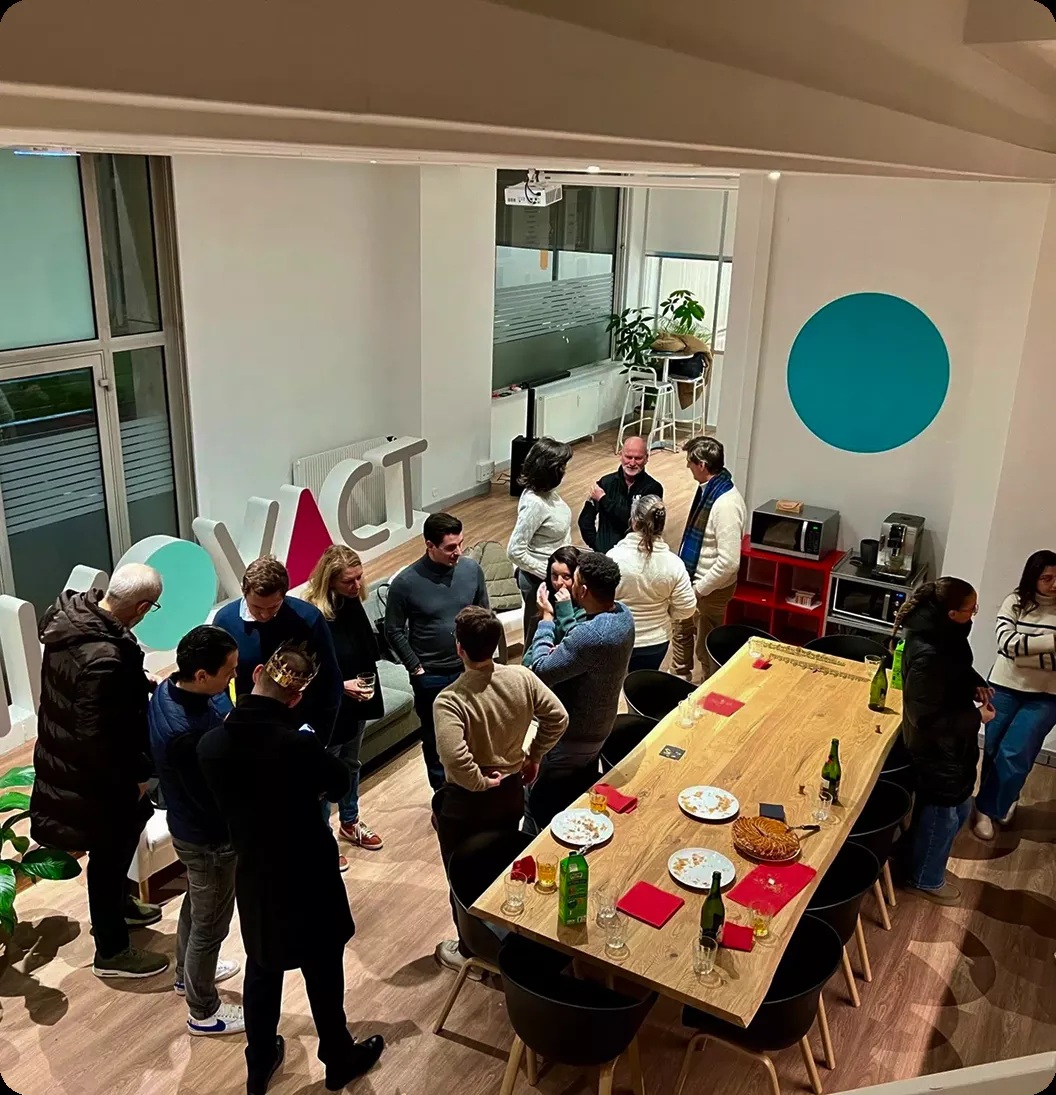
The Starter Class puts structure around the early questions. INNOVACT advertises two cohorts a year, one in spring and one in autumn, with ten places apiece. The programme runs for three months, scheduled two days per week. Topics include the value proposition, field research, pricing, business models, performance indicators, accounting, financial forecasts and the pitch deck.
The useful detail is the combination of theory and confrontation with the market. Learning the vocabulary of entrepreneurship is easy enough. Discovering that a prospective customer understands your product and still declines to buy it is more instructive. The curriculum explicitly includes that contact with the outside world, where a founder’s assumptions acquire consequences.
Support also includes individual incubation and thematic workshops. Startup managers bring entrepreneurial experience, while the wider Quest network supplies specialists across law, intellectual property, marketing, sales and industrialisation. A founder can therefore move from a general business question to a technical one without treating every new problem as a fresh search for help.
Money arrives in an order
BlueSpine joined the incubation network in 2023. In a November 2025 testimonial, chief executive David Garcia described using grants, loans and innovation competitions before beginning an equity raise. Proof of concept and first sales came first. He then described a €1 million fundraising target for industrialisation and commercial expansion, including international ambitions.
The preparation took work. Garcia described a five-month Funding Program and seven investor meetings in half a day at Investor Day. An underestimated element was the investor narrative: why raise, where should the company be in five years, and how would the money get it there? That questioning prompted a revised deck, sharper financing needs and preparation of a data room.
“Ne lève pas trop tôt. Et surtout : ne lève pas par défaut.”
David Garcia, BlueSpine CEO, November 2025
Translation: Do not raise too early. Above all, do not raise by default.
The lesson a reader can copy is the sequence: establish evidence, match financing to the next task, then explain what additional capital changes. It demands time and team capacity. Someone must keep delivering while the founder prepares and meets investors. A programme cannot compensate for a venture whose underlying market remains untested.
The laboratory is closer than it looks
INNOVACT’s sector focus covers health, bioeconomy, industry and digital innovation. Quest for Change links five territorial incubators across six Grand Est territories, with specialist support through Quest for Health, Quest for Bioeconomy and Quest for Industry. The local entrance opens onto a wider pool of expertise.
Two 2025 i-Lab laureates illustrate what those connections mean. Syntetica chemically recycles textile waste into reusable nylon; its support involved Quest for Bioeconomy and the European Centre for Biotechnology and Bioeconomy. BlueSpine diagnoses and treats infrastructure corrosion, with connections to Quest for Industry and the ROMEO computing infrastructure. These are different businesses requiring different kinds of help.
INNOVACT’s competition preparation includes expert mentoring, pitch workshops and jury simulations. Awards offer evidence of recognition, rather than a guarantee of commercial success. More revealing is the combination of research facilities, business coaching and financing preparation around companies facing expensive technical development.

A public bill, and a founder’s calendar
Public backing helps pay for this arrangement. INNOVACT names European FEDER funding, Région Grand Est, Grand Reims and CCI Marne Ardennes among its supporters. Grand Reims allocated a €165,000 subsidy for 2024. That sum is one identified contribution, rather than the incubator’s entire operating budget.
There is a founder contribution too. In February 2022, Le Parisien reported membership at €100 monthly, against INNOVACT’s stated €1,000 monthly cost of support per project. Those are historical figures. The continuing cost visible in today’s programme is time: classes, market work, financial preparation and repeated scrutiny of the business.
INNOVACT reports more than 120 startups incubated since 2018. Its larger community figures belong to the regional network. The attraction is concrete: a manager to challenge the plan, specialists to answer difficult questions and introductions that suit the project’s stage. For a founder willing to build in the Marne, that is a useful place to put an ambitious idea to work.