Before there was a global agency, there were some clothes and a problem. Ben Jeffries had started a label called Breeze as a teenager. Friends and family could buy only so much. He needed people outside his circle to care. So the Chelsea supporter approached reserve-team players, whose Twitter audiences, he recalled, numbered around 10,000 to 15,000. Would they wear the clothes and post a photograph?
- Influencer runs creator campaigns for brands and agencies.
- Its Waves software organises the work around the content.
- The useful lesson: match the creator, then measure the right thing.
The players were receptive. Jeffries saw a service other businesses might buy. It is an agreeably modest origin for a company whose clients now include Spotify, Coca-Cola and Monzo: a young entrepreneur discovering that someone else’s relationship with an audience could help his own business.
A shirt, a footballer, a useful discovery
The experiment also contained a trap. A person can be good at attracting attention without being good at building a company around it. Jeffries told an interviewer that Breeze had become overcomplicated, stretching into products from rucksacks to coffee cups. He sold off the merchandise and concentrated on the new business.
“I really didn’t need to overcomplicate things”
Ben Jeffries, recalling his early clothing business
Caspar Lee brought experience from the other side of the transaction: he had built a substantial YouTube audience himself. Today, Jeffries is CEO and Lee is chief vision officer. The UK company was incorporated in 2015; its investor dates the platform’s launch to 2017. That distinction helps explain the different birthdays attached to the business.

Spotify gives the guests something to do
Consider Spotify’s VIP programme. According to Influencer’s case study, 106 creators received early music access, behind-the-scenes material and invitations to cultural events. Over six months, the programme ran more than 30 activations. Personalised onboarding and concierge support helped creators participate.
The interesting unit here is the relationship. A single promotional post has a short working life. A programme supplies repeated occasions to make something. Spotify had experiences creators could use; Influencer organised the connection. The arrangement made participation a creative opportunity, with an operational team behind it.
Six months of reasons to participate.
Influencer reports a 90% post rate across the selected group and 37 million views from Wrapped 2024 alone. Those figures describe participation and attention. Its reported $2 million-plus in earned talent value is a valuation metric, rather than cash revenue. Keeping those categories straight makes the example more useful.

Monzo supplies a different example. To introduce The Book of Money, the bank worked with 12 creators who discussed personal financial habits, supported by a launch event and gift boxes. Influencer reports 12.8 million views and 98,800 engagements. The creative task was to make a potentially forbidding subject approachable. The creator’s usefulness was the ability to explain ordinary life, rather than merely occupy a screen.
The software is in the wings
Influencer sells the work surrounding those moments: strategy, creator selection, production, paid distribution, affiliate programmes and measurement. A client can bring a product launch or an audience problem and commission a managed campaign. An agency can bring a brief that needs specialist execution.
Waves, its proprietary system, supports that service. Teams run discovery and delivery; clients can approve creators, review content and follow results. Contracts, usage rights and international payments belong in the same workflow. These details become consequential when a campaign crosses markets or involves many people.
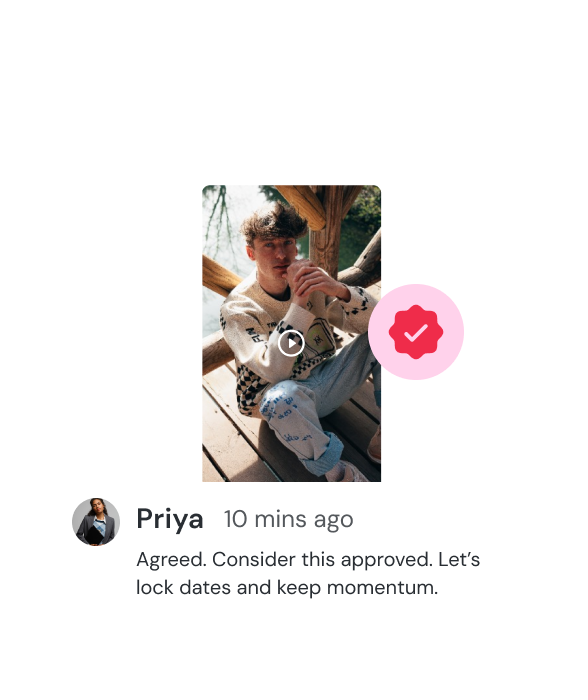
The 2021 Waves launch followed workshops with brands and agencies. Advertisers wanted greater data transparency. That is a revealing product brief: clients needed a clearer view of what they were buying and how it performed. The software grew around a trust problem.
There are alternatives. Whalar also offers creator strategy and campaign delivery. CreatorIQ supplies software for organisations managing creator programmes. Influencer’s particular package combines people who execute the work with technology they use to organise it. A buyer is choosing both a service team and its way of working.
The invoice meets the dashboard
In August 2019, Puma funds invested £3 million, announced the following month, to support technology development and international expansion. Growth had hazards. Investor reporting later described travel and hospitality clients pulling back during pandemic restrictions. Influencer responded by managing cash and pursuing business in other sectors.
The setback exposes a condition behind the model: a capable campaign team still depends on clients having reasons and budgets to advertise. More views cannot repair a cancelled travel season. Diversifying customers was a commercial response to a commercial problem.
For a buyer, the sensible starting point is a defined scope: which markets, how many deliverables, what content rights and how much paid distribution? Those decisions shape the work being commissioned. Comparing proposals on those terms is more informative than treating every creator post as an interchangeable unit.
Campaign evidence deserves the same care. Influencer’s Shark FlexStyle work used summer hair routines and festival themes. The case study reports more than 36,000 saves across 79 pieces of content. A saved tutorial suggests something worth revisiting. It does not, by itself, establish that somebody bought the tool.
- DeliveryWhat was published?
- ResponseWhat did people do?
- EffectWhat changed for the business?
An editorial guide to interpreting campaign evidence.
Now the audience includes an algorithm
In August 2026, Influencer announced Creator-First AEO with Profound. The proposed loop connects information about a brand’s appearance in AI answers with creator programmes, then measures changes in visibility and representation. Reviews, comparisons and demonstrations become material that answer engines might encounter.
It extends the company’s measurement question into another channel. The announcement describes an offering and its intended mechanism. Buyers should ask for results against their own objectives before treating that mechanism as an established return.
The lesson readers can borrow is practical. Give creators something relevant to make. Agree on approvals and rights early. Decide whether the goal is attention, understanding or purchases, then collect evidence suited to it. A small, isolated collaboration may need little of this machinery; a team already equipped to run programmes may prefer software. Influencer’s appeal grows with the coordination problem. The post is where the audience meets the work. Much of the business happens before it.