On election night in 1987, Buck McKeon went over to Carl Boyer with a question. Santa Clarita was becoming a city. The voters had chosen its first council, and McKeon had finished ahead of everyone else. Was Boyer ready to be the first mayor? Boyer turned the offer around: McKeon had come first, and the new city ought to establish a rotation. Even a government being assembled from scratch needed to decide whose turn it was.
The exchange is a useful place to meet Howard P. “Buck” McKeon. His career would eventually involve military budgets, congressional gavels and a consulting firm carrying his surname. Here, the stakes were local and the arrangements still negotiable. Before he could preside over a Washington hearing, he had to help a California city work out how to preside over itself.
There is a certain comedy in tracing a defense chairman back to a discussion about taking turns. There is also a practical connection. McKeon’s working life repeatedly brought him to institutions where people had to agree on something before anything useful could happen: a family business, a bank, a school board, a council and Congress.
A shopkeeper’s route to city hall
McKeon was born in Los Angeles on September 9, 1938, grew up in Tujunga and graduated from Verdugo Hills High School. A mission for the Church of Jesus Christ of Latter-day Saints and studies at Brigham Young University preceded the public offices. He earned his bachelor’s degree in 1985. By then, he had already spent years in business and on a school board. His diploma arrived in the middle of his working life.
The business was Howard and Phil’s Western Wear, his parents’ enterprise. McKeon helped obtain a small business loan and open a second shop. Working with his four brothers, he helped expand the operation to more than 50 locations across four Western states. Boots and hats make a more picturesque origin story than procurement hearings, but the underlying work involved financing, expansion and family cooperation.
That experience carried into community banking. He helped organize Valencia National Bank and became its first chairman, with small business lending central to the undertaking. The merchant who had needed money for a second location was now helping create an institution through which other businesses could borrow. It was a fairly direct translation of personal experience into local infrastructure.
His first elected office came on the William S. Hart Union High School District board, where he served from 1979 to 1987. The sequence matters. Education was part of McKeon’s public life before it became a congressional committee assignment. When Santa Clarita incorporated in 1987, he brought that local board experience into its inaugural council.
First, hire a city manager
Santa Clarita joined Newhall, Saugus, Valencia and Canyon Country in a new municipal government. Incorporation gave those communities an identity and an immediate list of chores. Winning cityhood was one achievement; running a city was another occupation entirely. McKeon’s fellow council members selected him as the first mayor.
Looking back for the city’s twentieth anniversary, McKeon remembered hiring its first city manager, increasing support for parks and policing, and protecting oak trees. The parks in his recollection had been uninviting, marked by graffiti. These were tangible problems. Residents could see a park improve without consulting a policy paper.
“We’d won that battle, and now we had to make a success of it.”
Buck McKeon, remembering Santa Clarita’s incorporation
His account included pride, adventure and apprehension. The admission gives the episode its human scale. A new municipality could celebrate its independence and still have to figure out whom to hire on Monday. The first council was setting precedents that later officials would inherit, including the uncomplicated idea that the mayor’s chair should circulate.
McKeon remained on the council until 1992. That year, voters elected him to represent California’s newly created 25th Congressional District. He was moving from a young city into a very old legislature, where most of the precedents had already been set and considerably fewer decisions were his to make.
Learning which chair does what
He entered the House in January 1993 and became president of its Republican freshman class. The local businessman and council member now represented a district in a national institution. He would stay for eleven terms, through January 2015. Twenty-two years offers ample opportunity to learn the difference between wanting a result and assembling the votes for it.
His congressional work developed along two tracks: education and defense. In 2006, he succeeded John Boehner as chairman of the House Education and the Workforce Committee. In 2009, he became the senior Republican on Armed Services. With the Republican House majority that followed the 2010 election, he became that committee’s chairman in 2011.
- 1979School board
- 1987City council
- 1993U.S. House
- 2015McKeon Group
Moving between education and defense also broadened the kinds of questions put before him. One committee concerned the institutions through which people learn and prepare for work. The other examined the forces, equipment and policies through which the country provides for its defense. In both rooms, legislation had to translate broad priorities into decisions other people would implement. McKeon had moved a considerable distance from local government, but he was still working through a board of colleagues.
The titles can make the ascent seem automatic. It required changes in party control, committee leadership and his own responsibilities. A chairmanship places someone at the intersection of colleagues, staff, witnesses and legislation. The gavel is the visible part. Much of the job takes place before it strikes the desk.
At the Reagan Library in March 2012, McKeon discussed a military policy rooted in Ronald Reagan’s idea of peace through strength. He favored sustaining military capability while pressing for fiscal discipline inside the Defense Department. That combination made the machinery of buying equipment a subject worthy of attention alongside the amount being spent.
The chairman asks what works
At a June 2014 acquisition hearing, McKeon asked a disarmingly practical question: what had actually worked? He had assigned vice chairman Mac Thornberry to examine management overhead, regulation and the way the Pentagon defined and purchased what it needed. The hearing invited case studies chosen by the witnesses themselves.
McKeon acknowledged the long history of unsuccessful attempts to reform defense purchasing. He then supplied a small joke about confidence that the latest attempt would be perfect. Anyone who has attended a meeting about fixing meetings will recognize the genre. The humor did not remove the problem; it made clear that he recognized its persistence.
He encouraged colleagues to ask about programs outside their usual areas. His instruction was plain: “So no question is a bad question.” For a committee dealing in specialized systems and formidable acronyms, that was a useful permission to give. Curiosity had an assigned place in the room.
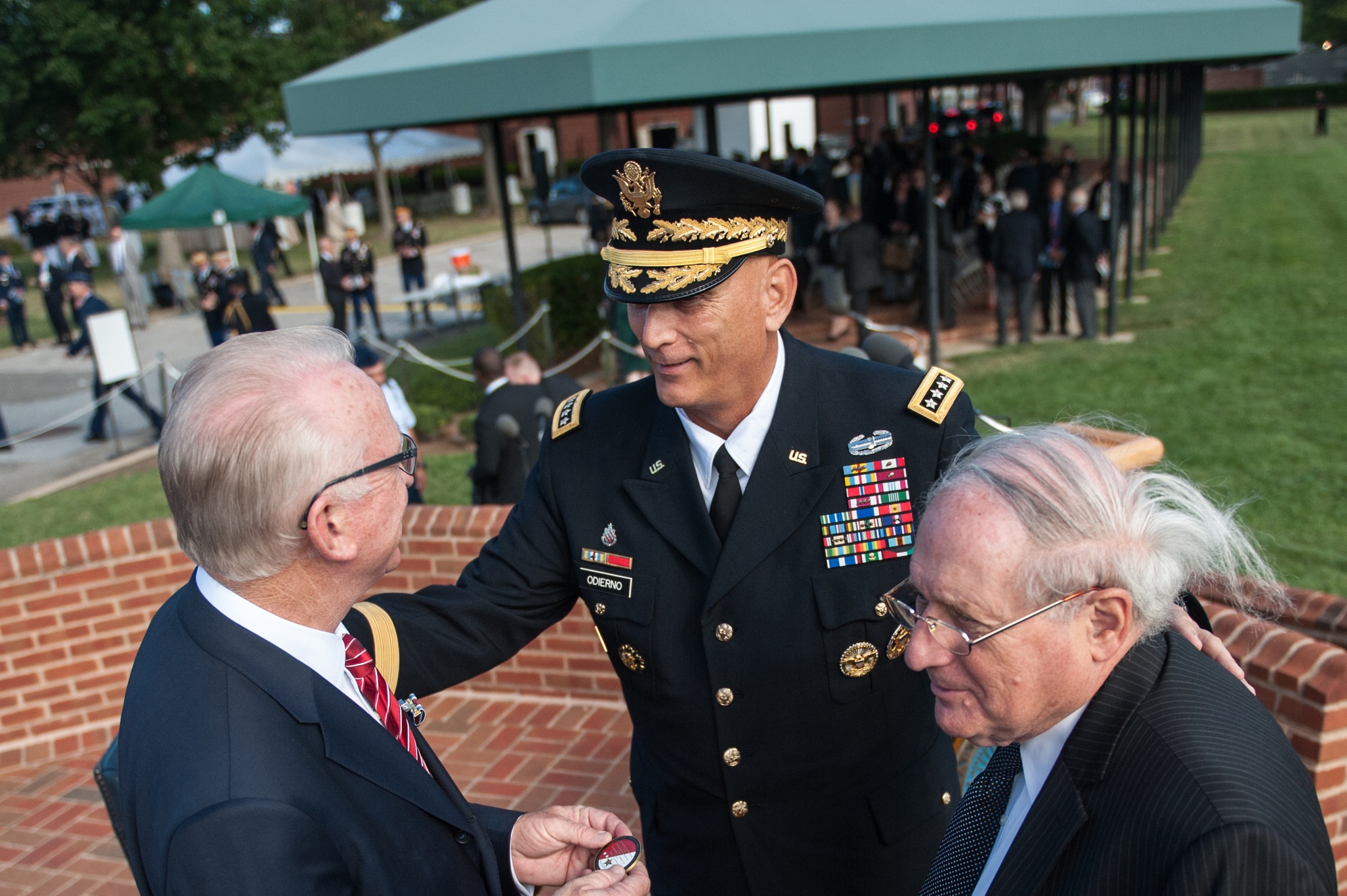
That December, the annual defense authorization became law bearing two names: Carl Levin and Howard P. “Buck” McKeon. Levin, a Michigan Democrat, chaired the Senate Armed Services Committee. The shared title put a Republican House chairman and a Democratic Senate chairman on the same legislative cover. Their parties were different; the annual bill still required the institutions to work together.
A surname becomes a business again
McKeon left Congress in January 2015. Later that year, he and his son Howard founded the McKeon Group, a government relations and political consulting firm. The family enterprise had returned in a different form. Its inventory was expertise in government, committee procedure and relationships accumulated over a long public career.
Today, the firm lists him as chairman and CEO, with Howard D. McKeon as president. Its work includes defense, education, international government affairs, critical minerals, appropriations and infrastructure. The range reaches beyond his last committee, although the education and defense practices plainly follow the two main tracks of his congressional career.
The move also changes whom a former legislator serves. A representative answers to constituents; a lobbying firm undertakes paid work for clients. The firm registered under the Foreign Agents Registration Act in November 2016. Its international practice explicitly offers clients help engaging American policymakers. That commercial use of public experience belongs in any account of his later career.
McKeon’s current business rests on the proposition that understanding government has value outside government. His career makes the proposition easy to follow. He spent years learning institutions from within, then helped establish a firm that offers that knowledge to others. The public office ended. The work around public decisions continued.
The boxes went back to college
Another part of his postcongressional life took a less commercial direction. At College of the Canyons, McKeon established an archive, a scholars award endowment and a leadership forum. The inaugural forum in November 2015 featured Marine Corps Gen. John Kelly. McKeon also spoke that fall about servant leadership.
The archive brought the material of a congressional career back to the Santa Clarita community. Correspondence, photographs, campaign material and memorabilia offer a view of politics that a list of chairmanships cannot. A career produces ceremonial moments, but it also produces boxes. Students get to examine the contents.
In July 2026, he appeared on former senator Tim Hutchinson’s Cigar Caucus podcast for a conversation about family business, entering politics and bipartisanship. Those subjects return the story to its beginning: work learned in company with other people, followed by the effort to make an institution function.
The memorable scene remains that exchange with Boyer. A newly elected council member, leading the returns, asked someone else about taking the first chair. Nearly four decades later, after two House chairmanships and another family business, the question still suits him. Who takes the seat, and what happens once the sitting down is over?