A former feed-and-grain store in Corinth, Mississippi, is an unlikely place to begin a Washington lobbying story. But Lanny Griffith’s life looks different from upstairs. He and his wife, Susan, turned the old warehouse into living quarters, with retail space below. A building that had served one generation’s commerce could serve another’s. After years spent around political institutions, Griffith had found something refreshingly literal to work on: an institution with walls.
He bought several downtown buildings and invited his friend, the designer Barry Dixon, to examine their possibilities. “My hometown of Corinth has a rich history,” Griffith said. There was affection in that explanation, and a practical proposition. Old places could have new uses. Moving away did not require losing interest. A hometown could remain a responsibility long after it ceased to be the address on a business card.
Griffith, who died on March 25, 2025, had spent decades in government and public affairs. His name supplied the middle initial in BGR Group, the Washington firm he joined in 1993. Yet the restored buildings offer a useful entrance to his story. They bring an abstract career in relationships down to street level, where a door either opens or stays shut.
The candidate was the problem
In 1969, Griffith and Haley Barbour met at Ole Miss through the College Republicans. The friendship would eventually stretch across campaigns, government service and a business partnership. Its early setting matters: they were young Republicans trying to organize in Mississippi, before either had a Washington résumé to offer. They had one another, an interest in politics and work to do.
Barbour later recalled asking Griffith to manage his 1982 Senate campaign against John Stennis. Barbour lost. Griffith’s consolation, as Barbour remembered it, was that he could have won with a better candidate. It is an excellent arrangement for a campaign manager: the defeat belongs to the man on the ballot; the joke belongs to the man who organized it.
The joke survived because the friendship did. Barbour’s remembrance of Griffith includes a striking claim: in more than 30 years together, they never argued about money. He attributed that to trust. Coming from business partners, it is a more revealing detail than a photograph of a handshake. The partnership had room for disagreement and teasing without turning every difference into a dispute about the ledger.
Before those campaigns, he had practiced law. From 1976 to 1979, he worked as an associate at Freeland and Gafford. The sequence gave his early career a professional beginning outside party headquarters, before organizing and public service came to occupy more of his time.
Griffith brought formal preparation to political work. He earned an accounting degree at the University of Mississippi in 1973 and a law degree in 1976. Accounting concerns what adds up. Law concerns what an arrangement permits. Politics, as his career would demonstrate, adds the further complication of whether anyone will agree to it.
Twenty-one efforts, one White House
His early jobs included leading the Mississippi Republican Party and working for the Republican National Committee. By the 1988 presidential election, he was George H.W. Bush’s Southern political director. His assignment covered 10 states in the Super Tuesday primaries and 11 in the general election. Bush won all 21 of those state efforts.
Those numbers describe two separate phases of a campaign, rather than 21 different states. That distinction is worth keeping: a tidy statistic should not acquire extra territory merely because it looks handsome in large type. The result nonetheless shows the scale of Griffith’s responsibilities before he entered the White House.
state victories
state victories
Two rounds of organizing. Every assigned state effort won.
On January 20, 1989, Griffith was sworn in as special assistant to the president. His work connected Bush with governors and other statewide elected officials. A campaign had carried him to the administration; the job now required dealing with people whose responsibilities extended beyond electing a president.
He helped plan Bush’s 1989 Education Summit in Charlottesville, Virginia, and worked on the development of national education goals. Bush announced his nomination as assistant secretary for intergovernmental and interagency affairs at the Department of Education in September 1991. Senate confirmation followed in February 1992. Under Secretary Lamar Alexander, Griffith worked on consensus around educational standards and testing.
His education work also crossed national borders. He represented the United States on the Education Committee of the Paris-based Organisation for Economic Co-operation and Development and co-chaired the advisory council serving as a school board for overseas dependent schools under the Department of Defense. The geographic range expanded, while the subject remained the everyday institution of a school. These assignments belong alongside the campaign record: they describe the work that followed victory, when the responsibilities grew more varied and the audience extended beyond the voters who had put Bush in office.
The titles are bureaucratic, but the assignment is recognizable. A federal official and a governor may care about the same school while answering to different constituencies. Agreement has to survive that difference. Griffith’s work sat at the junction, where national ambitions encountered the people expected to carry them out.
The middle initial takes a seat
In 1993, Griffith joined Barbour and Ed Rogers at the firm that became Barbour Griffith & Rogers. He remained part of its leadership for decades. In January 2023, the three partners gathered to celebrate his 30 years there. The anniversary photograph has the relaxed air of people who have long since stopped needing an introduction.
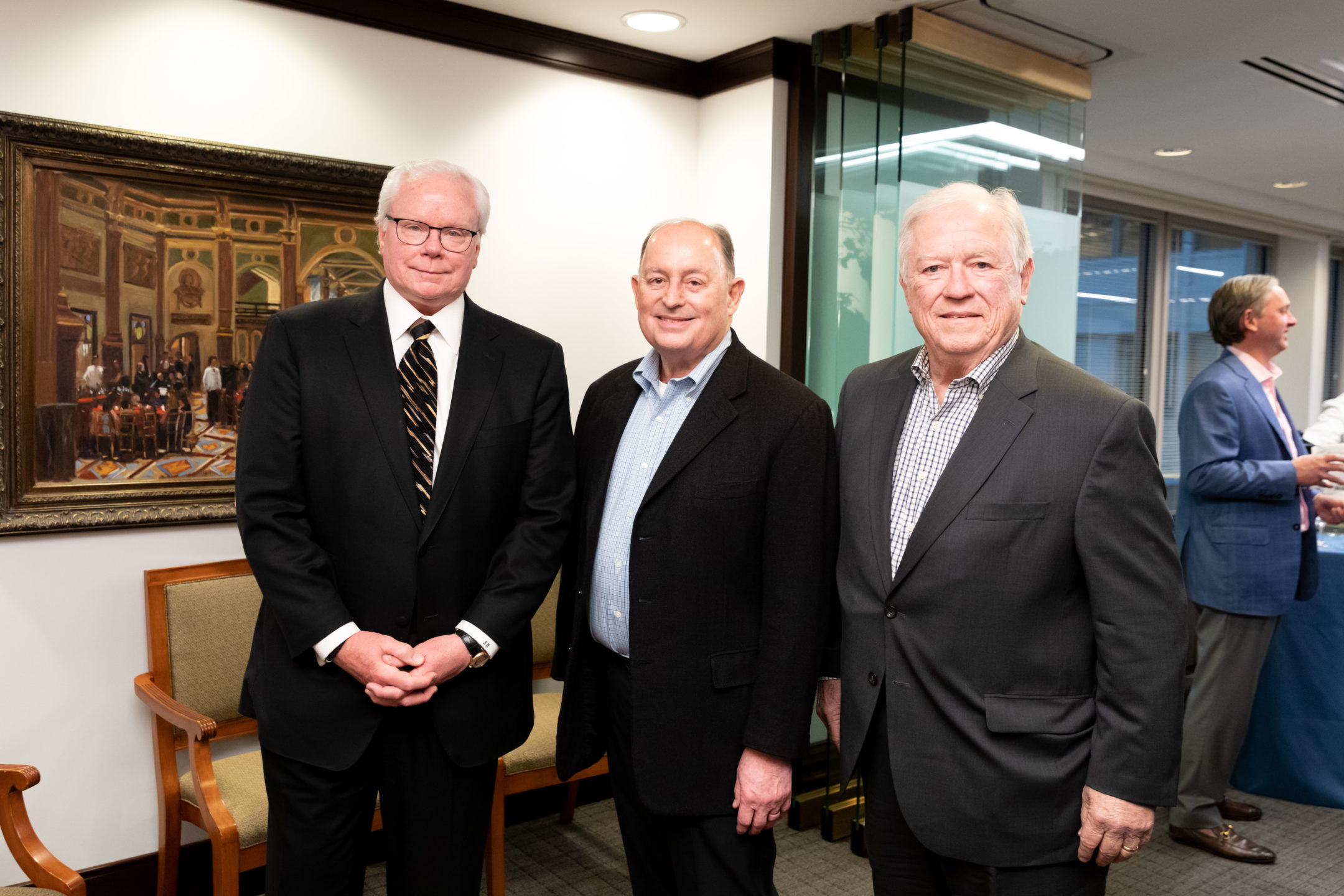
Colleagues remembered the office as a place where Griffith made time for younger staff. Katie McHenry, whom he hired in 2007, recalled mentoring, quick wit and a willingness to be teased back. Loren Monroe remembered lessons in putting clients first, long working hours, and stories that sometimes took the scenic route.
McHenry remembered that he laughed when colleagues returned the teasing. That small observation tells us something a list of appointments cannot. A senior person can enjoy making jokes while being considerably less enthusiastic about receiving them. In her account, the conversation traveled both ways.
“If you teased him back, he always laughed.”
Katie McHenry, colleague
His professional life also kept returning to the Bush family. He helped direct Jeb Bush’s transition in Florida in 1998, chaired the Bush-Cheney entertainment task force in 2000, and coordinated entertainment for the 2001 inauguration. Campaigns need votes; inaugurations need a program that starts on time. Griffith worked on both sides of the celebration.
There is a useful caution in reading a career like this. Long friendships and access explain some of a Washington consultant’s value, but they do not describe every decision or every client outcome. What the record does establish is continuity: Griffith worked across electoral organizing, government coordination, firm leadership and the practical arrangements that let public events happen.
Another old building, this time on the Mall
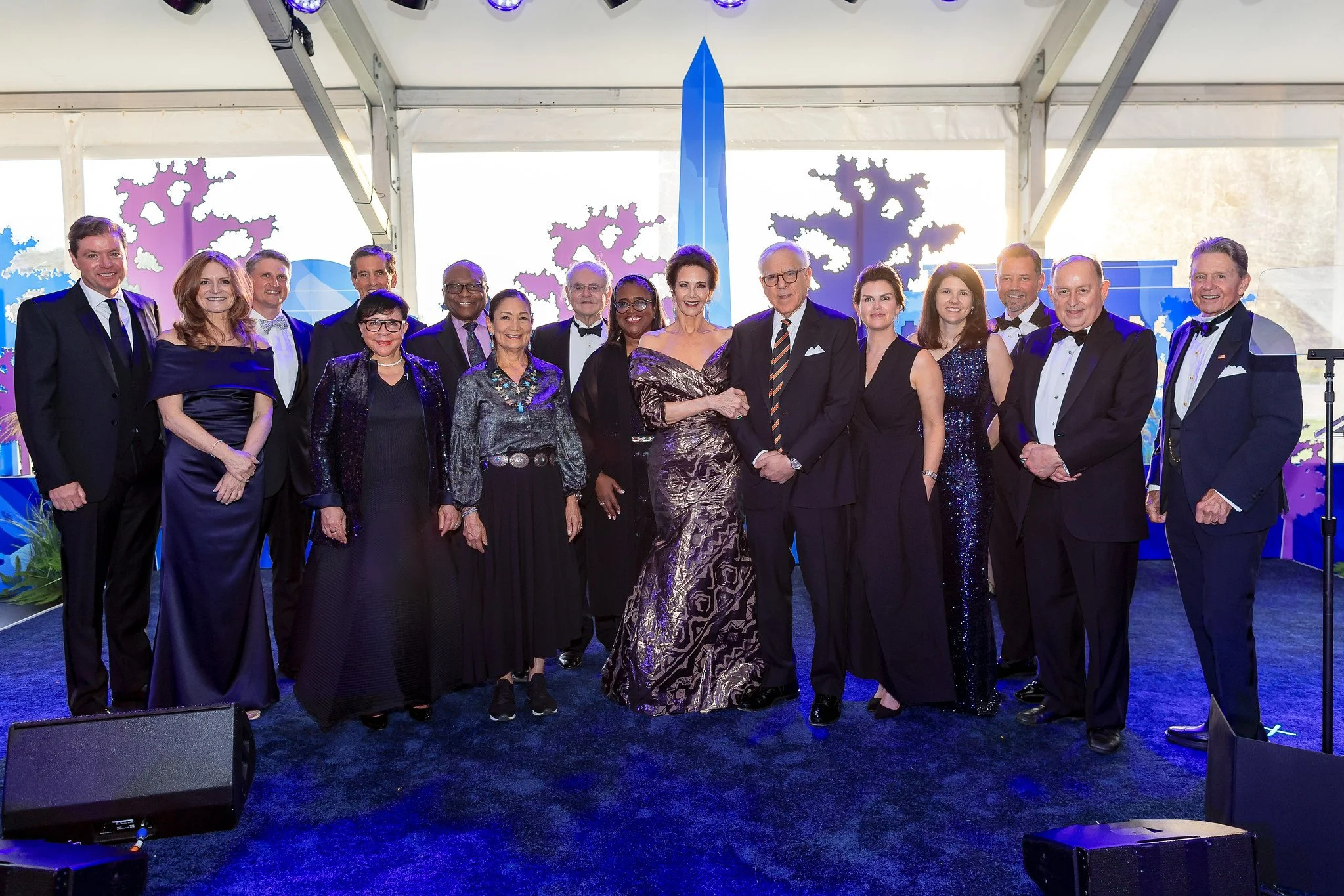
His preservation interests had a Washington counterpart. Griffith helped found the Trust for the National Mall and became its longest-serving board member. Founder John E. “Chip” Akridge III drew him into the effort. Griffith helped shape its early direction and secure the official partnership with the National Park Service in 2008.
He and Susan also supported restoration of the Lockkeeper’s House. The connection to Corinth is plain without requiring a grand theory about his motives: in both places, the Griffiths contributed to giving historic buildings a future. One setting was a Mississippi downtown; the other belonged to a landscape visited by people from across the country.
A political career can be measured in election cycles, each promising a fresh beginning. Preservation asks a different question: what is already here, and what will it take to keep it useful? The two kinds of work can occupy the same life. In Griffith’s case, they did.
His service also included the C.A.R.E. Community Foundation in Corinth and leadership at Westminster Presbyterian in Alexandria, where he lived. These commitments widen the map beyond the office. A person who spent his working life assembling groups also gave time to organizations concerned with the places he called home.
An anniversary with four hometowns on the guest list
The 30-year BGR celebration produced something with a longer life than the party: a scholarship endowment in the Griffith family’s name. By June 2024, Ole Miss described a $75,000 endowment for incoming freshmen from four Alcorn County high schools: Corinth, Alcorn Central, Kossuth and Biggersville.
Endowment supporting eligible incoming freshmen in the Sally McDonnell Barksdale Honors College.
Recipients must enroll full-time in the Sally McDonnell Barksdale Honors College, with first preference for accountancy majors. The terms make the gift unusually specific. It reaches students from the county where Griffith grew up, at the university he attended, with a preference for the discipline he first studied.
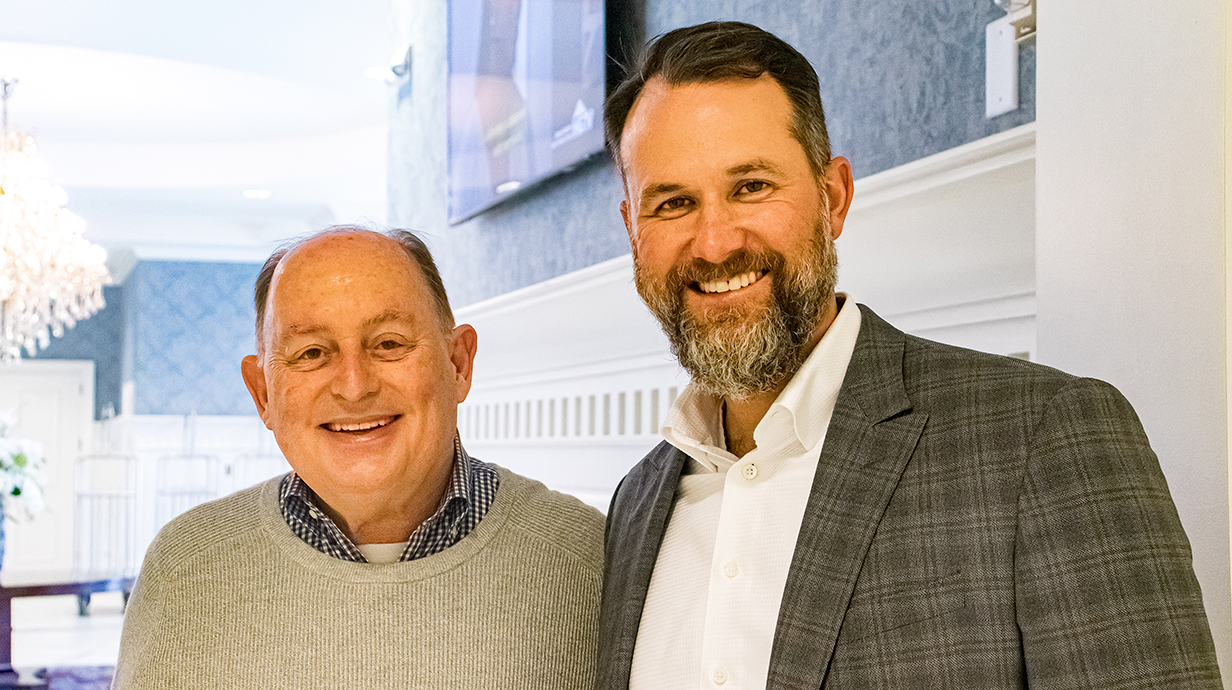
An endowment turns an occasion into a continuing obligation. The party celebrates what has happened; the scholarship makes room for someone whose story is still beginning. There is a pleasing economy to that choice. Thirty years at a firm become a chance for a student to spend a first year at college.
The pattern is visible without making every part of his life fit a slogan. Friends remembered a storyteller and host. His career shows a political organizer and executive. His civic work left restored spaces and educational support. Each view catches a different part of the same person.
Back in Corinth, the former warehouse remains a fitting image for that combination. Upstairs, a place to gather. Downstairs, a place to work. Griffith’s Washington career supplied the public résumé, but the buildings and the scholarship give his story an address beyond Washington. They leave room for other people to enter.