At 410 First Street SE, the United States Capitol is not an abstraction. It is the building up the road, a short walk away, full of offices where a single sentence can determine whether a new technology becomes a federal priority or remains a slide in somebody's pitch deck. Ervin Graves Strategy Group occupies the useful territory between those two outcomes.
The firm is a government-relations consultancy. That phrase can sound misty, so let us make it concrete. A defense manufacturer wants its system understood before the next authorization bill. A healthcare company needs officials to see how a regulation lands in practice. A cybersecurity business has technology the government may need, but no clear route through the budget. Ervin Graves helps shape the ask, identify the decision-makers, build supporting voices and carry the argument through Washington's calendar.
Its service list joins four things that are too often purchased separately: government affairs, strategic communications, coalition building, and advocacy through online, offline and earned media. The stitching is the product. A meeting without a message wastes access. A clever message without a constituency looks lonely. A coalition that arrives after the spending decisions have been framed is merely a group photograph.
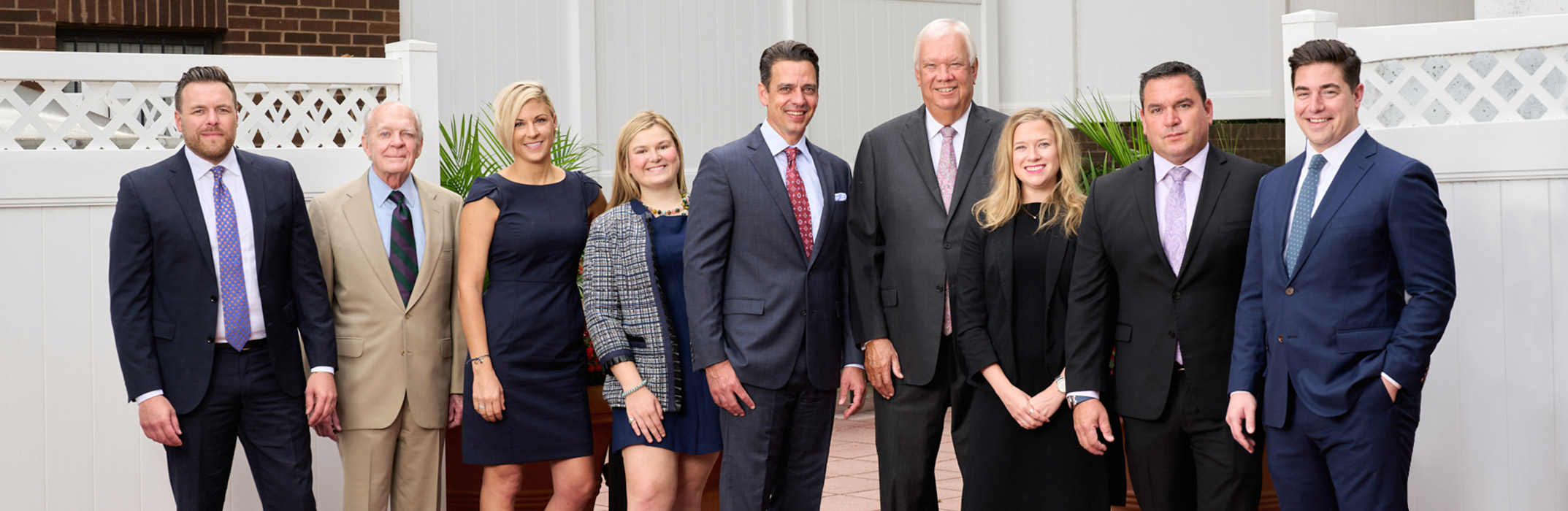
The shop behind the sentence
Jim Ervin started the original practice in 1987. The current firm took shape in late 2020, when Ervin joined forces with Tom Graves, the former Georgia state legislator and U.S. representative. One founder brought decades of government-relations work and military experience; the other had spent years inside the legislative machinery. In 2021, they put the combined name on the door and introduced a blue-and-red visual identity meant to signal bipartisanship.
That origin explains the firm's center of gravity. Federal lobbying disclosures compiled across public records show defense as its largest issue area by a wide margin, followed by homeland security, health, science and technology, budget and appropriations, and aerospace. The client record has included General Dynamics, Northrop Grumman, Coherent, Trellix, General Motors, Absolute Software, CTIA and Martin's Point Health Care. It also includes much smaller companies trying to make themselves intelligible to a very large customer: the federal government.
The market around Ervin Graves is crowded. A client can hire a large bipartisan lobbying firm, a specialist appropriations boutique, a law firm, a communications agency or an in-house government-affairs lead. The firm's answer is range without pretending every problem is the same. Its own formulation is blunt: “Every client is unique.” The tailoring matters because General Motors and a young defense-technology supplier may both care about the National Defense Authorization Act, but they do not arrive with the same credibility, constraints or definition of success.
“Good public policy isn't created in a backroom.”Ervin Graves on coalition building
What the retainer buys
Federal filings give outsiders an unusually clean peephole into the economics. In the second quarter of 2026, public records showed fees of $80,000 for Keeper Security, $60,000 for Westwin Elements, $50,000 for Trellix, and $40,000 each for Testek Solutions and Hoffman Engineering. These are reported lobbying fees for a quarter, not a universal price list and not a promise of results. They do, however, answer the impolite question: this work commonly costs tens of thousands of dollars per client per quarter.
A quarter in Washington
What sits behind those numbers is less theatrical than television lobbying. There is research: which committee, which agency, which authorization, which pot of money? There is translation: why should a policymaker care about this product beyond the product itself? There is sequencing: whom to brief before the public push begins? Then there is repetition. The idea must survive staff turnover, amendments, competing priorities and the strange compression of a congressional calendar.
The first thing to fail is translation
A founder says the platform is faster. A policymaker hears another vendor. An engineer says the material is lighter. An appropriations staffer wants to know whose mission improves, what program can use it, and why this year matters. The opening failure in many policy campaigns is not a lack of introductions. It is the inability to convert a commercial advantage into a public consequence.
Ervin Graves' mix of communications and government affairs is designed around that gap. It identifies people who already have standing in the debate - customers, trade groups, local employers, technical experts - then gives them a coordinated argument. The phrase “coalition building” can sound like arranging logos across a letterhead. Done well, it changes the perceived ownership of an issue. The request stops looking like one company's favor and starts looking like a shared problem.

The firm itself has widened that thesis over time. The 2020 combination added Graves' legislative experience to Ervin's established practice. The 2021 rebrand presented a broader, deliberately bipartisan shop. In February 2026, Ervin Graves acquired the Consilio Group, adding deeper capability in emerging health technologies, digital transformation, defense innovation, regulatory strategy and policy development. Two months later it hired Ryan White, whose background crosses Capitol Hill, the Air Force, defense technology and aerospace. The pattern is not subtle: access alone is not enough when regulation, procurement, policy and market entry arrive bundled together.
The useful parts are copyable
Most companies cannot copy the firm's congressional résumés or its years of relationships. They can copy its order of operations. Begin with a narrow outcome, not a grand desire to “raise awareness.” Learn the decision calendar before scheduling the campaign. Translate the product into the vocabulary of the institution buying or regulating it. Recruit allies with their own reasons to care. Keep direct outreach and public communications synchronized.
The pocket version
- Write the exact policy, funding or regulatory outcome in one sentence.
- Name the office that can act and the date after which action becomes harder.
- Replace product features with consequences for missions, constituents or public budgets.
- Find three credible allies whose incentives are not identical to yours.
- Measure movement in language, sponsors, meetings and procedural milestones - not applause.
There are conditions where this model will disappoint. A weak product does not become useful because a former member explains it. A request with no plausible home in law, regulation or a budget may generate meetings but little movement. A company that expects immediate certainty from a slow, contested political system has purchased the wrong instrument. And no adviser can guarantee passage, funding or procurement.
The right fit is an organization with a real policy problem, a defensible public argument and enough patience to work through the sequence. Ervin Graves sits in the middle of that sequence, close enough to the Capitol to watch the windows open and experienced enough to know that the decisive work usually happened before anyone noticed the line item.
Open another tab