Before Melissa Johnston had money to put to work, she had reports to finish. There were proposals, progress updates, performance measures and financial accounts: the paperwork that accompanies an education nonprofit’s search for support. Years later, with the power to fund other organizations, she remembered an especially revealing number. She could count on one finger how often an organization she worked for had received general operating support.
It is an unglamorous origin story for a chief executive. There is no garage, no lightning strike, no napkin destined for a display case. There is a person who has spent enough time explaining the work to wonder how much more of it might get done with a different arrangement. Johnston’s experience as a grantee became part of the design brief when she became a funder.
Today she is the founding CEO of Lemnis, a public charity whose approach includes buying education organizations and backing them for the long term. The question running through her work is practical: how do you give people the resources to serve learners now while allowing them to prepare for what comes next?
The paperwork before the power
In May 2025, Johnston wrote about the switch from receiving philanthropic support to deploying it. She recalled the effort of making an organization’s work fit a funder’s priorities. She also described asking other funders what they would change if they could begin again. Her new position came with institutional memory from the applicant’s side of the desk.
“I can count on one finger the number of times our organization received general operating support.”
Melissa Johnston, “Grantee Turns Funder,” 2025
General operating support gives an organization room to pay for the work of being an organization. The distinction can sound fussy until you consider how many useful things depend on people having time to plan, maintain systems and develop their skills. A promising project still needs a functioning home.
Johnston’s response was to make organizational support part of the offer. The idea follows a particular kind of experience: knowing both the satisfaction of winning a grant and the work that remains after the congratulations. She had spent much of her career close to that less photogenic second part.
A strategy with working hours
Johnston joined the Council of Chief State School Officers in 2003. Over more than fourteen years, her responsibilities grew through strategy and implementation, operations and the deputy executive director’s role. The work included partnerships and the everyday mechanics of keeping an education organization moving.
Her remit contained a telling detail: making sure a strategic plan actually guided staff work. An impressive document can enjoy a comfortable retirement on a shelf. Implementation requires somebody to connect it to what people do on an ordinary working day.
She arrived at that work with a BA in American Studies and Black World Studies from Miami University, followed by graduate study at the University of Chicago focused on policy analysis and nonprofit management. Her earlier experience included program roles at the Public Education Network and Reading Is Fundamental. The career accumulated around education institutions and how they operate.
In April 2018, she joined NWEA. As Chief Strategy Officer and EVP for Partnerships, she worked on strategy and relationships across the education sector. Here was a nonprofit with an earned-revenue business. Selling useful services supported its work, yet the next stage of development still raised questions about access to capital.
What a longer clock buys
In 2023, most of NWEA’s assets were sold to HMH. Johnston played a key role in that transaction. Lemnis was established that April as an independent public charity, with proceeds from the sale supporting its new work. She became its founding CEO.
The experience gave her a concrete financing problem to think about. An organization can have customers, expertise and a useful service, while still needing resources for a substantial next step. In her own account of NWEA, having a sustainable business had not removed that difficulty.
Lemnis takes its name from the lemniscate, the infinity symbol. Its focus is more bounded than its name: young people aged 10 to 26. Those years include transitions between schools, into further education and towards work. The charity’s premise is that support should follow learners through consequential changes in their lives.
Johnston has described the need for capital that can stay committed over a longer period. At Lemnis, the financing tools vary with the organization. Acquisitions bring established operations into the Collective. Grants support organizations through the Alliance, primarily via intermediaries and accelerators. Initiatives makes investments in funds and businesses.
Ownership is an especially consequential form of support. It puts the future of an organization inside the funder’s responsibilities. The Collective pairs patient capital with operational and strategic help, aiming to let its members keep developing the services learners use. The arrangement has to work after the deal announcement has disappeared from the news.
Three organizations, one practical test
In February 2026, InsideTrack became the first organization in the Lemnis Collective. It brought a history of coaching learners through decisions about education and careers. Mainstay followed in March, bringing AI-enabled student support used by more than 200 colleges and universities. In September, Lemnis announced the acquisition of Wayfinder, a provider of purpose-driven school curriculum.
The sequence makes Johnston’s approach easier to picture. A coach helps someone work through a decision. A technology platform extends an institution’s ability to reach students. A curriculum gives teachers material for developing capabilities such as collaboration and agency. Each works on a different part of the learner’s experience.
InsideTrack offers a useful view of the work behind the word “support.” Its February research announcement described a review of 36 peer-reviewed studies of coaching. The review connected effectiveness to how coaches are trained and supported. Relationships require practice, preparation and institutional attention. Simply adding a job title does not establish the conditions for good work.
Mainstay adds a different operational question: when technology reaches a student, what happens next? Its move from a public benefit corporation to a nonprofit division places that work inside Lemnis’s longer commitment. For Johnston, the attraction of AI is tied to its ability to extend useful human support.
Wayfinder moved the Collective into its first K-12 acquisition. At the September announcement, its curriculum was used by more than 1.5 million students. The subject matter includes adaptability, empathy, collaboration, agency and purpose. Those capabilities would soon have a familiar setting in Johnston’s public argument about learning: a school stage.
A roomful of people
The emphasis on relationships also turns up in Johnston’s account of leading colleagues. After a Portland gathering of the remote Lemnis central team and division leaders from Mainstay and InsideTrack, she described time spent exploring different thinking preferences and building connections. The Human Blueprint facilitated the gathering.
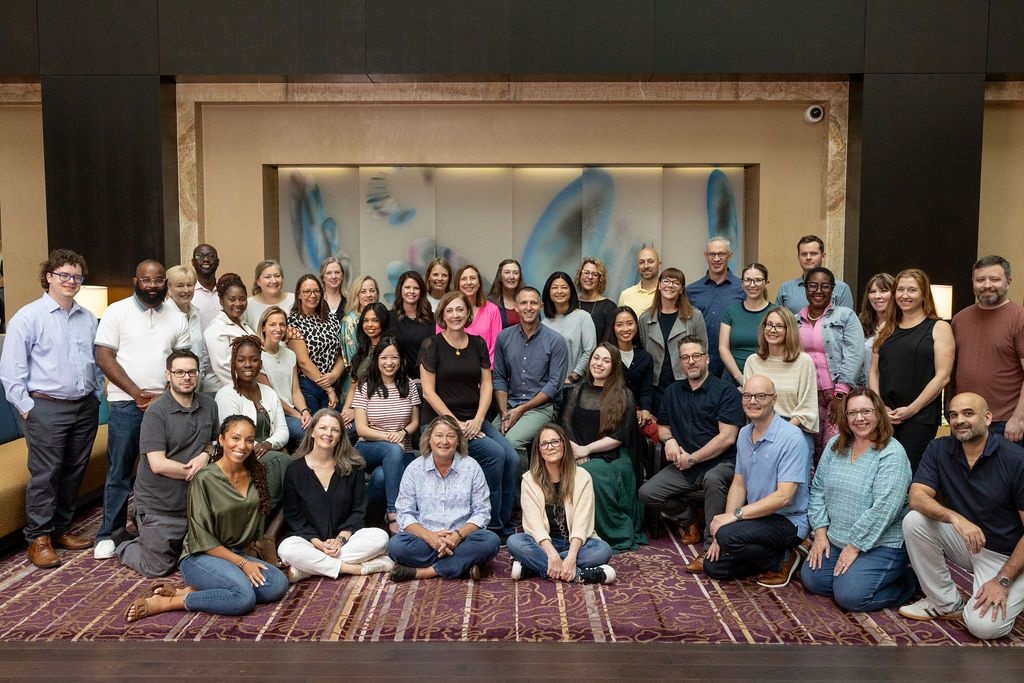
Her account included candid conversation and shared laughter. These are ordinary details, which makes them useful. A commitment to human connection has to survive contact with the people on the meeting invitation. For a remote organization, being together is itself something that requires planning.
In a leadership conversation with Kevin Mackey, Johnston’s themes included curiosity, listening and investing in relationships. Her public discussion of the job leaves room for asking questions and understanding the people an organization serves. It is a demanding standard for a leader whose professional toolkit includes both institutional strategy and acquisitions.
Pilar gets a place in the argument
Johnston lives in Rockville, Maryland, with her husband and two children. In June 2026, she offered an example from family life: her daughter had performed as Pilar in a school production of Legally Blonde: The Musical. The experience gave her a way to explain why learning outside academic subjects deserves serious attention.
She described the practical demands of putting on a show, including collaboration, taking feedback and handling mistakes. A musical is an unforgiving group project in that respect. Eventually, the curtain goes up. Other people need you to know what you are doing.
The anecdote places a parent’s observation alongside an executive’s work. Someone with years in education strategy, including at an assessment organization, is asking how to recognize capabilities that a transcript can miss. Her daughter’s experience supplied a concrete example of the skills Johnston wants education to take seriously.
There is a similar thought behind Lemnis’s attention to belonging and community. Learning happens among people, across settings and through transitions. Supporting it means paying attention to the circumstances around the lesson as well as the lesson itself.
That brings Johnston’s story back to the organizations doing the work. Coaches need preparation. Teams need time together. Curriculum needs development. A learner’s next step depends partly on whether the people around them have what they need to help. After years spent making that case to funders, Johnston now has a chance to put resources behind the answer.