There is a peculiar moment in a student's life when getting into college stops being the problem. The acceptance has arrived. Between the congratulatory letter and the first lecture, a promising future can get lost in administration. Education calls this “summer melt,” which gives a bureaucratic obstacle the charm of an ice cream cone. Mainstay built technology to help students cross that gap. In March 2026, something changed behind the technology: its owner.
- LEMNIS buys mission-aligned education organizations and supports them for the long term.
- Its 2026 acquisitions span human coaching, AI student support and PreK-12 curriculum.
- Institutions use the services; learners benefit. Grant proposals follow a separate, curated route.
The buyer with a different clock
The buyer was LEMNIS, a public charity based in Oregon. Mainstay, previously a Public Benefit Corporation, would become a nonprofit division. The significant alteration was the financial setting in which those services could develop.
LEMNIS had already brought in InsideTrack, the nonprofit learner-coaching organization, in February. In September it acquired Wayfinder, a purpose-driven curriculum business that would also become a nonprofit division.
A conventional grant can support a project. Ownership reaches into the machinery: strategy, operations, staffing and the horizon over which an organization plans. LEMNIS promises patient capital and support to businesses with educational missions and earned revenue. Its proposition is that worthwhile work should have time to mature without repeatedly auditioning for its next cheque.
A test-maker’s second act
The origin is unusually consequential. LEMNIS was founded in April 2023 following the sale of most of NWEA's assets to HMH. The organization that had helped schools measure learning turned toward investing in the conditions that make learning possible.
The financial inheritance matters. The December 2023 tax filing records approximately $907.1 million in net assets. That is a balance-sheet figure. But it helps explain why a young charity can consider becoming a durable home for established organizations.
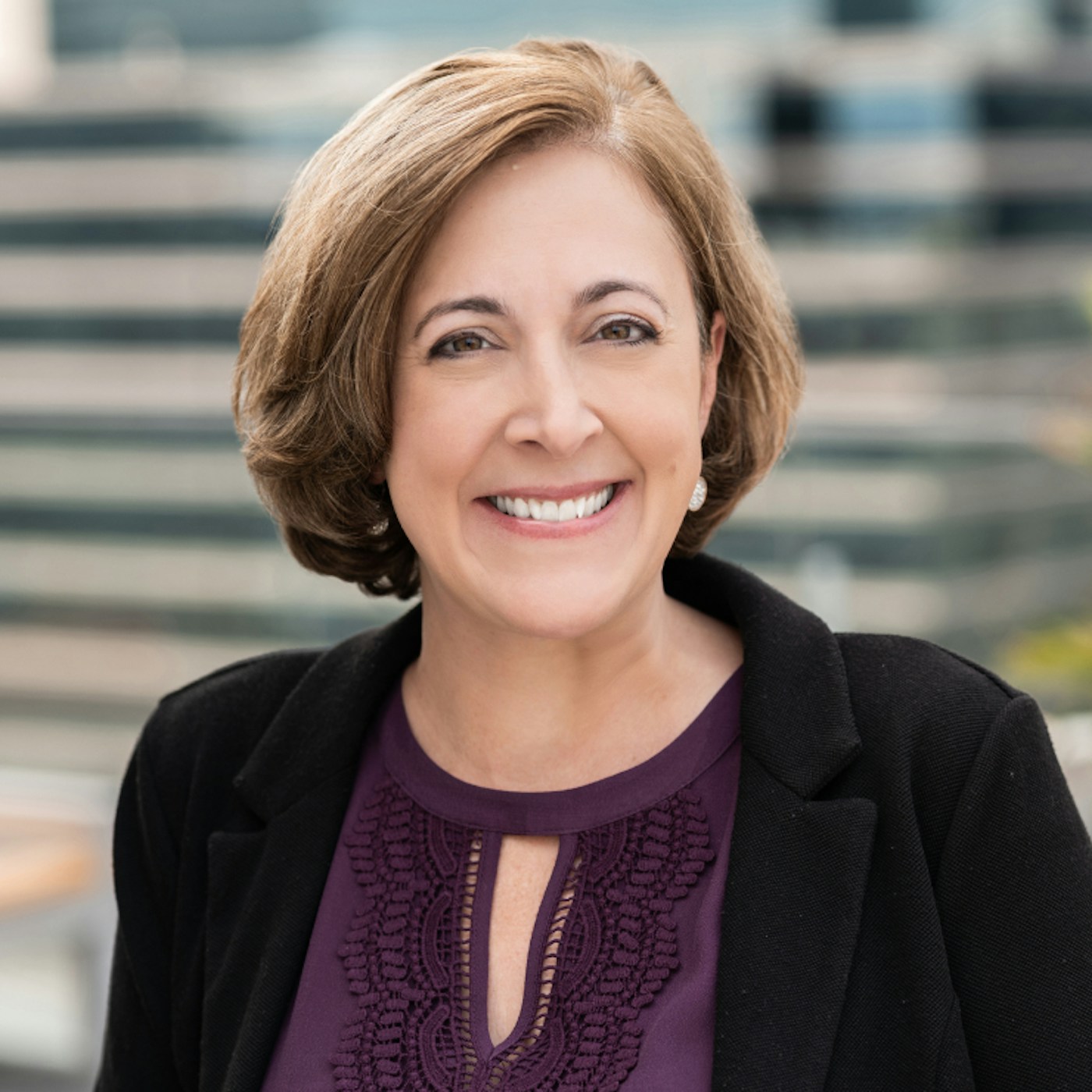
Founding CEO Melissa Johnston had been NWEA's chief strategy officer and executive vice president for partnerships, with an earlier career at the Council of Chief State School Officers. Her background places LEMNIS at the junction of education policy, institutional partnerships and transactions. The charity's name comes from the lemniscate, the infinity symbol.
Three doors into the same problem
InsideTrack supplies the human relationship. Its coaches help learners navigate enrollment, persistence, returning to education and career pathways. It also trains institutional staff to coach. The organization reports serving more than 3.6 million learners since 2001 and working with more than 425 partners. Those are cumulative figures.
Mainstay supplies communication at scale. Its current offering includes AI success coaching for students, a conversation co-pilot for staff and conversation insights for institutional leaders. More than 200 colleges and universities used its support technologies at the acquisition announcement.
Wayfinder brings the portfolio into school classrooms. Its PreK-12 curriculum combines lessons, activities and assessments around self-awareness, adaptability, empathy, collaboration, agency and purpose. Teachers, counselors and advisors deliver it; a digital platform supplies resources and tracks growth. At acquisition, Wayfinder reported reaching 1.5 million students across nearly 5,000 schools and districts. Its customers include the Hawaiʻi State Department of Education and Des Moines Public Schools.
The chatbot needs someone to call
A student asks how to drop a class. A system could answer efficiently and close the ticket. In Johnston's account of Mainstay's appeal, the useful response includes connecting that student with a counselor who can explore the reason behind the request. The difference lies in what happens after the message.
In a June 2026 interview, she put the principle plainly: “AI should enhance human connection.” Her concern is whether technology strengthens relationships and student agency. A human in the loop is part of the design.
This also explains LEMNIS's four investment interests: belonging and community; neuroscience and social sciences; AI and digital technology; and new ecosystems and supports. A reminder helps when the next step is confusing. A coach helps when the difficulty needs a conversation. A classroom activity helps when a young person needs practice understanding themselves and others.
“AI should enhance human connection.”Melissa Johnston / June 2026
Evidence has a postcode
Mainstay's early work at Georgia State University offers an instructive example. The March acquisition announcement describes a roughly 20% reduction in summer melt from its conversational AI intervention. Subsequent randomized trials examined outcomes including registration and course performance. LEMNIS is buying an organization with a research history, rather than simply buying an attractive AI label.
Wayfinder's evidence has a different shape. Its research page describes a 2021-22 evaluation using participating students and a comparison group at one high school near San Francisco. It also reports district studies and educator surveys. One school’s experience does not establish universal results.
For a buyer, the useful habit is to ask which learners were studied, what changed and what support surrounded the intervention. Staff need time to respond to the problems technology reveals. Curriculum needs a place in the school day. Patient ownership can make those conditions easier to sustain; it cannot arrange them by wishful thinking.
Who gets through the door?
LEMNIS's core focus is learners aged 10–26, though Wayfinder's curriculum begins earlier. The routes into its work are institutional. A college can explore Mainstay's engagement tools or InsideTrack's coaching. A school district can evaluate Wayfinder's curriculum and professional learning. Students encounter the support through those organizations.
The charity has two additional routes for deploying money. Alliance makes grants primarily through intermediaries and accelerators. Initiatives invests in aligned funds and for-profit organizations. Together with the acquisition-led Collective, they allow different kinds of educational work to receive different kinds of support.
An entrepreneur looking for backing should understand the distinction: LEMNIS does not accept unsolicited grant proposals. Its model depends on selection and alignment. Organizations seeking a quick financial exit or a hands-off investor would be asking this structure to serve a different purpose.
What the rest of us can borrow
The transferable idea is a question about ownership. Who pays for support, who delivers it and how long can they afford to keep improving it? LEMNIS has chosen to put established services inside a charitable structure while retaining institutional customers and operating revenue.
A district cannot reproduce that capital base. It can copy the discipline of pairing tools with people, demanding evidence relevant to its learners and budgeting for implementation. Johnston's proposed shift from “data as a report card” to “data as a conversation” captures the approach. The interesting number is the one that prompts useful action. The interesting acquisition is the one that gives that action somewhere to live.