The easiest way to misunderstand Holt Renfrew is to call it a shop. Shops move units. Holt Renfrew sells a reduction in doubt. A customer walks into a giant cream-coloured room carrying a question - which coat, whose serum, what gift, how formal - and pays for the answer along with the object. That distinction matters because nearly every label on the floor can now reach Canadians without the department store in the middle.
Holt Renfrew, usually shortened to Holts, is Canada’s privately owned luxury fashion and lifestyle retailer. Across six stores and an e-commerce site it offers women’s and men’s designer clothing, shoes, handbags, jewellery, watches, cosmetics, fragrance, grooming and gifts. Around those products sits the harder-to-copy layer: personal shoppers, alterations, made-to-measure clothing, beauty advice, cafés, events, delivery and store pickup. It serves affluent clients, aspiring luxury buyers, tourists, beauty regulars and the person who has left an important anniversary offensively late.
A fur shop learns to edit the world
The business traces its founding to 1837, when Irish-born William S. Henderson took control of a Quebec City fur shop. George Richard Renfrew joined in 1862; John Henderson Holt later supplied the other half of the modern name. Royal appointments as a furrier followed in the late 19th and early 20th centuries. By 1937, a six-storey Montreal flagship had pushed the company beyond specialist furs and into full-line fashion.
That history sounds stately until you notice how often the company changed its skin. Owners, partners, names, cities and formats came and went. Wittington Investments, the Weston family holding company, bought Holt Renfrew in 1986 and returned it to Canadian ownership. The strategic constant was not fur, a building or even a particular designer. It was the ability to interpret international luxury for a Canadian customer.
“The merchandise is global. The useful product is the edit.”YesPress analysis
That edit solves a real problem. Luxury is rich in signal and poor in clarity: hundreds of brands, seasonal drops, shifting fits, restricted distribution and prices that punish a bad decision. Holts concentrates the choice and adds people who can translate it. Its complimentary personal-shopping appointments can be held in person or virtually. A shopper can have a room prepared in advance, tour the store, arrange refreshments, alterations and delivery, then return to an adviser who remembers the context. It is less like browsing a catalogue and more like querying a well-dressed database with a pulse.
The $300 million narrowing
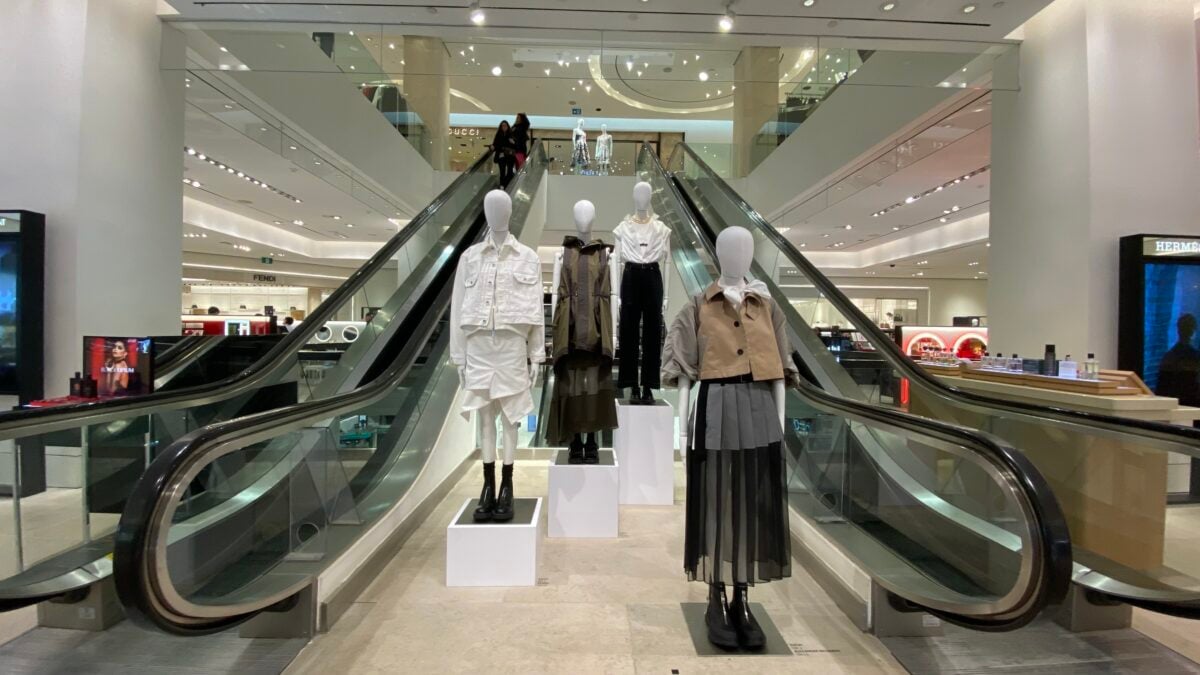
In 2014, Holt Renfrew announced a $300 million plan to expand its network’s selling area by 40 percent, from roughly 800,000 to more than 1.2 million square feet. The language was growth; the operating idea was concentration. Yorkdale’s expanded 120,000-square-foot store was the prototype. Square One, Vancouver, Calgary, Bloor Street and the enormous Montreal project were the future. Smaller stores in Winnipeg, Ottawa and Quebec City closed in 2015. Edmonton followed in 2020 after 70 years.
What did it cost? The announced network program was $300 million. In 2018 the company described more than $400 million of renovation and expansion investment across Canada. Individual projects were hardly timid: the combined Holt Renfrew Ogilvy in Montreal emerged as a roughly 250,000-square-foot store after a reported $150 million redevelopment. The original Bloor flagship, by contrast, cost about $6 million when it opened in 1979 - complete with marble, mirrored escalators and Belgian chocolates flown in twice a week.
The flagship flywheel
What failed first was the middle. A prestige chain with many modest locations could not offer the breadth, concessions and hospitality of a destination flagship, yet it still carried the fixed costs of physical retail. Holt Renfrew’s answer was not a coast-to-coast shop on every map. It was a small number of stores big enough to feel like events. The model works where wealth, density, tourism and designer demand overlap. Remove two of those conditions and the grand room becomes expensive scenery.
Digital arrived late - usefully late
The second weak seam was digital. In 2012, Holt Renfrew was remarkably fluent in attention: it had worked with bloggers since 2009, was active across social platforms and drew about 300,000 monthly website visits. But customers could not buy online. The site showed more than 1,000 products without a checkout. In 2014 the company promised an omnichannel program, with e-commerce news expected the following year.
Customer behaviour changed the argument. A beautiful store could no longer excuse a transactional dead end. Pandemic closures made remote selling, curbside pickup and cashless service immediately practical, but the broader shift was already underway. Today online orders may ship from the distribution centre or a store, and pickup is available at every location. A personal shopper can also work virtually. Digital did not replace the adviser; it removed geography and waiting from the adviser’s job.
The lesson is not that being late was clever. It left sales and customer data on the table. The useful part came after: Holt Renfrew did not reduce omnichannel to “put the catalogue on a website.” It treated inventory, fulfillment and human relationships as one experience. For a smaller retailer, the copyable version is simple: let the same employee who understands the customer send a link, reserve the item, close the purchase and arrange the handoff.
Sustainability moves onto the selling floor
Holt Renfrew’s old identity makes its environmental work especially loaded. A company built on fur stopped selling animal fur and exotic skins in 2022. More interestingly, it has tried to turn responsibility into merchandising. H Project, launched in 2013, is a department and incubator in all six stores and online. Every product must meet at least one of six criteria: circular, material, clean beauty, artisanal, charitable or innovative. Holts Sustainable Edit, launched in 2018, extends three of those signals across the wider assortment.
In 2024 the Sustainable Edit included 287 brands and generated 15 percent of product net sales. H Project added 13 brands and beat its sales goal. Beauty packaging from any brand could be dropped at all six stores through TerraCycle. REALOVE consignment pop-ups gave clothing another trip around the wardrobe. GoBolt handled next-day EV deliveries in four major markets, with 63,948 completed during the year.
The numbers need proportion. Holt Renfrew reported a 36 percent reduction in Scope 1 and 2 emissions from a 2019 baseline, toward a 65 percent reduction target for 2030. Yet Scope 3 - principally purchased goods and transport - is the much larger problem for a retailer selling other companies’ products. Better vans cannot clean up an upstream supply chain. Progress depends on brand data, verified materials, logistics partners and shoppers accepting a different assortment. The program will not work if “sustainable” becomes a vague badge, if suppliers cannot prove claims, or if customers treat the edit as a worthy corner they never buy from.
Where Holts still earns the middle
Holt Renfrew sits between luxury houses and Canadian consumers. It buys and resells goods, hosts brand concessions, operates stores and e-commerce, and uses exclusives, services and events to keep the relationship from migrating to a brand’s own site. Simons competes through broader price points and private labels. Harry Rosen has specialist authority in menswear. SSENSE offers digital range and cultural fluency. Global department stores and luxury boutiques compete for the travelling customer. The brands themselves are the most dangerous alternative because they own the product, story and increasingly the checkout.
The defence is local context. Holt Renfrew can assemble Chanel beauty, Canadian designers, a niche fragrance, denim and a restaurant in one visit. It can give a new label a national stage through H Project, or offer Levi’s a premium Canadian relaunch with exclusive items and pop-ups. Its concessions allow major brands to control the look and staffing of their spaces while benefiting from the department store’s traffic and service ecosystem. The tension never disappears: every successful concession also teaches the customer another brand relationship.
What another retailer can steal
- Cut before you decorate. Concentrate investment in locations capable of becoming destinations.
- Productize service. Name the appointment, define the handoffs and let one adviser span online and store.
- Turn values into filters. Publish criteria customers and buyers can actually use.
- Measure the unglamorous layer. Deliveries, energy, waste and supplier participation reveal more than a campaign does.
- Know the conditions. Flagships fail without dense demand; curation fails without trust; exclusives fail if the brand keeps the better inventory.
The Holt Renfrew story is not a clean triumph of heritage. It is a long negotiation with obsolescence. The company was early to social media and late to commerce, grew its floor space while shrinking its city count, and now asks a business built on consumption to help customers consume with more information. Those contradictions are the story. They also explain why the place remains useful.
A retailer cannot out-inventory the internet forever. It can, however, make choice feel intelligent, turn service into memory and make a store worth leaving home for. Holt Renfrew’s wager is that six large rooms, connected to a capable website and staffed by people with taste, can still do that. The marble is optional. The attention is not.