In the Oval Office in November 2017, Hock Tan briefly put the corporate announcement aside and talked about his mother. She could never have imagined her son standing beside an American president, he said. Then he went further back, to Malaysia in 1971, when MIT offered a scholarship to a young man whose parents could not afford to send him to college. The head of Broadcom had arrived to discuss a company's move to the United States. His explanation began with an institution that had once invested in him.
Tan called his younger self an “18-year-old skinny kid.” It was a wonderfully uncorporate description in a room arranged for corporate importance. Born in Penang, he went to Massachusetts to study engineering, earning both his bachelor's and master's degrees in mechanical engineering in 1975. An MBA at Harvard Business School followed. Long before he became associated with acquisitions, he had learned to examine how things worked, then how businesses paid for them.
Those two kinds of education make a useful way into his career. Tan's public record contains plenty of transactions, but it also contains a repeated argument about the technology inside them. He talks about customers, product generations and investment. The purchase price gets attention; the harder question arrives afterward. What have you actually bought, and what will make someone keep paying for it?
A route through cars, drinks and computers
His path to semiconductors was hardly a straight line drawn on a campus recruiting brochure. Senior management positions at General Motors and PepsiCo put him inside companies selling physical products to enormous markets. From 1983 to 1988 he ran Hume Industries in Malaysia. From 1988 to 1992 he was managing director of Pacven Investment, a venture capital fund in Singapore. He then became vice president of finance at Commodore International, serving from 1992 to 1994.
Cars, soft drinks, building materials, investment and computers: it is a pleasingly untidy apprenticeship for someone later associated with imposing order. The record establishes the breadth of those jobs, rather than a single revelation that neatly explains everything after them. What it does show is a manager crossing repeatedly between products and finance, between the United States and Southeast Asia, and between running a business and evaluating one.
At Integrated Circuit Systems, the chip company usually shortened to ICS, his responsibilities became more concentrated. He served as chief financial officer, chief operating officer and, from 1999 to 2005, president and CEO. After ICS was acquired by Integrated Device Technology, he chaired IDT's board. In March 2006 he took charge of Avago Technologies. That appointment began the leadership tenure that Broadcom now dates to 2006, even though the name on the business would change.
Buying the name on the door
The distinction matters. Tan did not found the original Broadcom. Henry Samueli and Henry Nicholas did. Tan led Avago, which agreed in May 2015 to buy Broadcom in a transaction valued at $37 billion. When the deal closed in 2016, the combined company adopted the Broadcom name and Tan remained CEO. In business biographies, the name on the door sometimes obscures who bought the building.
The announcement paired the two companies' engineering capabilities with a demanding financial ambition. It projected $750 million in annual cost savings within 18 months. Those were expectations at the time, rather than a retrospective scorecard. Still, their prominence tells you something about the assignment Tan had chosen. Combining technologies and improving the economics were part of the same proposal. Engineering quality had to survive contact with the income statement.
Over the following years, the acquisitions moved beyond chips. CA Technologies joined Broadcom in November 2018, bringing infrastructure software, including mainframe products. Symantec's enterprise security business followed in November 2019 for $10.7 billion. Tan was buying into the systems that large organizations depended on, including systems whose users might rarely think about the supplier until something stopped working. There is commercial appeal in being useful before breakfast and still necessary after everyone has gone home.
This sequence makes more sense as a map of corporate dependence than as a collection of fashionable categories. Mainframes, networking and enterprise software may occupy different departments, but they share a demanding audience: organizations with work that must keep moving. Reading the deals together, the pattern is investment in established technical capabilities with customers already attached. That is an interpretation of the acquisitions, not a claim that every purchase worked equally well.
- 2006Tan takes charge of Avago
- 2016Avago + Broadcom; Broadcom name retained
- 2018CA Technologies joins
- 2019Symantec enterprise security joins
- 2023VMware acquisition closes
Twenty-two businesses, one set of questions
Tan offered a revealing account of his method in a 2023 interview, while the VMware acquisition was still under review. “We look at it on a standalone basis,” he said of a prospective acquisition. He described 22 product divisions, each with its own management team, sharing support services. The number belongs to that moment in the company's history. The principle was more durable: a business needed to justify itself through its technology and its place in the customer's operations.
That is a less romantic account of company building than the familiar story of a founder imposing one vision on every desk. Here, the divisions could retain distinct work while operating under common financial and administrative arrangements. His account also complicates the easy picture of a buyer interested only in cutting. Tan explicitly connected the case for VMware to further investment, easier deployment and getting more customers to use its technology.
He was equally plain about the customer's role in invention. New generations of hardware, he explained, were developed in collaboration with the people who would use them. Higher speeds, greater bandwidth and lower power consumption were concrete improvements against which a product could be judged. Read together, these remarks suggest a leader who prefers a technical argument with a customer attached. A good idea needs somewhere to go after the presentation ends.
Technology first. A customer who needs it. A business that can sustain it.
An editorial reading of Tan's 2023 account of Broadcom's operating model.VMware tests the bargain
Broadcom completed its VMware acquisition on November 22, 2023. Tan's stated ambition was to help enterprises modernize private and hybrid clouds, with VMware Cloud Foundation at the center. In practical terms, the proposition was that businesses could gain more of the convenience associated with public cloud services while running infrastructure under their own control. He was trying to turn a collection of familiar enterprise tools into a more coherent purchase.
The commercial changes were substantial. Broadcom announced a simpler portfolio and the end of sales of perpetual licenses in favor of subscriptions. For Tan, simplification was part of making the technology easier to consume. For customers accustomed to buying selected components, bundles and new contract terms could alter the arithmetic. A smaller menu is convenient only if it still contains the meal you came for.
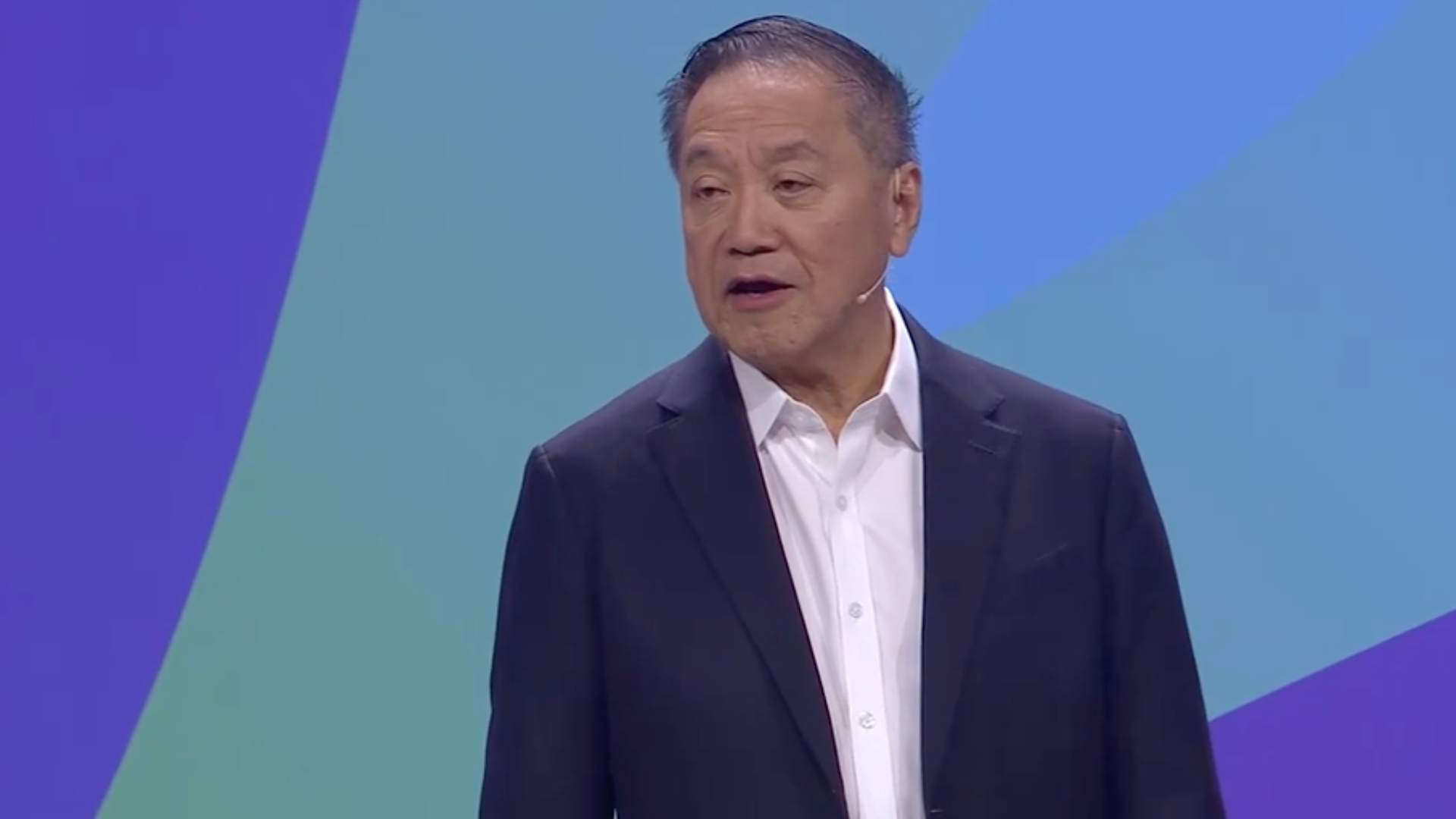
By VMware Explore in Las Vegas in August 2024, he was making his case directly to the people who operated those systems. “The future of the enterprise is private,” he declared. Private cloud, private AI and private data formed the proposition. Yet customer and analyst concerns about costs and purchasing flexibility remained visible. The result was a useful test of his approach: financial clarity for a supplier and satisfaction for a customer have to be earned together.
That tension belongs in any account of his achievements. Acquiring a technology gives a CEO authority over its direction; it does not settle the customer's judgment. Tan's public confidence is striking because he states a commercial position so directly. The response to VMware shows the work that follows such certainty: investment, migration, persuasion and the recurring decision by customers about whether the revised bargain suits them.
The engineer remembers a teacher
There is another, quieter entry in Tan's record. In 2015 he gave $4 million to endow a mechanical engineering professorship at MIT. The chair was named for Nam P. Suh, the engineer and former department head. Seth Lloyd became its inaugural holder. The gift returned money to the discipline in which Tan had first trained, and put someone else's name on the result.
It is a specific example of the gratitude he would later express at the White House. It also broadens a portrait dominated by deal values. A career can be measured in acquisitions and still contain an enduring attachment to a classroom, a department or a teacher. In 2024, the Global Semiconductor Alliance gave Tan its Dr. Morris Chang Exemplary Leadership Award. The recognition came after nearly two decades leading Avago and Broadcom, rather than at the launch of a new venture.
His connections span several generations of the industry. Samueli became part of the combined Broadcom leadership after the Avago transaction. Former Cisco chief John Chambers hosted him for a conversation in 2023; Tan publicly called Chambers a good friend. These are concrete relationships within a career built across engineering and management. They also offer a reminder that the corporate chart is only one diagram of how a technology industry works.
Now comes the bill for AI
AI has enlarged the financial questions around Tan's business. In October 2025, Broadcom and OpenAI announced a collaboration targeting 10 gigawatts of custom accelerators, with deployment planned from the second half of 2026 through the end of 2029. The announcement described a future program, not completed capacity. In April 2026, Broadcom and Meta expanded their custom-silicon relationship across multiple generations of Meta's MTIA accelerators.
That Meta agreement also changed Tan's personal position. Having joined Meta's board in 2024, he would move off it into an advisory role focused on the company's custom-silicon roadmap. Meanwhile, Broadcom's September 2026 results put quarterly AI semiconductor revenue at $16.7 billion, within total revenue of $29.6 billion. The infrastructure story had acquired a very large AI chapter, measured in reported sales as well as promises.
Then, speaking in Singapore in October 2026, Tan identified capital as the biggest constraint ahead, as wafer and memory shortages were being addressed. He also compared investors' poorly informed expectations with casino gambling. It was a sharp observation from an executive whose customers were committing to costly computing systems. Enthusiasm could generate an order book; somebody still had to finance the equipment.
The scholarship student from Penang now helps supply organizations attempting to build AI infrastructure at enormous scale. Across that distance, a recognizable question persists. Which investment will prove useful enough to justify what it costs? Tan has asked versions of it as a finance executive, a chip-company operator and an acquirer of software businesses. The latest version comes with gigawatts attached. Even then, the balance sheet gets a vote.
Total quarterly revenue