The farmer has seen the ad. He has seen the other ad, too, the one with the sunrise and the heroic corn and the promise that this particular bag of seed contains the future. He is not confused by a shortage of claims. He is deciding whether to trust the person making them. This was the quiet problem facing Channel Seed in 2019. The brand had grown, then stalled. Its message about service pleased existing customers but did not persuade prospects. So HLK, the independent agency from St. Louis, did something usefully impolite: it questioned the assignment.
The agency did not abandon advertising. It turned advertising space into advice space. Paid placements delivered agronomy guidance and practical information at moments when farmers could use it. Service was no longer a warm word floating beside a logo; it became evidence that could improve performance in the field. HLK reports that content consumption rose 151 percent, conversion reached 74 percent from 58 percent, and digital ads performed five times better. The work also earned HLK its first Effie.
The creative move was not a prettier claim. It was a more useful transaction.What “More Advice. Less Advertising.” actually changed
The business before the initials
HLK began in 1977 as Hughes Advertising. Founder Jack Hughes built the firm around client service and long relationships. Joe Leahy and Eric Karlovic later joined the ownership group, the capabilities widened, and in 2011 the name grew into HughesLeahyKarlovic. The initials won almost immediately, which is fortunate for anyone who has ever had to fit an agency credit into a corner.
Today the company is owned by seven working partners: Karlovic, now chief executive; Leahy; Alison Berry; Ben Bocklage; Emily Kircher; Shelby Georgis; and Brad Overby. It has its original headquarters in a converted warehouse south of downtown St. Louis and a second office in Chicago's West Loop. The Chicago operation opened in 2024 with 10 people in 4,000 square feet; a year later, it had 28 people and 5,800 square feet.

HLK calls itself a consultancy creating growth through movement. Strip away the agency language and the offer is broad but recognizable: brand strategy, creative campaigns, media, communications, identity, digital experiences and analytics. Newer service lines add account-based marketing and AI systems, including custom agents, predictive sentiment models and adaptive experience engines. The revenue comes from professional-services engagements - projects, retainers and agency-of-record relationships. Fees and media budgets are not published.
The repeatable part
The audience everyone left outside
Consider Ambetter. Insurers on the Affordable Care Act marketplace were competing for the same switchers, year after year, usually with price-led messages. Brand share was declining. More than 12 million Americans remained uninsured, but marketers treated them as too difficult to convert. HLK's research divided that giant abstraction into a smaller, movable audience: people stable enough to enroll who nevertheless felt that the healthcare system had left them behind. Their obstacle was not simply price. It was distrust, confusion and a lack of dignity.
That changed the strategy from stealing a rival's customer to growing the category. “Mission for Better” positioned Ambetter as an advocate and concentrated media in high-uninsured markets, with multicultural targeting and support from awareness through enrollment. HLK reports a 33 percent share of new marketplace enrollees, a 58 percent reduction in cost per lead from the prior year, and a 12 percent lift in consideration.
The distinction matters. A campaign can improve because the team writes a sharper line. A business can improve because the team finds demand where competitors have decided not to look. HLK's better work does both, but in that order.
One system beats three bottles
Envu had the opposite problem. Its Stressgard fungicides were known for plant-health benefits, but competitors had learned to make similar claims. The portfolio story was fragmented across individual products. A louder product claim would have entered a chorus. HLK instead presented Resilia, Stressgard and Fame SC as a continuous plant-health system: root protection, stress protection and core protection. Post-campaign research, according to the agency, put Stressgard back in the lead among golf-course superintendents for improving plant health.
This is the same move in different clothes. Channel's “service” became actionable advice. Ambetter's “affordability” became advocacy for an ignored audience. Envu's separate products became a system. The first version of each story was not false. It was too small to carry the decision.
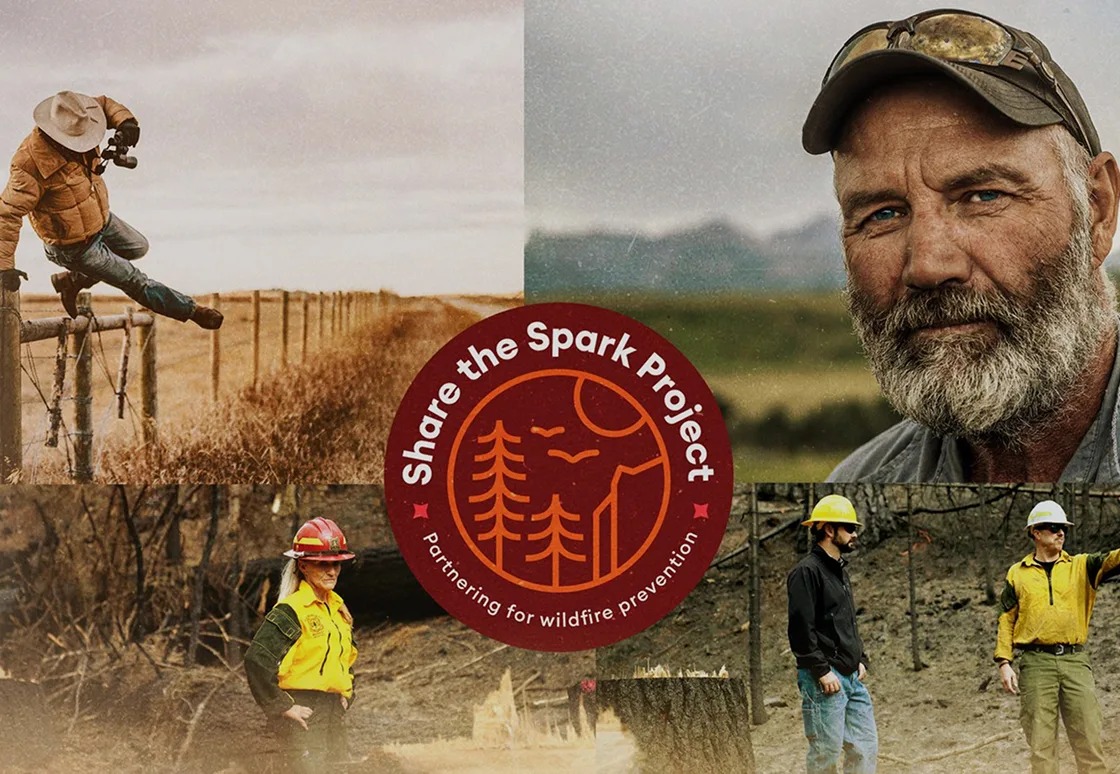
For Envu's Share the Spark project, the overlooked obstacle was paperwork. An herbicide could target cheatgrass that helps wildfires spread, and public grants could help communities pay for it, but many county weed directors and ranchers did not know the grants existed or found the process forbidding. HLK built a public-service-style campaign and an online repository of opportunities and application guidance. The first year produced 10.4 million impressions, 1.3 million video views, four times the average homepage dwell time and a 15 percent increase in subscribers.
Reported lift, selected work
What to borrow, and what must be true
The copyable lesson is not “make advice content” or “target uninsured people.” Those are answers to someone else's problem. The lesson is to interrogate the noun that everyone has agreed to use. Service. Price. Product. Awareness. Ask what the audience needs that noun to do, then look for the missing proof.
A brief worth stealing
- Write down the category's default promise in one sentence.
- Find the audience behavior that contradicts it.
- Name the practical or emotional job the promise has failed to perform.
- Build one useful experience before building a family of messages.
- Choose a business measure that can prove the reframing worked.
There are conditions. HLK's approach needs access to customers, credible research and a client willing to let the evidence revise the brief. It is especially suited to high-consideration markets, where people take time, consult experts and carry real risk into a purchase. It is less persuasive when the product cannot support the larger promise, when distribution is broken, or when a team mistakes a new frame for permission to ignore performance.
The agency's current roster makes the preference visible: agriculture, environmental science, healthcare, energy, banking, insurance and manufacturing. Sentry chose HLK after a four-month review. Pivot Bio hired it to connect product strategy, creative, PR and farmer adoption. BOK Financial gave it work across consumer, wealth, commercial and brand units, then launched “Let's Talk,” a campaign built on the observation that people will discuss almost anything before they discuss money.
Nearly 50 years after Jack Hughes opened the shop, HLK is adding AI agents to a business still organized around a very human act: noticing when the accepted explanation is not the useful one. The farmer does not need another ad. He may need a reason to believe the person who bought it understands his field.