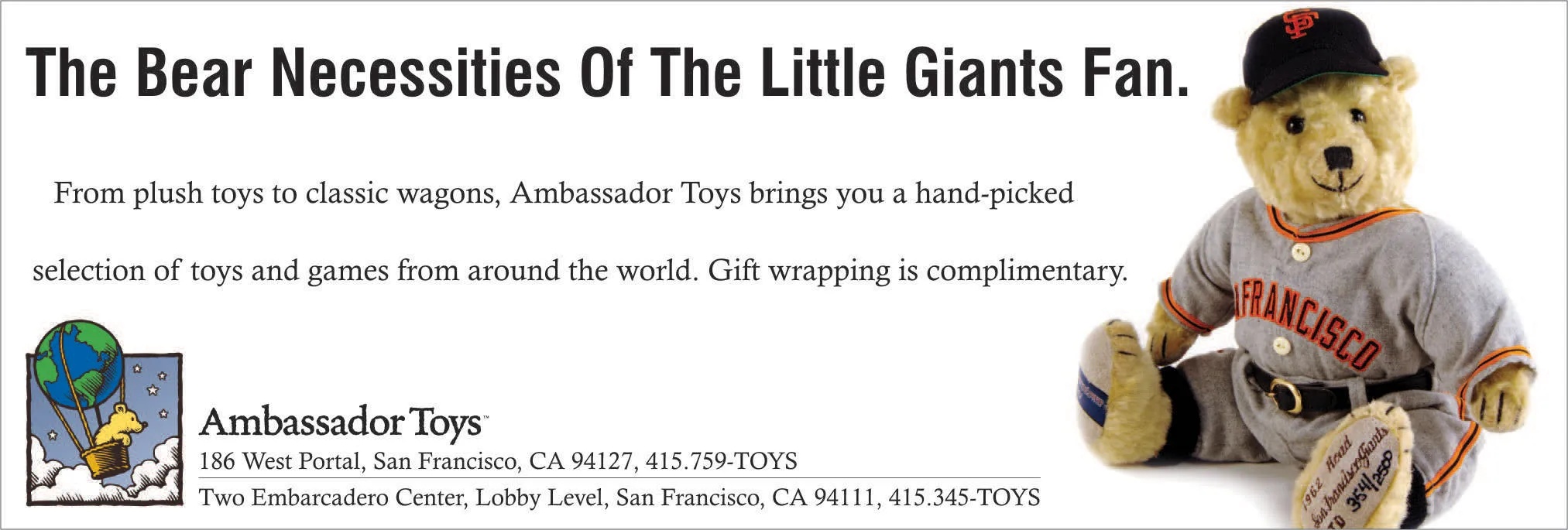
The bear is wearing San Francisco Giants gear. The headline supplies the wink. It is an ordinary enough assignment: persuade someone to buy a toy. But the interesting part of Tungsten’s work for Ambassador Toys happened before anyone wrote the line. The retailer already had advertising. What it lacked was a way for those advertisements to belong together.
In the agency’s account of the assignment, newspapers and television stations had been producing separate creative executions for the stores. Different messages. Different looks. Tungsten supplied a common voice for a retailer selling thoughtfully chosen toys. The lesson is pleasantly inconvenient for anyone eager to buy more media: first, look at what your existing advertising is adding up to.
The engineer and the parent have something in common
Tungsten is a full-service advertising agency in San Francisco. Its published capabilities cover strategy, identity, creative production, public relations and media buying. That places it in the market for companies buying an agency relationship: someone to work out what to say, make the material and help put it in front of people.
The portfolio crosses some entertaining borders. Retail sits beside satellite communications. A restaurant shares space with a financial-services book. The common problem is interpretation. A parent must understand why this toy deserves a place in the house. A technical buyer must understand why this piece of equipment deserves a place in a much more expensive system. Each needs a reason appropriate to the decision.
A satellite antenna needs more than a slogan
Consider Cobham’s Sea Tel work. Tungsten describes a worldwide brief encompassing advertising, trade shows, photography and supporting communications for maritime satellite equipment. The interesting detail is the distance between those tasks. An image in a trade magazine and a document consulted by a purchasing team may serve the same brand, but they have very different jobs.
The agency’s data-sheet portfolio recognizes that distinction. Specifications need exact language and a structure a technical reader can scan. Tungsten produced sheets for printing, trade-show distribution and electronic download. Here, creativity includes respecting the conventions that let a buyer compare products quickly. An unexpected layout can be a nuisance when someone is looking for a particular number.
An interpretation of Tungsten’s Cobham work, not a measured sales funnel.
White papers address another reading situation: a complex purchase involving people with different levels of technical knowledge. Tungsten’s examples use diagrams and visual signposts to explain maritime technologies. A finance officer and an engineer may be in the same meeting without needing the same explanation. Good communication gives both a way into the discussion.
Put the weather where it matters
A weather station presents a different challenge. Its measurements are useful, but measurements alone make a dry introduction. In its Davis Instruments work, Tungsten built videos around actual users and the situations in which they depend on weather information. One is tightrope walker Nik Wallenda.
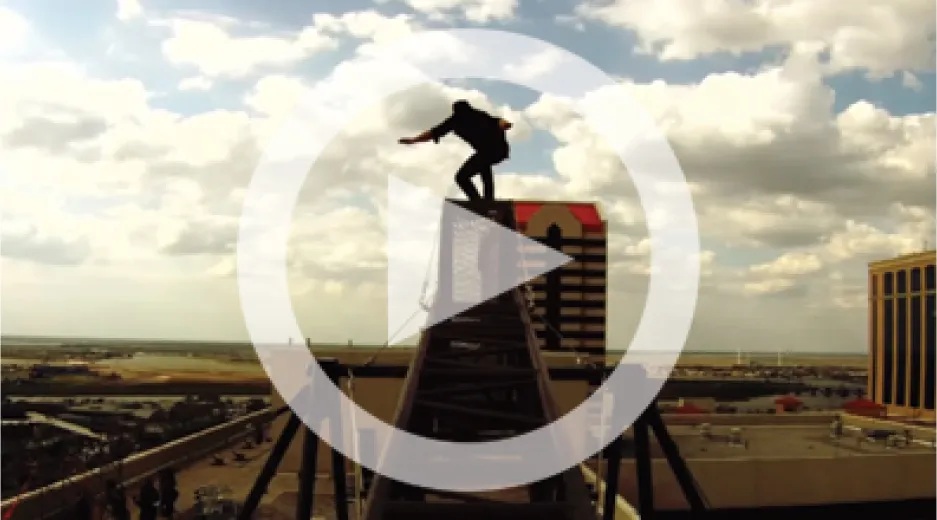
The visual does some work before the explanation arrives. A person on a wire gives weather a consequence. For another technical business, the transferable question is straightforward: where does the product’s performance become visible in someone’s life? The answer needs to be true and relevant. A spectacular setting that says little about the buyer’s problem would leave the difficult explanatory work untouched.
Four pages to lower the reader’s guard
For Pacific Equity Partners, the medium was a book. Tungsten handled design, publishing and private distribution, and commissioned cartoonist Tom Meyer to illustrate it. Four cartoon pages appeared in a 120-page volume about wealth management.
That is a small intervention with a clear purpose: give the reader an inviting route into a serious subject. It also shows the difference between having a recognizable approach and repeating an execution. The humor that fits a book need not belong in an engineering specification. The reader’s task decides how much room there is for play.
The expensive mistake can be the wrong audience
A media decision supplies another view of the agency. In its Shamann Walton case study, Tungsten describes a PAC assignment close to election day. The client suggested an Oakland broadcast station. Tungsten recommended cable advertising zoned to San Francisco, aiming to reduce spending on viewers outside the relevant geography. The spot also received a Cantonese version.
The agency reports a six-day television run. Walton won the 2018 election through ranked-choice voting; that result alone cannot establish the advertisements’ contribution. What the case does make concrete is the allocation choice. Reach beyond the useful audience can consume money without advancing the assignment. The lesson travels better than a blanket instruction to buy television: choose the territory and timing before choosing the channel.
A client relationship has a lot of ordinary Tuesdays
Tungsten dates its New Delhi Restaurant relationship to 2010. The work described includes photography, packaging, websites, publicity, social media and vehicle wraps. That range supplies a practical definition of full service. A restaurant’s public identity appears in many places, including places that would never make a television commercial.
For Friends of Alaska Marine Highway System, the website had explicit tasks: share information, support fundraising, collect petition signatures and help people contact representatives. Tungsten reports thousands of signatures and says the site was retired after an eighteen-month campaign. It is a useful reminder that a website can be built around a finite civic job rather than an indefinite demand for more traffic.
The person behind the filament
The University of San Francisco identifies Mukul Bakshi as Tungsten’s founder and an adjunct professor teaching the advertising creative process. His background includes J. Walter Thompson and Lowe & Partners. The university describes more than thirty years of advertising experience and a career informed by living in four countries.

His personal account is less institutional. He remembers discovering copywriting through a recruitment advertisement and credits Gyatso, a former creative director, with suggesting the Tungsten name. His description of agency life comes with a grin:
“Everybody’s the boss, and no one listens to me.”Mukul Bakshi, on his personal website
The name itself points to the filament in a light bulb, as the agency explains. The work makes the metaphor more practical. An idea must stay recognizable as it moves between formats, while making room for each reader’s needs. A business can start testing that principle without commissioning anything: place its ad, website and sales document together. Do they describe the same promise? Does each answer a different, necessary question? That is a useful brief to bring an agency. It is also a useful afternoon’s work.