The most consequential management book in a small North Dakota marketing agency is about growing pumpkins. This initially sounded ridiculous to Jade Scherr, founder of HexaHive. Then she tried its central idea: stop feeding every possibility equally. Find the few clients for whom your work has unusual value, remove what distracts from them, and cultivate the healthy patch. Scherr says the agency's reputation and profitability "skyrocketed." The botanical metaphor stuck.
It also explains HexaHive better than the usual agency adjectives. The Bismarck firm can make a logo, run a social campaign, build a website, buy ads, write email, design packaging and analyze the traffic. So can thousands of shops. The distinction is what HexaHive wants to do before any of that: ask what the business is actually trying to change, decide which activities deserve money, and own the work long enough to learn from it.
That sounds obvious until you watch how marketing is commonly purchased. A company asks for posts because its rival posts. It buys a new site because the old one looks old. It sponsors something because someone asked. Activity arrives before diagnosis. HexaHive's promise is to reverse the sequence.
“Businesses didn't just need more marketing - they needed the right marketing, grounded in strategy and aligned with their goals.”Jade Scherr, founder and CEO
The expensive shrug
Scherr founded HexaHive in 2019 at 23, after freelancing while working full time in marketing and design. She had studied both disciplines because she noticed designers could make handsome things without always connecting them to the result those things were meant to produce. The gap became the company: creative execution tethered to business strategy.
Its customers are organizations that have outgrown improvisation but do not necessarily want to assemble a complete internal department. The public portfolio moves from Yanish Home Solutions, a local home-improvement business, to Security First Bank, Dakota Home Care, North Dakota Safety Council, Sanford Health, trade associations and political organizations. In 2024 Scherr described the range as local family businesses through billion-dollar corporations. The common trait is not an industry. It is a management problem: marketing matters, yet ownership is fragmented, capacity is short, or the next move is unclear.
The commercial wrapper is deliberately simple: a flat monthly fee, no long-term contract and access to the whole team. Inside that relationship sit four broad capabilities - digital, design, web and strategy. This is closer to a rented marketing department than a vending machine for deliverables. It suits a client that needs several specialties coordinated around one plan. A buyer seeking a single, tightly specified artifact may prefer a specialist.
A letter beats a postcard
The best evidence for this model is not philosophical. It is slightly embarrassing to anyone who believes good marketing must look elaborate. North Dakota Safety Council needed 500 registrations for free responsible-beverage-server training before grant money expired. HexaHive built a statewide mix of social, email, mail, newspaper and radio. The campaign reported 4.1 million impressions, 1.7 million people reached and all 500 registrations ahead of schedule.
Two small findings mattered. Late in the campaign, a text-only graphic telling people to register before funding ran out beat image ads. A letter inside a plain number 10 envelope drove markedly more response than a colorful postcard. The explanation was mundane and useful: the return address belonged to a credible safety organization, and an envelope created curiosity. Taste lost to behavior.
For North Dakota Assistive, HexaHive changed who the ad was really for. The program supplied phone equipment to people with communication impairments. Instead of concentrating only on those end users, the agency addressed caregivers who could recognize the problem and help act on it. A second round kept only the two strongest ads and replaced a Facebook lead form with a direct website visit. HexaHive reports that the revised campaign tripled the first round's results, producing 380 link clicks within 852 total clicks and a 53-cent cost per result.
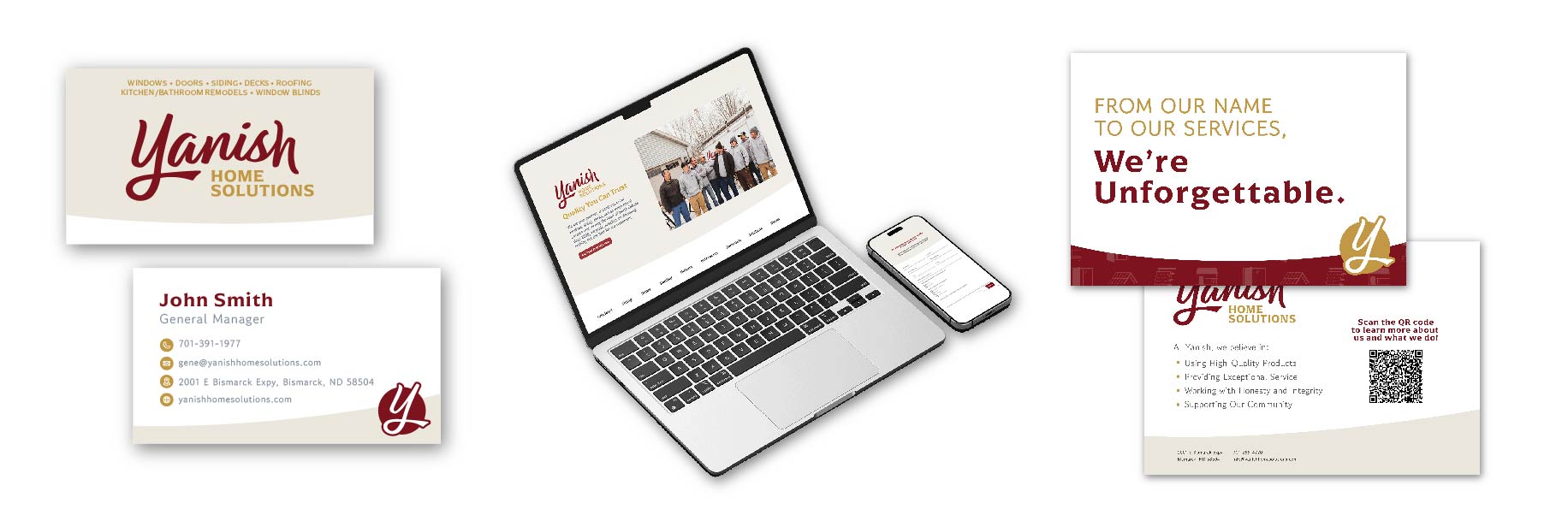
Yanish Home Solutions shows the other side of the model. HexaHive changed the name from Yanish Custom Exteriors to accommodate broader services, rebuilt and consolidated the website, improved business profiles, ran direct mail and digital advertising, supported social media, and connected lead generation to the sales team. The client went from zero or one digital lead in a month to a reported eight to twelve, while holding a 100 percent top impression rate on Google Guarantee for four consecutive months.
The cobbler finds a shoe
There is a pleasing complication. In 2025 Scherr admitted that one of HexaHive's longest-running pain points was its own marketing. The agency tried assigning it to someone on top of a core job. That person became stretched. It tried an entry-level owner who lacked direction and context. A productive arrangement dissolved when the employee moved away. Then responsibilities were divided among several people, and the work fell behind.
What failed first was not design or software. It was ownership. This is precisely the condition HexaHive says it fixes for clients. The admission gives the pitch credibility because the mechanism is painfully familiar: important work becomes everybody's secondary responsibility, which makes it nobody's primary responsibility.
Growth created other tensions. A limited North Dakota labor pool made support roles hard to fill. HexaHive hired two international remote employees through a recruiting firm. Scherr said the decision initially made her hesitate because of the agency's commitment to its local community. Speed, availability and the economics changed her mind: the roles were urgent, the arrangement kept client pricing competitive, and the pay exceeded what those hires could earn in their local markets.
By mid-2024, Scherr described a nine-person company. Public team practices include employee-led learning spotlights and peer-selected innovation recognition. HexaHive has also accumulated local validation: the 2023 Bismarck Mandan Chamber EDC Women-Owned Business of the Year award, a Better Business Bureau Spark Award, and repeated recognition as a Top 10 workplace for young professionals. These honors say more about its position in Bismarck than they do about campaign effectiveness. The case studies do the latter job.
The part worth copying
- Write the business outcome before choosing a channel.
- Name one person who owns the result, not merely a task.
- Concentrate on customers where your advantage is specific.
- Run enough of a system to learn, then let evidence overrule taste.
Where the model fits
HexaHive sits between a freelancer and a large national performance agency. Its local knowledge matters when trust, civic networks, regional media and physical mail shape the campaign. Its breadth matters when brand, website, ads and sales handoff must move together. Its flat-fee partnership works best for leaders willing to share business context, make decisions and continue measuring after launch.
The conditions are important. Strategy cannot rescue an offer nobody wants. A whole-team relationship is excessive for a clean one-off production job. A client that withholds sales data or changes direction every week will deprive the agency of its feedback loop. And regional instinct becomes less decisive when the audience, regulation and culture sit far outside the Midwest. Focus is useful partly because it defines what not to accept.
That returns us to the pumpkin patch. The lesson was never that fewer clients are morally better, or that every business should prune itself into a boutique. It was that resources grow potent when concentrated. HexaHive's strongest work follows the same pattern at campaign scale: two ads instead of many, a caregiver instead of everyone, a plain envelope instead of a prettier object, one accountable owner instead of a committee. The agency sells many services. Its actual product is the decision to stop guessing.
Keep following the hive
Explore the company, its work and Jade Scherr's 47-minute conversation about building strategy-led campaigns and scaling an agency.