A camera can tell you that something has changed. Persuading an organisation to do something about it is a longer conversation. Hanno Blankenstein has spent years working in that interval: between the picture and the decision, between the interesting demonstration and the maintenance job somebody actually approves. It is an unglamorous place to build an artificial intelligence company. There are permits here. And work orders. The future, it turns out, has paperwork.
Blankenstein is the Sydney-based co-founder and Group CEO of Unleash live, a business applying computer vision to infrastructure and industrial operations. His subject is the physical world: poles, blades, rail platforms, equipment. These things have the unfortunate habit of continuing to exist after a presentation ends. They need inspecting again tomorrow.
His career has carried him through telecommunications, consulting, strategic design and venture building. The thread is an interest in making technology useful across distance. The question running through his work is disarmingly ordinary: when the person who needs to decide is somewhere else, how do you show them what matters?
A childhood spent improving the cockpit
Long before industrial inspections, there was Microsoft Flight Simulator. Growing up, Blankenstein wrote a plug-in for the program and later sold it to Microsoft. Aviation supplied both a fascination and something to make. For a young programmer, that is a pleasing arrangement: an excuse to spend more time with aircraft without first acquiring an aircraft.
He has described Unleash live as a way of bringing that early interest together with technical experience accumulated over his career. The connection runs deeper than the sight of a drone. Aviation makes information practical. A reading has to help someone judge conditions and decide what to do next. An attractive instrument that supplies the wrong information is an expensive decoration.
He earned an MBA at Duke University’s Fuqua School of Business. The combination of coding and business training would recur throughout his working life. He could discuss a product’s mechanics, then consider the organisation expected to buy it. Both conversations would prove necessary.
The route through the telephone
His early career included consulting at Booz Allen Hamilton and leadership roles at Vodafone. At the telecoms company, his responsibilities covered strategy and innovation: business models, partnerships and the process of taking an idea toward a product. Later, as CEO of Pocketweb, he worked on location-based services for web and mobile users.
In each setting, the machinery was only part of the job. A network needs customers; a service needs a reason to be used. Product innovation requires someone to work through partnerships, commercial choices and the awkward transition from a promising prototype to something people depend upon. His subsequent move into design put those questions closer to the centre of his work.
At S&C, he was joint CEO alongside Michael Priddis. In July 2014, Boston Consulting Group acquired the Sydney design firm. S&C became the founding team for BCG Digital Ventures in Asia, and Blankenstein went on to serve as a partner and managing director of that regional business.
S&C approached products and services through human-centred design. Its clients included established businesses with plenty of machinery already in motion. That is useful preparation for selling to an industrial operator. A customer’s existing habits, responsibilities and systems do not evaporate because a new product has arrived. Software must find its place among them.
A sports coach and an aviation buff
Unleash live brought together two different routes to the same difficulty. Co-founder Jason Grier came from sports coaching, where observation and performance analysis are everyday work. Blankenstein had worked on autonomous-driving problems with BMW and Toyota in Silicon Valley. Both had encountered the effort involved in turning visual material into structured information.
The pairing offered an unusual starting point. A rugby field and an industrial site do not look much alike, but both can produce more footage than a person can conveniently examine. Recording creates a new task: someone must find the relevant moment, interpret it and pass it on. More cameras can make that task larger.
The founders began building a platform to bring video together, analyse it and connect the findings to enterprise workflows. The ambition was to make observation useful while there was still time to act. A video archive is helpful when you know what you are looking for. A live operation also needs help deciding where to look.
“We believe video is the most powerful digital sensor.”
Hanno Blankenstein, 2018
That description explains his choice of raw material. A camera can observe several conditions in the same scene. The commercial problem is extracting the relevant detail and getting it to the right place without requiring another person to watch an endless screen.
Early work with AWS and NVIDIA addressed the computing demands of analysing live streams. Behind the simple act of opening a feed sat encryption, routing, storage and substantial processing. Blankenstein was building for people separated by geography and job function. A field team and a head office needed a shared view, available quickly enough to influence the work.
- 01 / ObserveCamera captures the asset
- 02 / InterpretComputer vision flags a finding
- 03 / DecideAn operator reviews the context
- 04 / ActThe finding enters the work system
An explanatory workflow, from visual capture to operational action.
The crosswalk is a useful test
In Sacramento, Unleash live worked on counting pedestrians at crosswalks. The city wanted better information about where people crossed and how existing crossings were used. Gathering those counts manually consumed staff time. Video analysis offered another way to collect the information needed for placement and signage decisions.
It is a modest example with a revealing quality. The object of the exercise was a better street decision. The technology had to answer a defined question for someone with a defined responsibility. That relationship between observation and responsibility would become increasingly explicit in Blankenstein’s account of industrial AI.
He also understood that his own company could not build every useful application. By 2021, Unleash live was developing an AI app store, opening the platform to other computer-vision developers and researchers. Different assets require different kinds of analysis. A platform that can accommodate those differences has room to grow without pretending that one algorithm understands everything.
Capital arrives. The equipment still needs checking.
A 2021 Series A brought A$8 million, led by SafetyCulture, with Roger Allen’s investment group participating. SafetyCulture founder Luke Anear was announced as a board addition. The relationship connected Unleash live with another Australian software business concerned with how work happens in the field.
In 2025, Unleash live announced a further A$17 million Series B to support international expansion and product development. Its markets included Australia, North America and Europe. For Blankenstein, the investment supported a business dealing with infrastructure whose upkeep cannot be postponed simply because raising money has become difficult.
Amounts raised in each round. Series A led by SafetyCulture; Series B supported further global expansion.
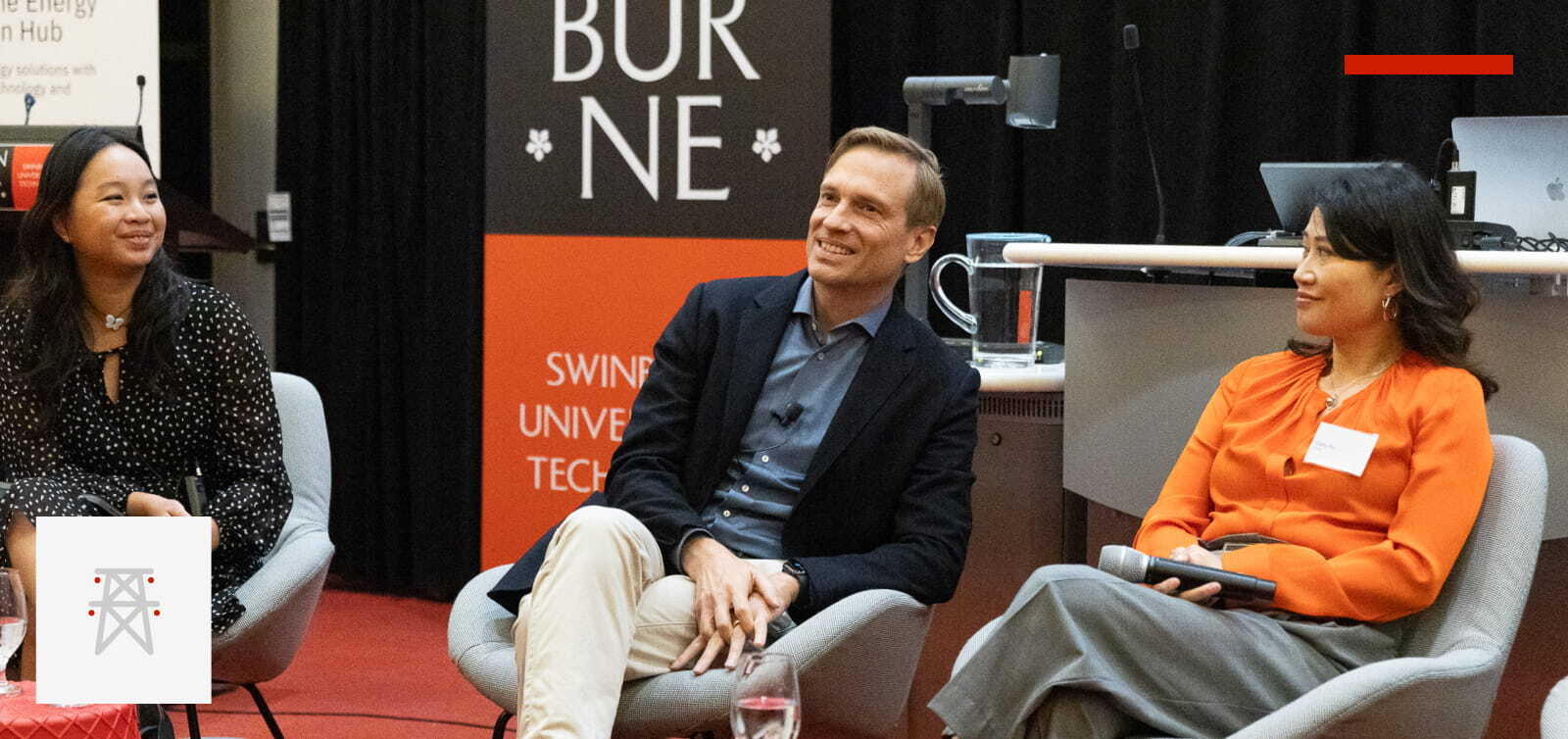
That May, he delivered a keynote and joined a panel at the Siemens Swinburne Energy Transition Hub in Melbourne. The discussion concerned energy systems and the role of visual data in keeping them resilient. More than 150 people attended. It was an appropriate setting for a founder whose business depends on cooperation between software developers and people responsible for expensive physical assets.
Recognition followed in several forms. Unleash live and Worley won the 2025 Australian Financial Review AI Award for Productivity and Efficiency, with wind-turbine inspection work central to the result. Forbes Asia included the company in its 100 to Watch. Later that year came an Australian AI Award for Responsible AI. These were company achievements, built by teams and partners around a shared operational problem.
The engineer gets a vote
By September 2026, Blankenstein’s public reflections were increasingly concerned with what happens after a detection. At MAINSTREAM in Melbourne, he spent two days talking with asset managers and engineers. Their concerns included moving from pilots into ordinary operations, and making findings travel through the systems already used on site.
That is a substantial change of scale. A successful demonstration can have one enthusiastic sponsor and a carefully chosen problem. An operating business has different shifts, maintenance arrangements and approval processes. Replicating software is comparatively easy. Getting separate sites to respond consistently requires attention to how people actually work.
At Siemens Ignite, he argued for earning engineers’ confidence through processes they already understand. The proposition has a certain courtesy about it. People responsible for industrial equipment have reasons to ask difficult questions. They are accountable for the result. Evidence gathered under real conditions gives them something firmer to work with than an appealing forecast.
Still building toward the next decision
There is a personal consistency here. Blankenstein has named Leonardo da Vinci as an inspiration, particularly for combining technical and creative disciplines. Yet his advice to aspiring founders includes the administrative work required to keep a young company moving. Flying machines and forms occupy the same career. It is a useful antidote to the idea that imagination excuses a person from finishing the dull parts.
He has also emphasised patience in finding employees, advisers and mentors. His work extends into industry networks, including the German-Australian Chamber’s advisory committee and participation in the National AI Centre’s AI at Scale discussions. Building the company involves people who understand the equipment, the software and the institutions around both.
In a reflection published on 24 September 2026, he returned to the challenge of detecting infrastructure risk early. He described a next phase of continuous and automated visual intelligence, with operators moving toward consistent use across their assets. His account of the past decade placed particular weight on earning trust through deployments in the field.
The young aviation enthusiast improved a simulated cockpit. The executive now works on helping people see conditions across real infrastructure. The distance between those projects is considerable, but the instinct is recognisable: make the information useful to the person at the controls. Then stay long enough to see what they do with it.