A customer can leave a company without making a sound. No furious letter. No demand for the manager. No wonderfully quotable complaint for the next staff meeting. For Hamid Farooqui, who has built businesses around helping organizations collect feedback, that silence has become a problem worth examining. The person who never answers may be carrying precisely the information a company needs.
It is an interesting place for the co-founder and CEO of Sogolytics to arrive. His working life has included corporate travel software, communication tools for schools, and online surveys for businesses. Each promises to make information easier to exchange. Yet the exchange remains stubbornly human: somebody has to volunteer an answer, somebody has to understand it, and somebody has to care enough to respond.
Farooqui’s recent argument is that companies should also connect what customers say with what they do. Waiting for everyone to explain themselves leaves too much to chance. The engineer who helped put questionnaires online is now asking how much of the conversation happens outside them.
C++ before customer experience
His route into software began elsewhere. Born in Mumbai, Farooqui spent part of his childhood in Kakrahta, his family’s ancestral village in the Azamgarh district, before returning to the city. Engineering studies in India led to work at Mahindra and then a planning job at a glass factory in Dubai. He subsequently moved to the United States to study computer science at Binghamton University.
That change of discipline matters to the story. A planning engineer already has reason to think about dependencies: what must happen first, what blocks the next step, how a local problem travels through a larger operation. Software gave him another medium in which to work on those questions. His next employer would provide a particularly intricate setting.
At Oracle’s e-Travel business, Farooqui was an early member of the team that designed, built, and launched a corporate travel tool. He worked with C++ and the Wireless Application Protocol, known as WAP, from the period when putting business functions on mobile devices involved rather more patience than opening an app. He later became the division’s Director of Engineering.
The work extended beyond building a product. Following Amadeus’s acquisition of e-Travel, he led the integration of technology platforms across the United States and Europe. Acquisitions have a neat date on a press release; making the underlying systems cooperate is a longer assignment. That experience placed him at the junction of software architecture, teams, and the practical needs of a business.
Travel software and platform integration.
Communication between schools and those they serve.
Feedback tools for customers and employees.
The school gate, then the corporate door
With K12 Insight, which he co-founded and where he serves as CTO, the problem became communication between educators and their communities. Parents, teachers, students, and staff each encounter a school differently. Giving those groups a way to be heard creates a demanding design brief: a system has to work for the organization running it and for people who have little reason to study its instructions.
Farooqui has described noticing how feedback still depended on paper forms and telephone calls. Those methods constrained how many people an organization could reach. He saw an opportunity to apply cloud software to the exchange, first in education and then more broadly. Product development for SoGoSurvey began in 2012; the company launched in 2013 with co-founder Suhail Farooqui.
In a school, the distance between an institution and its community is easy to recognize. A family may have a question; a teacher may have a different account of the same event. Listening requires a way to receive both. That setting helps explain why communication tools belong in Farooqui’s story alongside analytical ones. The person sending information needs an accessible route into the organization. The person receiving it needs enough context to handle it. Those requirements travel well beyond the school gate.
The dates capture a useful interval. There was a period of building before the public launch, and an existing body of experience before the new company. Farooqui entered a survey market with established competitors. His answer was a combination of capable analysis and a price customers could accommodate, rather than the assumption that putting a form on the internet would be enough.
The challenge also stretched his engineering remit. He has said the company hired specialists in survey research and statistics to tackle prediction. Collecting responses and drawing a defensible conclusion require different skills. A software team can make a question mandatory; it cannot make the question wise by adding a red asterisk.
The engineers and the crowded room
Farooqui has been unusually direct about the consequences of a product-led upbringing. In his account, the engineers kept concentrating on what they could build, while marketing received less attention. Competitors with a stronger appetite for promotion became more visible. This is a familiar predicament for a technically minded founder: improving the thing can feel much more concrete than explaining why a stranger should try it.
“We’re a product-focused company, founded by engineers.”
Hamid Farooqui · 2022
His own analogy was an unfamiliar restaurant whose food surprises the people who find it. The comparison is revealing. It locates his confidence in the experience after arrival. It also quietly admits the difficulty of getting anyone through the door. An empty reservation book offers limited consolation to the chef who knows dinner would have been good.
There was commercial substance behind the product emphasis. In 2019, Farooqui described security as a concern present from the beginning. He also explained why enterprise customers would pay when free survey products existed: they needed onboarding, tailored assistance, and support alongside the software. The purchase included help making the product useful inside a particular organization.
Farooqui said revenue had roughly doubled in 2018. He described reinvesting revenue in growth and said the business had taken no outside funding at that point.
That account offers a view of his operating priorities at the time. Money coming in could finance the next round of building and selling. The free tier provided a route for people to test the platform, while larger customers could work with the sales team on their requirements. Different customers needed different amounts of help before an answer on a screen became useful work.
A form is the beginning of the work
By 2022, SoGoSurvey had become Sogolytics, a name suited to an offering that had expanded into experience management. The distinction is practical. A business may begin by asking how satisfied someone is, then need to understand the interaction behind the score and arrange a response. Each additional step brings more people and more responsibility into the process.
Consider the hotel example Farooqui has used to explain the idea. A poor guest rating can trigger attention from a manager while there is still an opportunity to address the problem. A positive response can prompt a thank-you and an invitation to leave a review. The value depends on what happens after the answer arrives. A survey left unread has impeccable manners: it never interrupts anybody.
- 01AskA relevant question
- 02UnderstandContext behind the reply
- 03AssignA person to follow up
- 04ActA response that matters
The company’s stated values include security, quality, creativity, and service. They fit together particularly closely in this business. People are being asked to entrust an organization with their judgments; the organization is being asked to use those judgments responsibly. A clever interface can ease the exchange. The wider relationship determines whether people want to participate again.
Room for people, room for revision
Farooqui describes himself as a careful business planner who is more spontaneous away from work. Once, he recalled, he arrived in Beijing and arranged his accommodation from the airport. His approach to employees allows space too: he prefers giving people responsibility, stepping into the details when the work needs closer attention.
He has also said he would choose an innovator over a more experienced candidate, provided the idea made sense. Coffee belongs to the office, tea to home, and movies offer time with family. These are small details, but they give the software executive a recognizable scale. There is a person behind the dashboards, with ordinary preferences and an occasional last-minute hotel booking.
“My employees inspire me,” he has said. For a founder selling ways to hear other people, the observation carries a useful obligation. The team’s suggestions belong in the same conversation as customer requests. Leadership has to remain receptive when the answer complicates an existing plan, or when a colleague spots something the founder has overlooked.
What silence asks of a founder
 WATCH THE CONVERSATION ↗
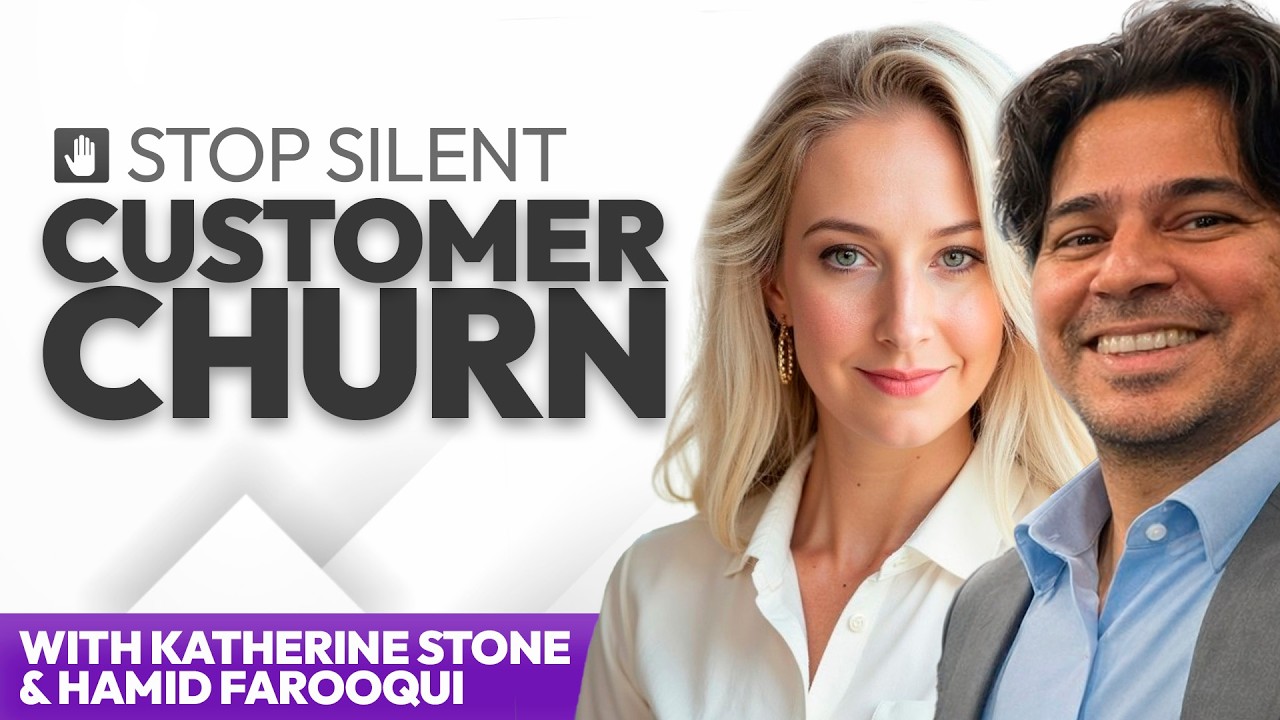
In that 2026 conversation, Farooqui and Katherine Stone examined timing, ownership, and trust in feedback programs. The questions move past whether a company has a dashboard. They concern when it asks, which part of a customer’s journey it understands, and who is expected to do something with the result. Artificial intelligence enters the discussion as a tool whose analysis still needs judgment.
His September 2026 writing develops the idea further: organizations should connect feedback with behavior to understand the experience they deliver. A customer’s silence cannot safely stand in for an endorsement. The aspiration is to recognize trouble earlier and respond consistently, rather than keep accumulating answers whose destination remains unclear.
There is another educational ambition in his story. In 2024, Farooqui described plans with his family to improve and expand a school in their ancestral village, with modern education open to students across backgrounds. His own education carried him between disciplines and countries. The project brings that concern for opportunity closer to where his family began.
Across those ambitions, the recurring question is what a system enables somebody else to do. A parent wants to be heard. A customer wants an issue resolved. A student needs a chance to learn. Farooqui has spent much of his career building the machinery around those exchanges. The difficult, human part begins when the machinery delivers its answer.