Hamad Al-Hajri once thought QR100,000 and perhaps five engineers might be enough to get his technology venture going. It is a wonderfully tidy estimate for a business that would eventually require merchants, couriers, customers and software to agree on the whereabouts of somebody’s dinner. Reality had a larger invoice ready.
The idea took shape during his studies at HEC Paris in Qatar. A capstone project offered a setting in which to work through a business problem. Most assignments eventually retire to a folder. This one became Snoonu, launched in 2019, and continued acquiring responsibilities long after the academic work was finished.
By October 2025, Saudi-listed Jahez had completed a $245 million majority acquisition. Al-Hajri’s next job included leading the group’s international business. The student project had become a regional assignment. To understand how he got there, it helps to look past the transaction and back at the engineer who kept returning to the problem.
An engineer, with several tabs open
His working life began a considerable distance from the familiar delivery-app screen. At Qatar Petroleum, he worked in automation and control systems. Project management, marketing and business development followed. His career also took him through Barzan Holdings and Qatar’s Ministry of Finance, where he worked on economic competitiveness.
That range matters. A delivery service has a friendly surface and an impatient interior. Behind a customer’s tap are questions about systems, timing, money and the cooperation of people who work for different organisations. Al-Hajri had already spent years dealing with projects whose moving parts needed to behave themselves.
He kept studying along the way. His education includes engineering at Murdoch University in Australia, project management at Teesside University and an Executive MBA at HEC Paris, completed in 2017. His biography also includes ventures in software services, landscaping and restaurants. The app founder had accumulated experience on several sides of a potential order.
The first budget was wonderfully wrong
The university chapter has an instructive detail. At the 2017 HEC graduation ceremony, Al-Hajri shared the Best Capstone Project award with Khalid al-Tamimi, Mohamed al-Kuwari and Saud al-Attiya. The project was called MSHWAR. The Snoonu story had an earlier name, and more than one person at the desk.
In later accounts of Snoonu’s beginnings, including co-founder Sabina Abuova’s recollection, the classroom appears as a place for feasibility work and a real business model. There was a practical question underneath the coursework: could everyday shopping and services in Qatar be brought together in one place?
Al-Hajri has spoken about two failed attempts before Snoonu. His recollection of that early QR100,000 budget captures the gap between imagining a service and paying for the capability to run it. A spreadsheet can be persuaded to cooperate rather more readily than a marketplace.
He returned to the idea. The version that reached customers in 2019 grew into a platform spanning food, groceries, shopping and logistics. In November 2020, Snoonu added its own round-the-clock online grocery store. The scope of the business kept widening beyond the original promise of getting an order from one point to another.
From a capstone to a regional brief
- 2017HEC Paris graduation
MSHWAR capstone award - 2019Snoonu launches
in Qatar - 2025Jahez completes
majority acquisition - 2026International business
and startup backing
Small goals, celebrated properly
When Al-Hajri talks about leadership, his attention often comes back to people. “Building a good, cohesive team is critical,” he said in 2021. He described setting small goals and celebrating completed work, giving colleagues reasons to keep going while the larger ambition remained some distance away.
There is a useful modesty in that method. A team cannot finish an ambition on Friday afternoon. It can finish a task, see the result and start the next one. For a founder inclined towards large technological possibilities, these smaller units of progress make the work approachable.
By his June 2026 podcast conversation, the subjects had expanded to managing a workforce of more than 90 nationalities, investing in employees’ development and holding an annual Common Vision workshop. These were his accounts of building the organisation, with hiring and culture occupying substantial space alongside the product.
“Building a good, cohesive team is critical.”
Hamad Al-Hajri, 2021
He also takes the lessons outside the company. In July 2025, he delivered a Qatar Chamber workshop on operational systems and business growth to an audience of more than 200 entrepreneurs and interested participants. The topic was fitting for someone whose business depends on making many separate activities work together.
Back to campus, this time with jobs
In 2022, Snoonu and Qatar Foundation announced a partnership intended to offer 50 job opportunities each year to graduates of Education City universities. Al-Hajri described remaining close to Education City through workshops and entrepreneurship programmes while developing the company. The connection had continued after the degree.
The arrangement gave that relationship a practical sequel. A graduate whose studies had helped him shape a business was now creating routes into it for other graduates. The annual figure was an announced opportunity target. The significance of the agreement lay in connecting education to a place where people could put it to work.
He had already become president of HEC Paris’s Qatar alumni chapter in 2020. That role placed him between the university and its graduates, a position that suited the direction his work was taking: building a company while keeping a connection to the people and institutions around it.
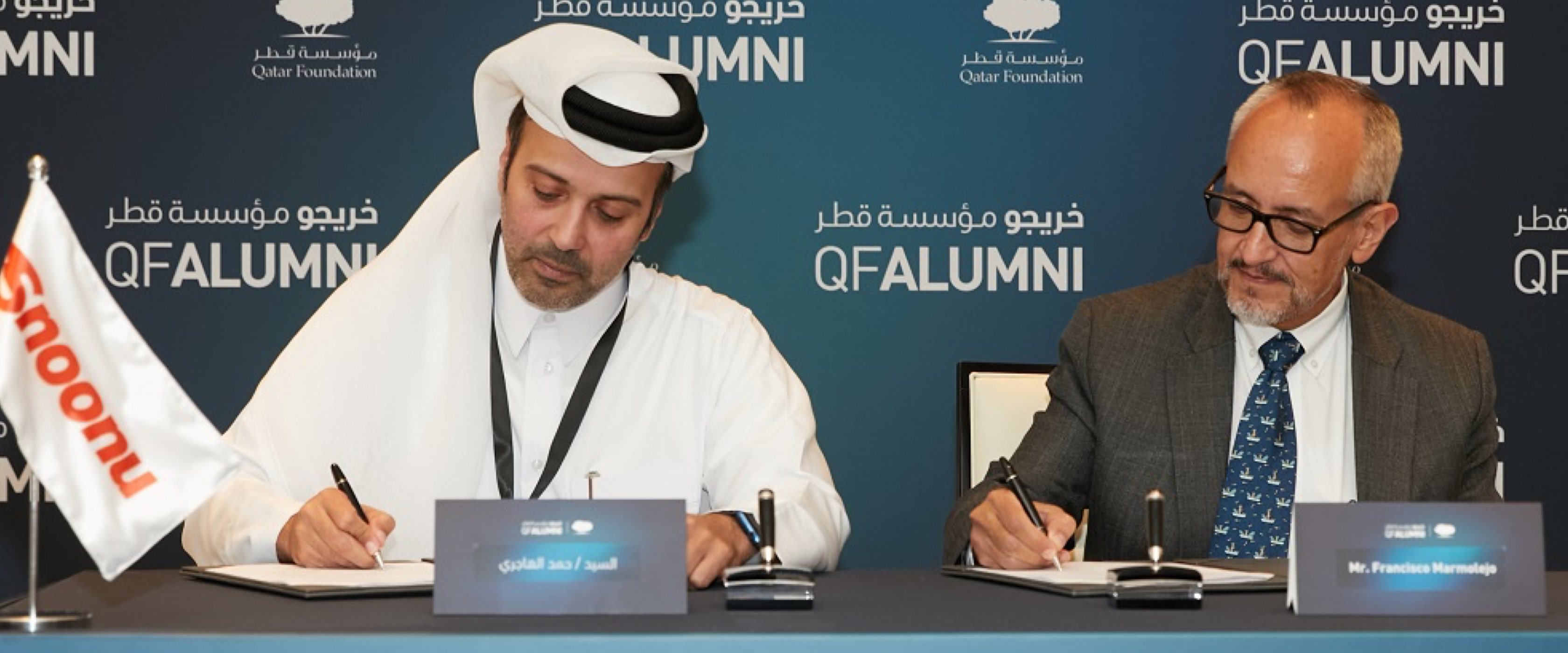
Recognition came back through the same wider community. In 2024, Al-Hajri won the Middle East Mercure HEC award. The institution that had supplied a setting for the early idea was now recognising the business built around it. There are worse reasons for a former student to receive a message from school.
The buyer wanted the engine
The numbers became much larger than the early budget. In July 2025, Jahez announced its agreement to acquire control of Snoonu. The final transaction combined the purchase of existing shares with new capital. Jahez’s subsequent annual review recorded a 76.56% stake, $245 million in consideration and completion in October.
The deal put Snoonu’s post-money valuation at approximately $320 million, above one billion Qatari riyals. The currency is worth keeping attached to the number. It was a substantial outcome for a company built in Qatar, with a valuation quite different from a billion US dollars.
Company transaction figures. They describe the deal, rather than the founder’s personal wealth.
Jahez’s explanation of the purchase gives the story another dimension. It had considered building its own position in Qatar. Acquiring Snoonu offered an established platform, a local brand and an operating team. The buyer’s account emphasised technology, customer experience and the ability to develop products across several categories.
Al-Hajri took on the role of CEO of International Business, overseeing Bahrain, Kuwait and Qatar. In February 2026, Jahez designated Snoonu its primary international operating platform. The founder’s next test would be making the experience accumulated in Qatar useful across a larger group.
The swallow crosses a border
Snoonu takes its name from the swallow, a small bird suited to the idea of quick movement between places. By 2026, the name had a longer journey to describe. The company’s phased Kuwait launch introduced groceries, an on-demand courier service, flowers and gifts, and home services.
Bader Al-Ajeel led the Kuwait operation. The local leadership is a detail worth retaining in a story about a founder’s growing regional responsibilities. Expanding a platform also means putting people in charge who can respond to the market in front of them.
For Al-Hajri, the problem had changed scale. Getting a customer in Qatar to trust a homegrown service was one assignment. Carrying that business into another country meant earning a place in another set of routines. A familiar logo can introduce itself quickly; the service still has to turn up.
A seat on the other side of the table
During 2026, Al-Hajri also became more visible as a backer. In February, he committed to two Shorooq strategies: a late-stage growth fund backed by the Qatar Investment Authority and a global AI fund backed by Presight-G42. His work was extending to businesses beyond his own operating company.
The Snoonu Startup Factory supplied a more direct connection to young teams. Its programme combines funding and mentorship with access to the company’s logistics, technology and commercial relationships. One early investment went to SUFRA, founded by Carnegie Mellon University in Qatar graduates and developing personalised digital tools for restaurants.
Then, in September, GrowthX, Al-Hajri’s venture platform, announced a combined $1 million investment in Hired Valley and Talebhub. The hiring-and-careers platform and the student-services business joined the Startup Factory. Their founders gained access to an existing organisation’s experience as well as its capital.
That progression gives his own beginnings a second use. The classroom project, the failed attempts and the operational work have become experience another founder can draw on. Whether the new companies succeed remains their task. Al-Hajri can offer them more people to call when an assumption stops surviving contact with the day.
The next delivery may have no driver
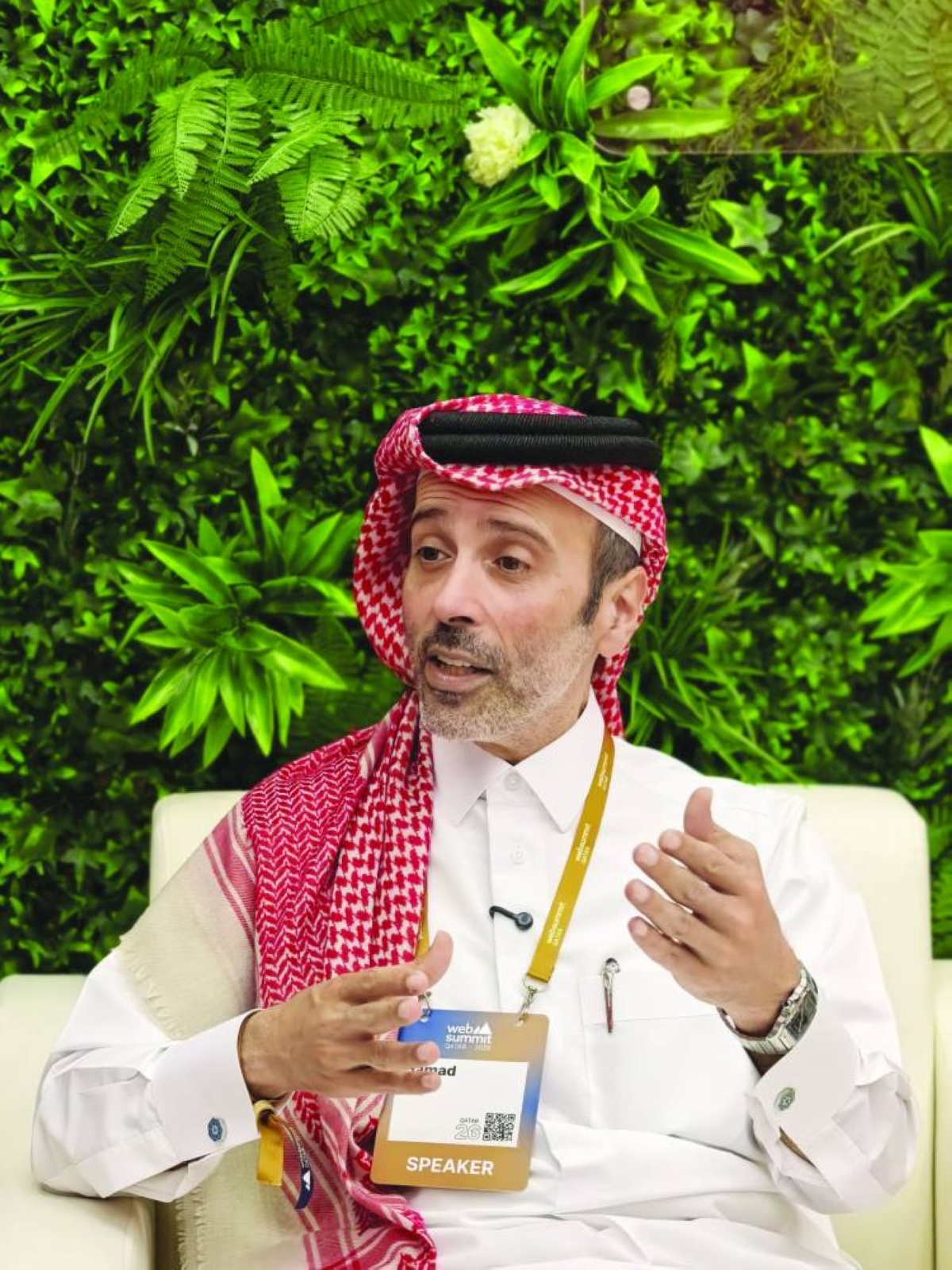
Photo: Riyaz Abdulrahmin / Gulf Times.
At Web Summit Qatar in February 2026, Snoonu launched its robotics venture with support from the Qatar Research, Development and Innovation Council. The stated plan was to develop autonomous logistics technology in Qatar, beginning with delivery within Snoonu’s own operations and extending to partners.
Al-Hajri has described 2035 as a horizon for deliveries carried out by robots and drones. That remains an ambition. It adds another engineering problem to a career that has moved through control systems, business models, hiring and international expansion.
The appealing continuity is his willingness to keep revising the assignment. A project for a degree became a service people used. The service became a regional platform. The founder began financing other founders. Somewhere between the first budget and the next delivery, his homework developed a habit of making more work.