A single customer wants a complicated new feature. The sales team can see the contract. The engineers can see the work. Somewhere between the two sits a decision that can quietly determine what kind of company everyone is building. Guy Avigdor had a rule for this situation: measure the return on the team’s time. A feature that serves one deal can be a poor bargain for everybody else.
In 2018, while serving as Klear’s chief operating officer, Avigdor explained why profitability mattered to the company he had founded with his brothers. It supplied a common test for decisions. The product team, he said, would resist building something elaborate simply to secure a solitary customer. In an industry devoted to counting attention, he was also counting the hours required to earn it.
“When the top-line metric is profitability, each decision is measured by the return on the team’s time investment.”
Guy Avigdor, 2018
There is a certain pleasure in finding this argument inside an influencer marketing company. The public image of the trade comes with flattering light, desirable objects and a suspicious absence of laundry. Avigdor’s argument concerned the less photogenic business of choosing what to build. His career at Klear offers a view of the machinery behind the picture: finding the right people, making their work measurable and persuading customers that the results justify the expense.
Before Klear, a place called Twtrland
The family business began with a question familiar to anyone who has stared at a stranger’s social profile: is this person worth following? Twtrland, the service that preceded Klear, analyzed Twitter accounts to help visitors understand what someone posted and how others responded. It could break an account’s activity into replies, retweets, links and other categories. An enormous stream of conversation became something a person could inspect.
Twtrland was already attracting investment in 2012, when Jeff Pulver and Magma Venture Partners backed it. Its early work belonged to a period when the social web still required a good deal of explanation. A profile contained plenty of numbers, yet numbers alone offered an incomplete introduction. A large audience might be interested in something entirely irrelevant to the visitor. The useful question had a second half: worth following for what?
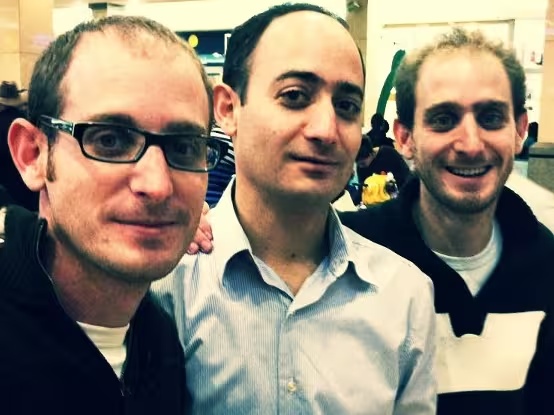
Guy, Eytan and Noam Avigdor became the three brothers associated with Klear’s founding. Family supplies a memorable origin, but the product’s early experiments show what they were attempting commercially. In 2012, Twtrland introduced Yamana, which used its Twitter data to connect brands with people whose audiences might care about a product. One example involved offering a fashion blogger a wallet, without an obligation to post.
The mechanics were modest: identify someone relevant, make contact, offer something that might interest them. The underlying bet was more ambitious. If a service understood the relationships around a person, it could help a business make a better introduction. A database could become the beginning of a conversation. By September 2013, Guy was demonstrating Twtrland’s business dashboard as its co-founder and vice president of business development.
The useful part of a very large crowd
That dashboard offered a rather different experience from simply scrolling. Users could examine audience demographics, interactions and the kinds of material an account shared. Its team grouped people into 60,000 topic areas. The classification looked beyond the little autobiography in a Twitter bio toward the content people actually produced. Claiming expertise is a comparatively easy afternoon’s work; repeatedly producing something others value leaves more evidence.
Avigdor described uses ranging from community management to sales leads and blog research. The variety mattered. A tool built to help people understand social accounts was finding customers who wanted to do something with that understanding. The commercial task was to turn the same underlying information into useful answers for quite different organizations. His part of the story was increasingly about the distance between an interesting tool and a paying customer.
By October 2014, Twtrland was serving more than 1.5 million users a month. Avigdor discussed the team and platform in a podcast interview with Daniel Rowles. Those visitors give a sense of the reach the service had acquired before its better-known name arrived. They also put its early development in perspective: this was already a product people used, with an audience to serve while the business continued to change.
Monthly users, as described in Avigdor’s Digital Marketing Podcast interview listing.
In June 2015, Twtrland became Klear as its coverage extended to Facebook and Instagram. The company raised $1.5 million in a round involving Altair, GIG and TMT. At the time, its database covered 200 million profiles. The new name made room for a business that no longer fit neatly inside a single social network. Even the vowels had returned from their Twitter-era leave of absence.
A buyer’s question, a creator’s audience
The persistent problem was relevance. A marketer might know the place, subject and audience a campaign needed, yet still struggle to find the people who connected those things. As Klear developed, Avigdor described search that could examine biographies, shared content, conversation and engagement. By April 2019, the platform’s topic coverage had expanded to about a million categories, with searches using hashtags, keywords and brands.
A category such as beauty contains more possible relationships than a single campaign can sensibly pursue. More specific conversations help explain what an audience actually cares about. Klear’s developing search capabilities reflected that distinction. Someone discussing a particular concern or practice may offer a more relevant connection than someone filed beneath a broad label. The work becomes a matter of context as much as scale.
Avigdor also challenged the stock photograph in the marketer’s imagination. In May 2019, he wrote about baby boomer influencers, pointing to fashion and food creators whose appeal came partly from having experiences their audiences recognized. His examples included Beth Djalali, Shauna Robertson and Teri Turner. The interesting relationship ran between the creator and the people listening, rather than between the creator and a stereotype of internet fame.
His argument was commercial and human at once: an audience may trust a person whose life feels recognizable. Age could help create that recognition. Brands looking only for a youthful image of influence could miss people their customers already found persuasive. Avigdor was asking marketers to widen their search, and to take seriously the communities that an easy assumption might leave out.
Twenty-four hours is a short reporting window
Meanwhile, the work itself kept changing format. In August 2018, Klear announced automated tracking for Instagram Stories, adding the disappearing format to its campaign measurement tools. A Story could vanish after a day while leaving a marketing department with a much longer obligation to explain what its money had accomplished. The glamorous side of impermanence had acquired a reporting problem.
For Avigdor, the addition addressed a gap in understanding the impact of creator content. The product could assemble campaign reporting across activated influencers, with both an overall picture and detail about individual contributors. As creators adopted new ways of publishing, Klear had to keep pace. A company selling measurement cannot politely ask the subject to remain still while the ruler catches up.
A simplified view of the capabilities Klear brought to Meltwater.
His writing in September 2019 took up another moving target: authenticity. He argued that companies needed to understand their own values before choosing creators to express them. A partnership made more sense when the person involved already had credibility around the relevant subject. His examples included environmental concerns and inclusion. The word authenticity can become rather slippery in advertising; his advice gave the buyer a concrete place to begin.
There was also a practical skepticism in the argument. Avigdor acknowledged that brands have commercial agendas. He nevertheless saw value in consumers demanding more responsible behavior from businesses. The position did not require a marketer to become innocent of marketing. It required the association between the company, the creator and the message to withstand some attention of its own.
The visitors who became the buyer
In Avigdor’s account of Klear’s relationship with Meltwater, the larger company’s leaders came to the small Israeli office in person. He remembered being impressed by the organization’s ability to move quickly and by its employee culture. The companies began their partnership in 2017. Years of working together preceded the acquisition announcement, giving the eventual transaction an unusually practical courtship.
On April 14, 2021, Meltwater announced an agreement to acquire Klear for $17.8 million, combining cash and an earn-out. Klear had recorded $7.6 million in revenue during 2020. Those are company figures, with the purchase consideration subject to the transaction’s structure. They belong beside the earlier argument about profitability: this was a business selling tools to other businesses, with revenue behind its social data.
Announced acquisition consideration:
cash plus earn-out.
By then, Klear’s capabilities extended from identifying creators to managing relationships and measuring their commercial contribution, including through ecommerce integrations. Meltwater brought a broader customer network. The combination joined work on influencer relationships with the media intelligence business around it. Avigdor’s story had reached a familiar founder’s turning point: the company he helped build would continue inside somebody else’s organization.
The adventure, after the announcement
The next chapter included some decidedly ordinary promises. A March 2024 company post carrying Avigdor’s byline as Klear CEO explained that Klear’s website visitors would be redirected to Meltwater from April 1. Customers would keep their workspace and login credentials. Acquisitions invite expansive language; customers still need to know whether their password works. This was the sort of detail on which a transition could be judged.
The 2026 ANA Creator Marketing Conference agenda lists him as Meltwater’s Head of Influencer Marketing, alongside Snap’s Fintan Gillespie for a session about creators in an AI-powered world. Its emphasis on human stories and audience trust brings the career back to a question present in the early product: what makes one person’s contribution matter to someone else?
The platforms have changed, and so has Avigdor’s title. The question has proved harder to retire. His public work keeps returning to the choices behind a useful relationship: whom a brand approaches, why an audience listens, what the campaign accomplishes and whether the effort was worthwhile. Somewhere, another customer will want another complicated feature. His old rule still has work to do.
Follow the thread
- Guy Avigdor on LinkedIn
- Guy Avigdor on X
- Meltwater Influencer Marketing
- Listen: Finding Twtrland (2014)
- The early Yamana experiment (2012)
- Twtrland’s business dashboard (2013)
- Klear’s 2015 expansion
- Profitability and product choices (2018)
- Instagram Stories tracking (2018)
- Searching by topic (2019)
- Avigdor on older creators (2019)
- Avigdor on brand authenticity (2019)
- Meltwater’s acquisition announcement (2021)
- Klear’s move to Meltwater channels (2024)
- ANA Creator Marketing Conference (2026)