Greg Segall wore a small. The jacket was an extra large. A business partner had sent it as a gift, filling it with chocolates that melted before they reached him. Here was a parcel with a generous budget and a remarkably loose acquaintance with its recipient. It had enough fabric for someone else and a confectionery problem all its own.
Segall remembered the mismatch while thinking about his next company in 2015. The sender was hardly a stranger. This was a partner he saw several times a year. Yet the gift seemed to have passed through the relationship without picking up much information about the person inside it. For an entrepreneur who had already spent years helping companies sell things online, it was an intriguing failure of commerce.
The expensive part had been handled. The personal part needed work. Segall would build Alyce around that unfinished business, bringing software to an exchange that can be touching, useful, embarrassing, or all three before the wrapping paper reaches the bin.
A jacket with plenty of room for improvement
Corporate gifting offered a practical opening. Companies already spent money thanking customers, approaching prospects, rewarding employees, and handing out branded merchandise. Segall saw room to reconsider who made the final decision about the object being sent. The sender could have excellent intentions and still choose badly. His own wardrobe had supplied a demonstration.
Alyce’s approach allowed a sender to suggest a gift while leaving the recipient options. Accept it. Exchange it for something else. Donate the value to charity. A proposed present could become a conversation rather than a small obligation arriving in a box. The recipient was allowed a preference without having to perform a convincing impression of gratitude for an unwanted item.
“The more personal you can be with somebody, the better you can build your relationship,” Segall said. His business attached a measurable sales and marketing process to that belief. A gift was supposed to help a relationship move forward. Giving someone another possession, by itself, was a rather incomplete definition of success.
The art student learns to sell
Segall’s route into technology began with art. At Boston University, he studied graphic design and became interested in computer science. Looking back, he described the studio critique as an education in persuasion: explain a color, defend a composition, make the case for a decision. A designer has to think about how someone else will encounter the work. The maker’s intention gets only so many votes.
That habit suited the web. His agency, One Pica, worked on e-commerce, including projects for companies such as 3M and Scholastic. An account of its development describes a move from broader branding and marketing work toward a tighter focus on digital commerce and Magento. It was a lesson in choosing what the company would spend its attention doing.
One Pica was sold in December 2012. Segall could take satisfaction in the people whose careers had developed there. Still, he found something unsettling about what happened to the work. Websites get rebuilt. Technology gets replaced. A company name can disappear into a larger organization. An agency can do its job successfully and leave its founder wondering which parts will last.
That question helps explain the ambition behind Alyce. Segall wanted a business whose effect extended beyond a completed commercial project. He spoke about reducing unwanted gifts and making charitable giving part of the transaction. The product could still help companies sell. He wanted the activity of selling to leave something useful behind for the people involved.
The hours a job title leaves out
By December 2015, he had founded Alyce. He developed a vocabulary around what he called the “5-to-9”: the interests, pursuits, and relationships outside a person’s working hours. A job title might help establish whether a product was relevant. It told you considerably less about what someone would enjoy receiving, talking about, or remembering.
For Segall, art, music, and baseball belonged in that picture. He had loved all three growing up. These were ordinary personal details with a commercial implication: people bring more to a business conversation than their purchasing authority. Knowing a title can get a message to the right inbox. Knowing an interest can give two people something to discuss once it arrives.
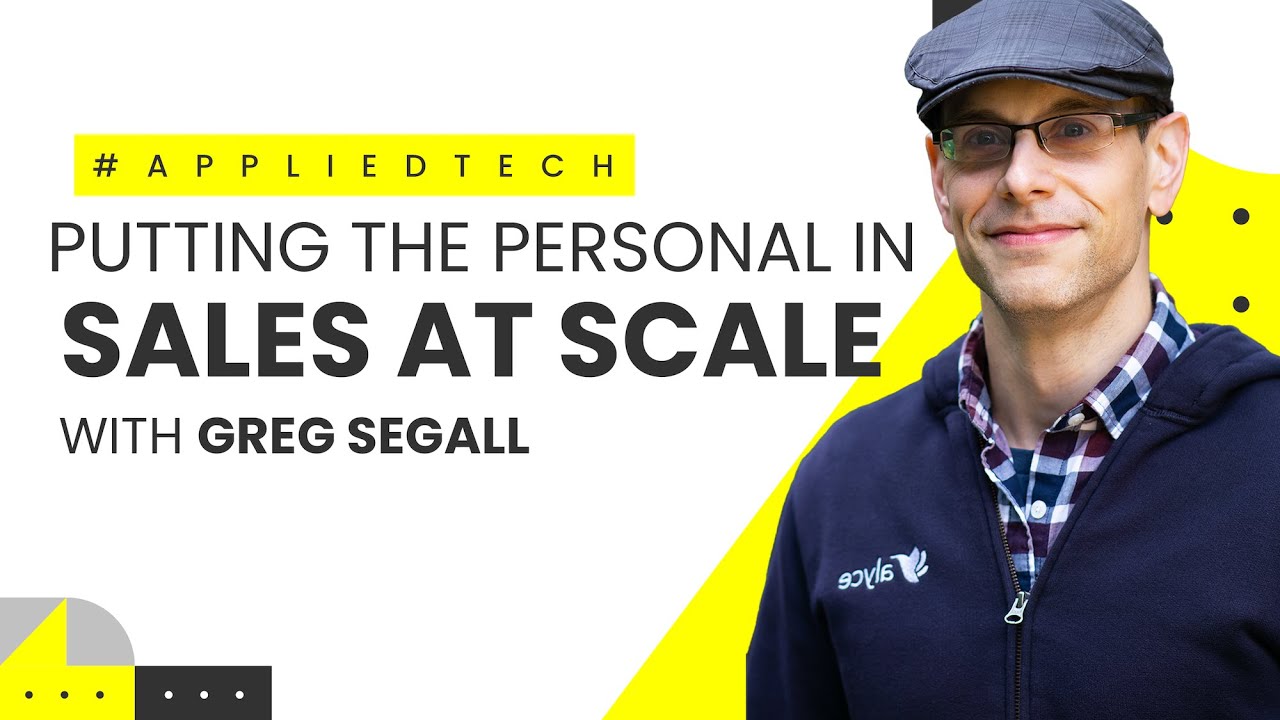
He called the approach personal experience, or PX. Its working principles were relevance, relatability, and respect. There was a deliberate shift in emphasis from sending more messages to understanding the individuals receiving them. In his formulation, technology could help gather the intelligence that made a better interaction possible. The relationship would still need people to do something with it.
The argument also reached beyond gifts. A video, an email, or an internal communication could give someone evidence that another person had spent time thinking about them. Segall liked conversational video for the face and voice it brought into the exchange. A small imperfection could make the person recording it feel more recognizable. Few friendships begin with admiration for flawless mail merge.
“Marketers aren’t thinking about the person on the other end,” he said. It was a blunt diagnosis from someone selling marketing software. His proposed remedy asked companies to consider the experience they were creating before celebrating the efficiency with which they created it.
“Marketers aren’t thinking about the person on the other end.”
Greg Segall
A little attention, remembered for years
Long before he had a platform to explain, Segall had an example of how attention felt. At 13, he met his baseball hero, Cal Ripken. He was last in line after Ripken had spent hours talking and signing autographs. Ripken still made time to be friendly. Segall remembered struggling to get his own words out. He also remembered being treated kindly.
The encounter became a reference point for the consistency he admired and wanted to practice. Its proportions are worth considering: a short exchange for the player, a durable memory for the child. Later, Segall described learning to ask other business leaders for help after initially assuming he could manage everything himself. Relationships became part of how he learned to run a company.
There is a similar thread in his willingness to discuss leadership as something to work on. A coaching conversation explored bringing colleagues into his thinking process and encouraging them to participate. The question was how to lead without making the founder’s head the only room where decisions could develop. Someone building a company about attention had reasons to examine where his own attention went.
Growing without losing the person
Alyce’s idea attracted venture investment. In June 2019, it announced an $11.5 million Series A. In April 2021 came a $30 million Series B led by General Catalyst, with existing investors participating. That announcement put total funding at $48 million. Lou Shipley joined the board, and General Catalyst managing partner Larry Bohn became a board observer.
Series A and Series B round sizes. These are company investments, not personal wealth or revenue.
The 2021 announcement reported more than 300 percent revenue growth between 2019 and 2020 and named customers including Marketo, Lenovo, G2, and Wex. The company was selling a way for marketing and sales teams to make personal gifting workable at a scale that required systems, budgets, and coordination. A thoughtful gesture had acquired an enterprise software operation behind it.
Growth also sharpened the problem of focus. Segall’s advice to founders included asking for help, resisting the temptation to do too much with a small team, and learning to say no. The e-commerce agency had already taught him something about narrowing a business. At Alyce, those lessons sat alongside the challenge of explaining an idea with enough clarity for employees and customers to act on it.
He also wanted work to have some play in it. Alyce employees were known as Charmers, after the term for a group of hummingbirds, the company’s symbol. In discussing company culture, Segall made the case for authenticity and enjoyment. A business that asked clients to see people beyond their roles had set itself a fairly visible standard for how it treated its own colleagues.
The names in the farewell
By the time Sendoso acquired Alyce in February 2024, Segall had already passed the CEO role to Brett Zucker about a year earlier. The transaction joined two corporate gifting businesses. Alyce would operate as Alyce by Sendoso, with no immediate platform changes announced. The financial terms were not disclosed.
Segall’s farewell lingered on the people. He thanked Tori, recalling the early days working on the idea in the back of a bike shop. He acknowledged Caroline and Gianfranco, his board, the company’s employees, and Zucker’s leadership. The language was affectionate. Behind a transaction that could be reduced to two company names stood colleagues whose work he wanted to name individually.
A further chapter arrived that July, when Sendoso introduced Recipient Gift Exchange. The company explicitly connected the launch with bringing Alyce’s recipient experience into its platform. The practical premise endured: even a well-chosen gift might be something the recipient already owned, or something they would prefer to exchange.
That is a fitting place to leave Segall’s story. He had spent years building ways for businesses to sell, then asked what the transaction looked like from the other side. A recipient could want something different. They could say so. The jacket that did not fit had helped him find a question with room to grow.