Greg Mark tried retirement with better equipment than most people bring to work. There were airplanes, helicopters, cars, and New Hampshire, where he had moved after leaving Markforged. For an aerospace engineer, this was a reasonably persuasive arrangement. He had helped build a company around printing strong parts. He could now spend some time enjoying machines that already existed.
Yet the satisfaction wore thin. He missed making things. The freedom to stop working had exposed an inconvenient preference: he liked the work. By January 2025, he was describing a life divided between New Hampshire and San Francisco, with printing rooms and a new shop once again entering the conversation. Retirement had acquired a development schedule.
His return, Backflip AI, reunited him with David Benhaim, his fellow Markforged co-founder. Their earlier company had addressed a stubborn question: how do you turn a digital model into a useful physical part? This time Mark was looking farther back along the workbench. Someone still had to produce the model.
A bicycle frame before a business plan
Before the printers and funding announcements, Mark fabricated custom bicycle frames in high school. At MIT, he studied aeronautics and astronautics and worked on lightweight racing cars with the Formula SAE team. He earned both a bachelor's degree and a master's degree. Building a car with other students gave him something a transcript cannot quite record: people whose work he knew firsthand.
Several of those teammates later joined him at Markforged. The connection is telling. A race car requires mechanical systems, electronics, software, and people willing to make those things cooperate. The same disciplines would have to coexist inside a printer. A good team was part of the engineering.
His early career moved through high-power electrical connectors, then Aeromotions, where he designed and manufactured computer-controlled composite wings for race cars. He also ran Genasun, working in power electronics for solar applications. Those businesses sound scattered until you consider their customers. A connector must carry power. A wing must behave at speed. Solar electronics must work away from a convenient socket. A handsome demonstration earns limited credit when the object has a job.
That background helps explain his initial lack of enthusiasm for 3D printing. The early plastic parts he encountered seemed too fragile for the work he wanted to do. He was already familiar with composites. He needed a reason to connect the two.
The prototype that needed to survive
The reason arrived through an off-grid battery-charging prototype for the U.S. Marines. His team could deliver a plastic prototype quickly, but its material limited its usefulness. Mark saw a familiar engineering opportunity: add reinforcement and the prototype might become a working part. The distance between those two objects could be small in appearance and large in value.
Markforged was founded in 2013. Its continuous-fiber approach placed reinforcing fiber into printed composite structures. The material was doing structural work inside the shape. For Mark, that brought printing closer to the kinds of components he had wanted all along, parts that could leave the demonstration table and enter a workshop.
There is a practical modesty to this origin story. It begins with a customer needing something to hold together. The appeal of the new process followed from that need. Industrial ambition can arrive wearing the clothes of a battery charger.
Make a digital design physical.
Make physical geometry editable.
As Markforged developed, its products combined printers with materials and software. That integration matters to Mark's story because the interesting invention was only one portion of the customer's experience. A shop also needed to prepare jobs, run machines, and obtain useful results repeatedly. The manufacturing process had to become a product people could operate.
By the time of its February 2021 merger announcement, Markforged reported products in 10,000 facilities across 70 countries and approximately $70 million in 2020 revenue. The proposed transaction assigned the combined company an estimated equity value of $2.1 billion. These were company figures attached to a public-market transaction, rather than a price tag on Mark's personal fortune.
He had already handed over the CEO role in October 2020 and moved to chairman. His departure from employment and the board became effective on December 29, 2021. An eight-year stretch from founding to leaving had given him an unusually close view of what happens after a useful invention meets purchasing departments, factory floors, and the expectation that it will work again tomorrow.
A cup, and a fresh set of objections
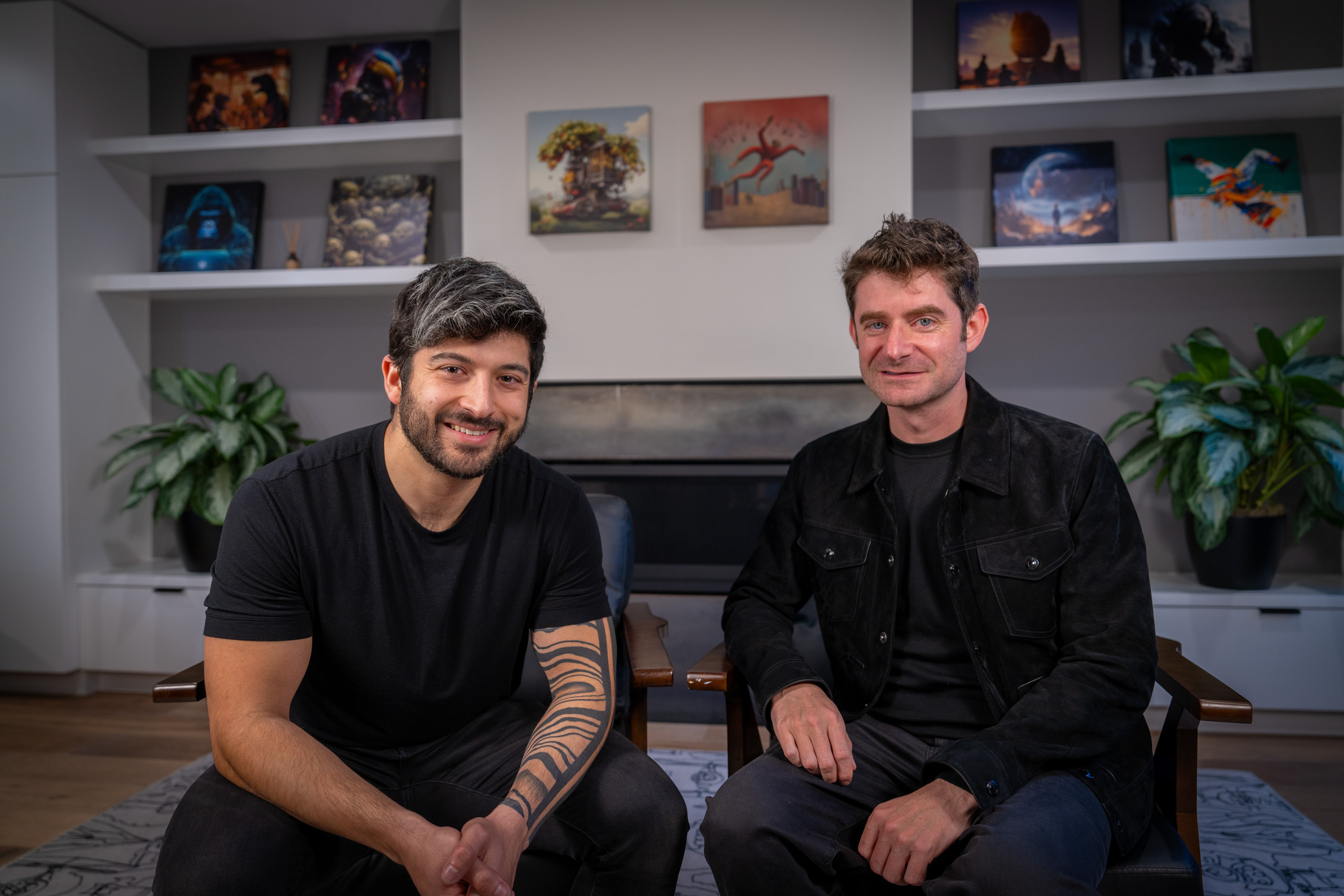
Backflip emerged publicly in December 2024 with $30 million in funding led by NEA and Andreessen Horowitz. Its angel investors included Kevin Scott, Rich Miner, and Ashish Vaswani. Mark and Benhaim were returning with a shared history, but with a new technical problem to solve.
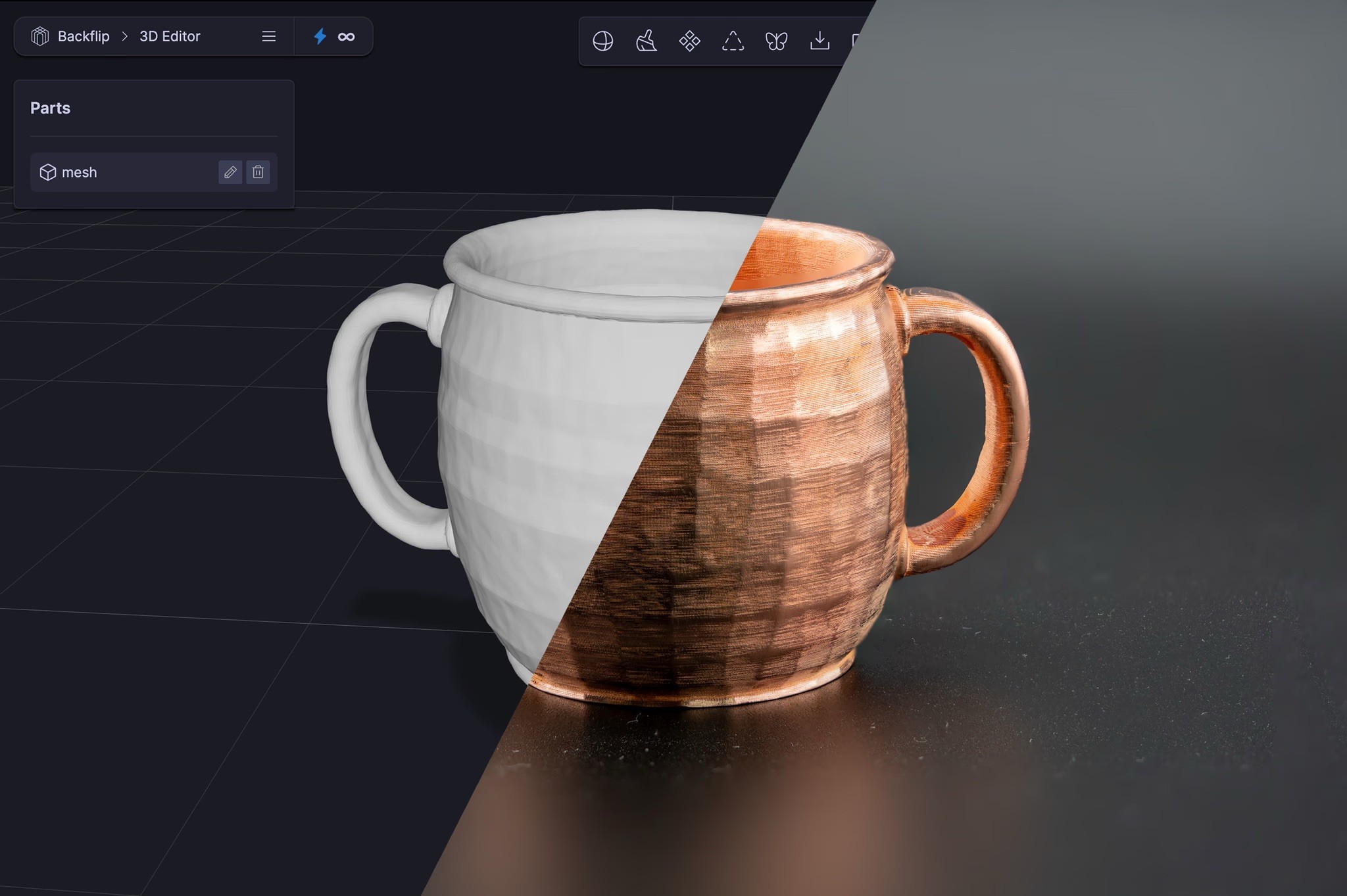
One early object made the proposition tangible: a copper cup. Mark described holding a cup that had been generated with AI and then printed. It was an everyday object carrying an unfamiliar history. A cup is also a useful antidote to abstraction. You can explain a foundation model for several minutes; a handle gives the conversation somewhere to land.
In his launch announcement, Mark described inputs ranging from text to drawings and phone photographs. The first release offered an accessible route into 3D creation. He also outlined an intended next step: greater precision and control for experienced designers and engineers. Those two audiences pose different tests. A beginner needs a place to start. A professional needs a result that can survive revision.
The attraction, for Mark, was the amount of human effort caught between imagining a thing and being able to make it. A person might understand an object through years of working with wood or metal and still struggle to express it through design software. The tools could become another craft to master before the original craft was allowed to proceed.
The missing file on the factory floor
By August 2026, Backflip's work had taken a more specific industrial form. Its second-generation model supported converting scans and mesh files into editable CAD. Mark gave the project a science-fiction name, the Reverse Replicator: start with the physical thing and recover a digital version.
The problem sounds perverse until you consider an old factory. Equipment outlives suppliers. A component survives while its original drawing disappears. A replacement might be sitting on a shelf, perfectly visible and maddeningly absent from the design system. Owning the object does not guarantee owning a useful digital description of it.
Mark's argument is that this reconstruction consumes engineering time that could go toward improving equipment. Scanning captures a surface, but the next step remains consequential. Engineers want dimensions and features they can change. A picture of a hole is considerably less helpful than a hole whose diameter can be edited.
The Fusion integration shows how that ambition translates into a working environment. Backflip reconstructs geometry with familiar operations such as extrudes, revolves, and patterns, producing a feature history. Autodesk describes uses including adapting fixtures and recovering interfaces for new components. The engineer can continue modeling, validating, and preparing manufacturing work in the same application.
A shape you can keep working on
Scan the object. Recover modeling features. Change a dimension. The intended handoff gives the engineer an editable starting point.
Backflip says its scan-to-CAD system can reduce some reconstruction jobs from hours to minutes. Its August announcement described particular strength with moderately complex milled and turned parts, and offered fast and thinking modes for different reconstruction demands. Those details give the promise a useful boundary. The work is about geometry, fidelity, and the types of parts the system can handle.
In September 2026, the company added drawing-to-CAD and photo-to-CAD tools. The drawing workflow interprets the views and dimensions in existing engineering drawings. The photo workflow uses three to six images and a known dimension for scale. Old archives and ordinary phone cameras became additional entrances to the same editing process.
What he wants the saved hour to become
For all the new software, Mark's interests remain recognizably mechanical. Wings, frames, power electronics, printed composites, and recovered CAD files are connected by his concern with how much effort separates a capable person from a working object. The company changes; the wasted time keeps attracting his attention.
His public manner carries some of the enthusiasm of a workshop conversation. In his LinkedIn biography he describes a love of products and the people who build them. When he talks about his return from retirement, the impulse is similarly concrete. Building was something he wanted back in his day.
“Our mission is to digitize the world.”
Greg Mark · September 2026
There is also a continuing connection to the place where he studied. MIT listed him among alumni speakers in its hardware entrepreneurship course, first held in spring 2025. Students were hearing from founders about the practical difficulties of starting and scaling companies. His experience gives him plenty to discuss before anyone needs to reach for a motivational slogan.
The interesting measure of Backflip will be what people do after obtaining a model. They might adjust a fixture, reconstruct a worn component, or try a design they had postponed. Success would make the software a relatively short episode in a longer act of making.
Mark has already had a chance to fill his days with finished machines. He came back for the unfinished ones. Somewhere between a bicycle frame and a factory's missing file, he found a recurring occupation: shortening the wait until somebody can get on with building.