The house was nearly ready. The electricity was another matter. After losing their media and communications jobs in the 2008 financial crisis, Roman and Andrij Zinchenko helped finish a house their parents had bought outside Kyiv. The family tackled wiring and plumbing. Then came the grid connection: pay for new infrastructure, or pay a bribe.
That encounter helped turn a domestic project into a public question. If a family could build so much itself, why was joining the energy system so difficult? The brothers founded Greencubator in 2009. Its subsequent work suggests an answer: opening an industry requires people who can invent, people who can buy, and someone willing to connect them.
- Who it helps: Ukrainian climate founders, green SMEs, and community energy teams.
- What it does: business education, acceleration, mentoring, grant delivery, and introductions.
- What to copy: find the next concrete obstacle and organise support around removing it.
The socket was the problem
Greencubator occupies an unusual position in the startup economy. It is a nonprofit working to produce businesses. Those businesses may sell charging infrastructure, sustainable packaging, or energy-saving systems. Greencubator supplies the surrounding help: a useful expert, a better business plan, a route to funding. Its customers in the everyday sense are founders; its institutional partners include organisations financing that support.
The original grid dispute makes this arrangement easier to understand. A clever technology can meet an obstacle outside the workshop. Market rules, expensive specialist services, and missing relationships can all stop progress. Greencubator’s expertise sits at that junction between technical possibility and commercial reality.
The camp found its people
The first attempt was considerably more outdoorsy. EnergyCamp gathered people around renewable energy. In a later interview, the brothers acknowledged that their initial idea had failed to attract the hoped-for crowd of journalists and bloggers. Energy professionals and enthusiasts liked it, however. The intended audience stayed away; a community arrived.
A pleasant meeting place eventually became insufficient. The founders recalled nearly closing in 2011-2012. Exposure to hackathons during a 2012 trip to the Consumer Electronics Show helped change the format. By 2013, TeslaCamp combined the gathering with a challenge: make something. The event itself ran on solar electricity, away from the grid.
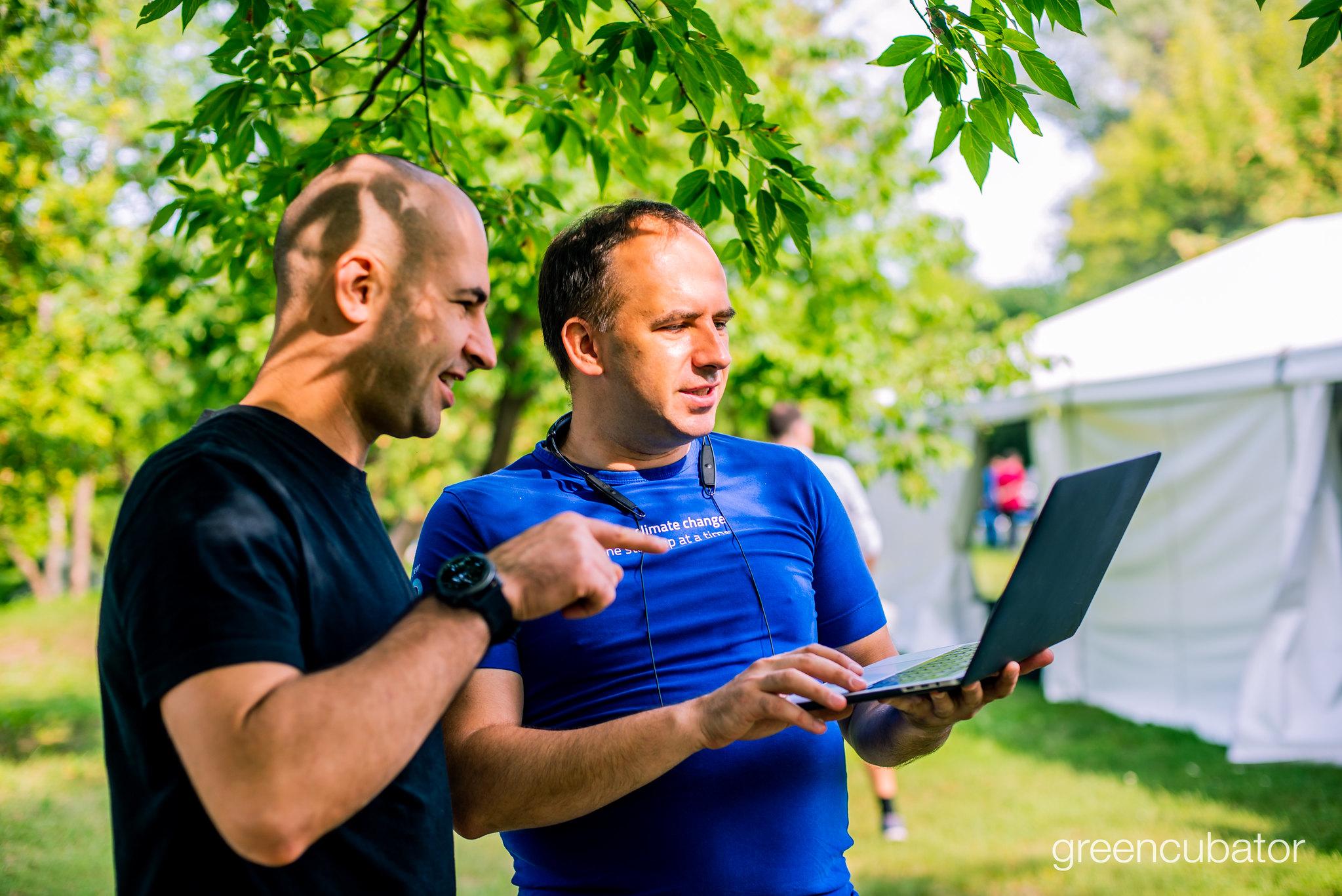
There is a useful distinction here between demonstrating a technology and discussing one. At a solar-powered camp, the electricity supply becomes part of the lesson. Greencubator moved from explaining why green energy mattered toward giving people a place to work on it. A gathering could become a starting point for a company.
Pay for the next obstacle
The next step was less photogenic. Climate Innovation Vouchers, launched publicly in Ukraine in 2017 by the EBRD and European Union and implemented by Greencubator, helped businesses purchase specialist services. Intellectual property protection, product certification, prototype design, and production planning were eligible uses. These are the bills that arrive after an idea becomes serious.
The arithmetic matters. Grants of up to €50,000 covered 75% of eligible service costs. For an illustrative €40,000 eligible project, that means €30,000 from the grant and €10,000 from the business. A founder still needed money, an eligible project, and the ability to execute it. The voucher reduced a defined expense.
Programme ceiling: €50,000 per voucher. Eligible services only.
Releaf Paper makes the mechanism tangible. Its technology turns fallen leaves into paper. In 2022, it won voucher support that helped cover international patenting. “Patenting abroad costs a lot of money,” co-founder Valentyn Frechka explained. The science attracted attention; protecting it required another kind of expertise and another budget.
Releaf subsequently sent test batches to several European countries. That sequence does not establish that one grant caused its expansion. It does show what practical support can buy: work a company needs before a promising invention can travel safely into new markets.
A business needs a customer
Different stages require different interventions. Greencubator Academy, launched in 2021, helps people examine green business ideas. Its Ukrainian-language courses include customer research and business modelling. Students work on assumptions and receive expert feedback. Someone with an idea can begin asking who needs it before spending heavily on making it.
GCIP Ukraine 2.0, which Greencubator began implementing in 2025 with UNIDO and the Global Environment Facility, addresses more developed businesses. The advertised advanced programme expects a ready product, initial customers, a competent team, and a Ukrainian connection through its eligibility rules. It also requires English at B2 level and active participation.
The 2026 offer describes five months of training and mentoring, free for selected companies, with grants up to $20,000 for the best teams. Free admission still carries a time commitment. A founder running a company must make room to examine sales, legal structure, finances, and international expansion while the business continues operating.
Average attendance reported for the first GCIP Ukraine 2.0 cohort.16 startups. Organiser-reported results published in April 2026.
The first cohort’s reported results included €500,000 in secured or confirmed financing. Attendance indicates engagement; financing indicates movement. Neither settles the longer question of survival or profitability. Together, they give a more useful picture than a photograph of founders holding certificates.
The useful part is repeatable
A founder choosing between a general accelerator, a consultant, and Greencubator is choosing a kind of help. Greencubator combines local energy and climate knowledge with business training and international programme relationships. Its value is greatest when those ingredients match a specific problem. An idea-stage team needs different support from a manufacturer preparing certification.
The approach also depends on conditions. Vouchers require eligible spending and a company contribution. Advanced acceleration requires readiness and time. Coaching cannot substitute for a working product or a willing buyer. Institutional programmes have selection rules and funding cycles, so an opportunity available to one cohort may close before the next founder arrives.
The transferable lesson is pleasantly practical: ask what stops the next step. Sometimes the answer is a missing introduction. Sometimes it is customer research. Sometimes it is a patent bill. Greencubator’s story began with a family trying to connect a house. Its work keeps returning to the same question: what would make the connection possible?