The revealing detail is a clock. In September 2026, Global Holdings changed a document-validation task so it waited 120 hours, rather than 72, before flagging certain unfinished paperwork. A form submitted on Friday had been liable to trigger an unnecessary task over a weekend or holiday. The fix gave the calendar a little common sense. It also offered a surprisingly good explanation of this company: much of its work involves keeping small administrative problems from becoming somebody else’s financial problem.
- Global administers accounts and processes payments for debt settlement programs.
- Separate providers negotiate with creditors; consumers retain control of their accounts.
- Its software now reaches into enrollment, calls, approvals, and reporting.
01 / The money has a separate address
Debt settlement contains two jobs that are easy to confuse. One is negotiation: persuading a creditor to accept an agreement. The other is administration: collecting deposits, keeping records, and sending authorized payments. Global Holdings operates in the second job. A consumer can encounter its name on a bank statement without having chosen it as the company that negotiates the debt.
Global says it establishes a dedicated account in the consumer’s name, with funds held at FDIC-insured institutions. The consumer deposits money, commonly through automatic bank debits. Global processes payments to creditors and fees earned by the settlement provider. The money belongs to the consumer. Online access and a mobile app make balances and account activity available without waiting for a mailed statement.
Simplified role map. An account balance is not a measure of debt settled.
That division matters when something goes wrong. Questions about negotiations belong with the provider. Questions about account access or payment history belong with Global. Its FAQ adds a particularly useful detail: canceling the debt settlement program does not ensure that the Global account closes. The relationship with the account administrator requires its own ending.
02 / A narrow job, repeated millions of times
The business dates to 2003. Its current leadership page identifies Rob Merrick as co-founder and executive vice president for strategic initiatives, and Steven Petrevski as CEO and president. Its customers span debt settlement providers, enrolled consumers, and creditor payment operations. Its market is primarily the United States, despite a name that could belong to almost any multinational.

The homepage reports $15 billion in annual transaction value, 43 million annual transactions, and more than 10 million customers served. Those are company figures; the customer total is cumulative. Transaction value measures money passing through the system, not the company’s revenue. The distinction is essential for understanding payments businesses, whose operational footprint can look enormous beside the fees they collect.
Money processed. Not company revenue.
Financing tells another part of the story. In June 2017, Crystal Financial agented a $68.5 million credit facility supporting an equity recapitalization by New State Capital Partners. A 2019 announcement described another recapitalization supported by Comvest. These transactions were financing arrangements around an established business. The $68.5 million figure should not be mistaken for a valuation or a venture round.
03 / The price of getting the rules wrong
The history includes a consequential regulatory episode. In 2014, the Consumer Financial Protection Bureau brought an action naming Global Holdings, its subsidiary Global Client Solutions, and principals Robert Merrick and Michael Hendrix. The bureau alleged that the processor had helped debt relief companies collect illegal upfront fees. The resulting consent order required over $6 million in consumer relief and a $1 million civil penalty.
The lesson travels beyond debt settlement: a company moving money can face responsibility for the transactions it enables. Today, Global describes initial certification and continuing monitoring of providers on its platform, alongside compliance controls and audits. Those descriptions do not erase the earlier action. They identify the territory in which customers should examine its work: payment permissions, earned fees, evidence, and oversight.
A company moving money can face responsibility for the transactions it enables.
04 / Following the payment into the working day
Global Prime extends that territory. It combines sales, enrollment, service, negotiation workflows, voice, payments, and analytics for debt settlement providers. A call, an approval, and a scheduled payment can share the same operational context. Its proposed advantage over a collection of separate tools is fewer handoffs and less duplicate work. That is a product argument about coordination, rather than a guarantee of better settlements.
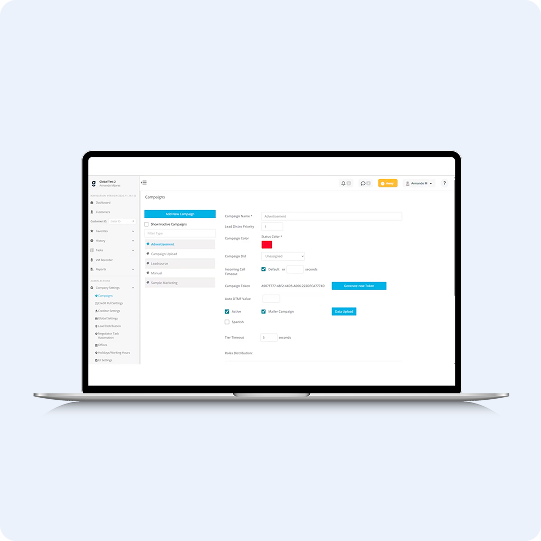
The alternative is familiar: assemble a CRM, phone system, reporting tools, and payment provider, then maintain the connections. Reliant Account Management offers another dedicated-account and payment-processing option. Global’s broader pitch joins those payment functions to provider software. Prime Express offers preconfigured onboarding for emerging providers; full Prime accommodates custom integrations. More customization also means more implementation decisions.
The commercial model combines account and payment services with licensed provider software. For a buyer, the useful comparison is the full cost of the proposed configuration, including migration, integrations, training, and ongoing administration. A platform that combines tasks earns its place when those tasks otherwise consume enough time and introduce enough errors to justify the change.
05 / Start with the paperwork
Global’s October 2025 onboarding case study is more concrete than its broad platform pitch. Working with Cape AI, it built Global Onboarding Automation to ingest documents, extract and validate information, and identify inconsistencies. Global reported more than 80 percent fewer manual data-entry errors and tenfold faster record processing. It said employees moved into customer service, analytics, and partner work. These are reported internal results, not a universal forecast.
The transferable idea is to begin with a repetitive process and measure its errors and turnaround. The weekend-alert change supplies the companion lesson: automation still needs to understand the working day. Software cannot supply missing settlement funds, secure a creditor’s agreement, or turn deposit insurance into a promise that a debt will disappear. Global’s most useful contribution sits in the accountable details between those events.