Consider the water bill. Paying it online ought to be a small victory over paperwork. Instead, it can require a password reset, an account number, a payment fee, and a second thought about whether the money will arrive on time. The screen says success. Somewhere else, a ledger still needs updating. That little distance between the two is where doxo has built its business.
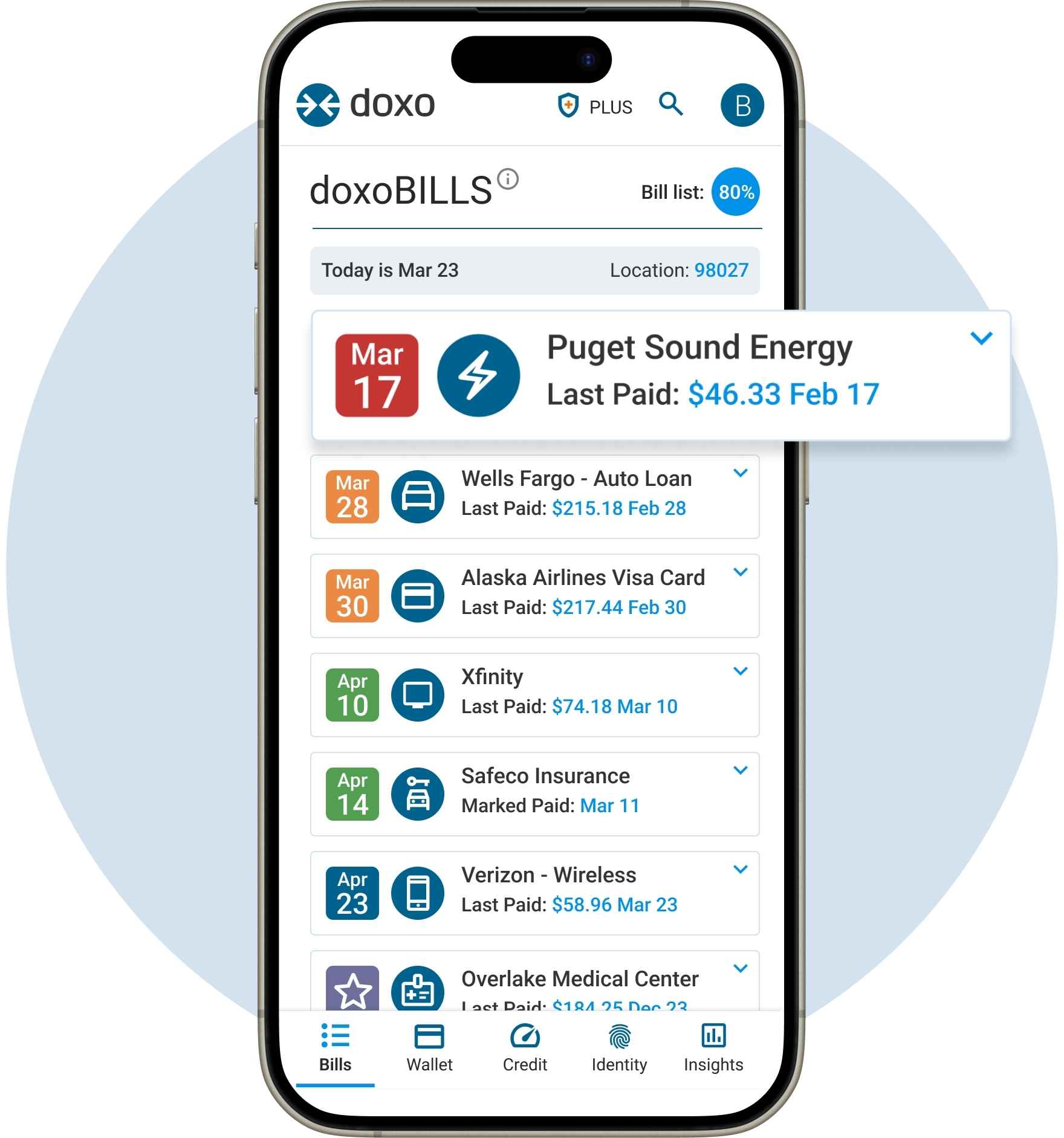
- One account: organize bills, set reminders, and track payments across a nationwide directory.
- Two price layers: free linked-bank payments; optional doxoPLUS protections for $5.99 monthly.
- One crucial distinction: a payable biller is not necessarily a doxo partner.
The appeal is easy to understand. Households encounter utilities, insurers, lenders, and medical offices as separate administrative universes. doxo offers a common checkout across them. The company says it has served more than ten million consumers. Its more interesting achievement is persuading people that paying ordinary bills deserves a product of its own.
The cabinet became a network
Steve Shivers, Mark Goris, and Roger Parks founded doxo in 2008. At its 2011 Finovate demonstration, the proposition resembled a digital filing cabinet: receive documents, manage accounts, pay bills, keep records. One password could replace a drawer full of paper. The early network included Sprint and regional energy providers. Even the filing cabinet had ambitions.

Early money did not guarantee momentum. Forbes reported that growth stalled and investor enthusiasm faded. In 2015, doxo added software aimed at billers themselves. That widened the problem it could solve: consumers needed a convenient place to pay; businesses needed a practical way to collect.
In March 2022, doxo announced an $18.5 million Series C led by Jackson Square Ventures, its first new institutional round in eleven years. Shivers told Forbes that annualized revenue had passed $40 million. That is a historical management claim, not today’s revenue. Still, it explains the timing: the operating business had become a stronger argument for financing.
“By waiting, we raised as much or more capital with way less dilution.”
Steve Shivers, speaking to Forbes in 2022
One checkout. Two routes.
doxo’s directory contains more than 120,000 payable billers. Read that number carefully. It describes where payments can go, rather than how many companies have signed up as partners. The difference is central to both the service’s usefulness and its troubles.
With doxoDIRECT, participating billers verify their bank account and receive payments by ACH. Elsewhere, doxo sends money on the customer’s behalf without a biller partnership. The FTC’s 2024 complaint described payments delivered through mailed paper checks. A modern interface can still lead to an envelope.
ACH delivery
Can include a paper check
Coverage describes destinations. Integration changes the route.
This makes doxo different from simply visiting a utility’s website. Its consumer proposition is breadth across companies and payment methods. A bank’s bill-pay service is the other obvious alternative. doxo competes for the household’s habit of paying, while direct biller portals compete to keep that habit on their own turf.
For a household juggling several due dates, the useful feature is the shared view. A bill can be easier to remember when it appears beside the others. But aggregation has to earn its place: someone already comfortable with a bank’s service or a biller’s autopay may have less reason to add another account.
Free has a payment method
The basic service offers free payment delivery when a user links a bank account. Credit cards, debit cards, and Apple Pay can carry variable charges. doxo makes money through applicable transaction fees and its optional subscription, doxoPLUS. The choice of payment method remains part of the price.
June 2026 subscription terms list $5.99 monthly or $59.88 annually. Benefits include identity and credit services through TransUnion, plus conditional late-fee and overdraft reimbursements. Approved fee-free methods include ACH and eligible debit cards. Credit cards remain outside that waiver. Identity benefits require enrollment; reimbursements require claims and supporting records. The subscription buys a defined package, with defined edges.
For billers, doxoDIRECT enrollment is advertised as free. The tools include payment visibility, autopay, and optional account integrations. That matters to a small provider whose existing collection process involves telephone calls and manual reconciliation. The company’s expertise is joining these everyday workflows to a common payment experience.
The expensive part of a tidy screen
In 2024, the FTC sued doxo and two co-founders, alleging misleading search advertising, unclear fees, and deceptive subscription practices. The complaint also alleged that delivery delays caused harm. These were allegations; the later court ruling addressed a narrower set of issues.
In May 2026, the court found the company liable on two subscription-related claims under the Restore Online Shoppers’ Confidence Act. In August, the FTC announced a proposed settlement requiring $2.1 million for consumer redress and restrictions on affiliation claims, fees, and subscription consent. At announcement, the order awaited court approval.
doxo said the settlement contained no admission of wrongdoing, service would continue, and reporting and monitoring would run five years. It emphasized that the court had not found deception under the FTC Act or individual liability. The useful product lesson survives the dispute: customers must understand who handles the money and what they agreed to buy.
Follow the bill all the way home
There is another business hiding in the transaction record. doxoINSIGHTS uses aggregate, anonymized payment activity to compare household expenses by geography. Its 2026 state report put median monthly bills at $2,892 in California and $1,116 in West Virginia under its methodology. Those comparisons give a household’s private administrative headache a public dimension.
Those figures describe recurring obligations within a particular dataset. They are useful benchmarks, rather than predictions of any one family’s spending. The distinction matters for the same reason payment routes matter: a simple number becomes more useful when the reader understands what went into it.
What can another company copy? Put scattered obligations in one view. Make payment status visible. Explain charges beside the decision that creates them. For consumers, the practical test is equally concrete: compare the fee and displayed delivery date with the biller’s own option. An urgent bill may leave too little time for an indirect route. The job finishes when the biller credits the account.