The meter is still blinking. You have paid for parking on your phone, yet the machine beside your car appears unconvinced. In Grand Rapids, the MOTU app’s instructions explain this peculiar arrangement: the payment need not appear on the meter. The enforcement officer sees it on a handheld device. Somewhere between the pavement and the database, your car has become a record.
That is a useful place to begin with Passport. Drivers encounter an app that saves them a walk back to the curb. A city buys something more complicated: a way to keep payments, permits, tickets and money moving through the same operation. The screen is pleasant. Agreement between departments is where the work begins.
- The buyer: cities and parking operators with several systems to manage.
- The proposition: connect the payment, the permit and the enforcement record.
- The evidence: local deployments in Portland, Grand Rapids and Austin.
- The new chapter: Arrive completed its acquisition on October 1, 2026.
The meter can lie. The record should not.
Passport sells cloud software for managing parking and the curb. Its enforcement tools cover citation issuance, photo evidence, appeals and overdue accounts. Digital permits replace paper administration with applications and records that enforcement systems can consult. Mobile parking lets drivers pay, receive expiration alerts and extend a session where local rules permit it. Payment services help staff track and reconcile the money.
The company reports more than 800 city and private-operator clients across North America. Universities and parking authorities also belong to its market. A driver needs a quick transaction; an officer needs reliable evidence; an administrator needs a defensible decision. Passport’s expertise sits in those overlapping requirements. One license plate can matter to all three people for entirely different reasons.
A parking facility before a platform
There is a pleasingly literal detail in the company’s origin story. In Passport’s recap of a 2024 podcast interview, co-founder Khristian Gutierrez described how he and Bob Youakim leased a parking facility to understand the business firsthand. Their background was investment banking. The facility gave them customers whose problems could be observed directly.
Founded in 2010, Passport grew into a business that could disappear behind a city’s own branding. Grand Rapids calls its app MOTU; Austin uses ParkATX. This is enterprise software with a local face. For a municipality, a familiar identity can coexist with an outside supplier handling the underlying technology.

The method is worth borrowing. Before designing the dashboard, watch someone do the job it is supposed to improve. A missing payment, an incomplete application or a confused visitor exposes requirements that an internal planning meeting can easily overlook. In municipal software, such details become the product.
Portland’s paperwork problem
Portland, Maine, offers a more grounded test than any grand promise about smart cities. Its published Passport case study describes manual ticket writing, telephone calls to check repeat violators and tedious data entry. The city selected Passport through competitive bidding. Officers could look up registration information in a mobile app, print tickets wirelessly and send records into the back office in real time.
The telling detail is the input field. An officer described how searching for a vehicle make saved writing out a name such as Mitsubishi. It is an unglamorous improvement, which gives it a certain charm. Multiply a small inconvenience across a working day and it becomes an operating problem.
These numbers show people using digital channels. They do not tell us how much net revenue the software created, or how many violations it prevented. That distinction matters. A city evaluating a vendor should ask about completion rates, staff time and disputed tickets alongside collections. An efficient payment route is useful even when the aim is simply to help people comply.
Cash belongs in the digital city
In Grand Rapids, MOTU takes its name from the city motto, Motu Viget, meaning “strength in activity.” Passport’s case study places the app at more than 3,600 on-street spaces. Its wallet lets users preload funds, including people without a credit card. The app’s FAQ explains how drivers can add cash at the parking office.
A digital service still needs a physical doorway. Someone must accept the cash and credit the account. That requires staff and a process. The lesson for other services is practical: list the people a preferred payment method excludes, then design a route they can actually use.
“It’s exciting to watch the data in real time”
Jennifer Kasper, Grand Rapids Mobile GR assistant director
Grand Rapids added Apple Pay and Google Pay through enhanced gateway services in 2023. The case study reports adoption reaching 25% in less than six months. That result concerns the payment options in this particular program. It suggests a useful habit for operators: introduce a choice, observe its use and adjust the service around actual behavior.
The price of a little convenience
Passport’s business combines software contracts with payment services. Who pays, and for what, depends on the local agreement. A free app download does not make the transaction free. Newark, Delaware, lists a 35-cent convenience fee for each new Passport parking session. Evanston’s published July 2026 changes put a non-wallet ParkEvanston session at 47 cents.
Local transaction charges, additional to parking. Evanston also lists wallet-loading charges. This is a city schedule, not a universal Passport tariff.
Evanston says the card fee covers merchant processing, gateway and platform costs. Its wallet offers a lower session charge. A useful buying question follows: separate the parking rate, convenience charge, processing cost and software license before comparing offers. A transaction fee is not necessarily the vendor’s net income.
Public acceptance can change the calculation. In July 2023, Chico removed a 35-cent credit-card transaction fee across kiosks, smart meters and Passport mobile payments after residents and businesses described it as a burden and a possible deterrent to downtown visits. Software can process a fee perfectly while the policy proves unpopular.
When the meter joins the ledger
Austin expanded its Passport partnership in October 2025 to include meter and pay-station payment processing. It already used the platform for digital permits and ParkATX. The addition brought physical card-present payments and digital transactions into a shared reporting and reconciliation environment. Existing hardware still had a place in the operation.
The following month, Passport unveiled Passport Payments for the public sector. Its proposition extends into accepting, tracking and reconciling payments across municipal departments and services. The growth opportunity is clear enough: parking supplies experience with many small transactions, and city finance teams have other payments to manage.
For mobile payments, alternatives include PayByPhone and ParkMobile. South Miami publicly lists all three as available providers. Passport’s broader pitch asks buyers to consider the enforcement and permit workflows around the payment. That breadth is useful when departments need shared records; the buying decision still depends on integrations, local requirements and contract terms.
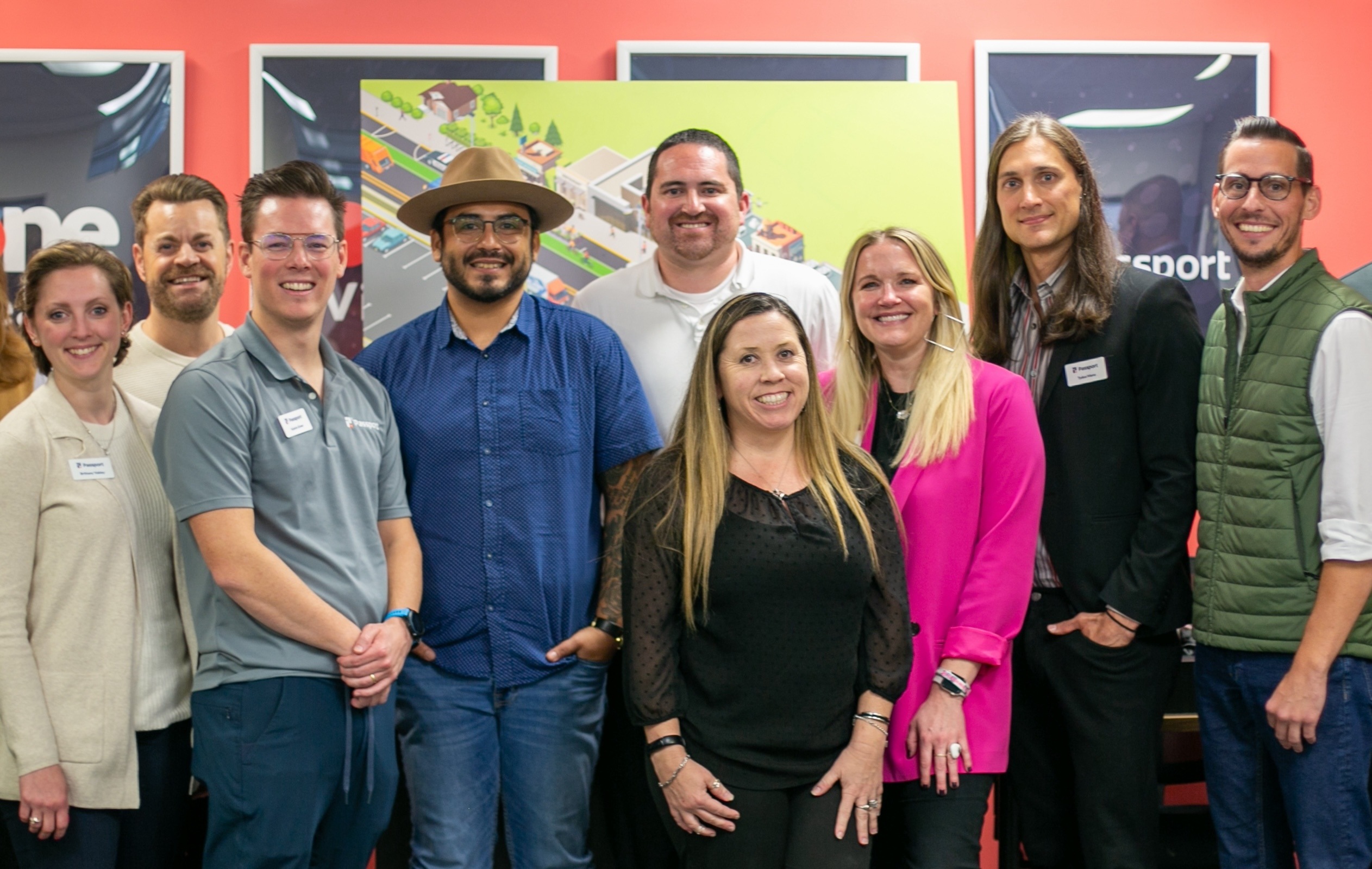
Gutierrez’s public writing gives a clue to the management approach. After experience in public-safety software, he emphasized government constraints and the need to establish reliability before proposing more ambitious tools. His 2025 culture essay describes candor and shared responsibility during leadership change. These are management’s own accounts, but their practical emphasis fits the customers’ work.
The curb gets a new owner
Investors financed the expansion: a $65 million Series D in December 2019, followed by $90 million from Sixth Street Growth in May 2021. The latter announcement put total capital raised above $200 million. These were investments in the company; they tell us little about what an individual city should budget for implementation.
On October 1, 2026, Arrive announced that it had completed its acquisition of Passport. Arrive’s portfolio includes EasyPark, Flowbird, RingGo, ParkMobile and Parkopedia. Its stated ambition connects payment and compliance infrastructure with future autonomous mobility. The announcement says products and services will continue operating normally as integration proceeds.
The immediate test remains ordinary. Did the right vehicle pay in the right zone? Does the permit apply? Can the driver challenge a ticket, and can the finance team account for the payment? City staff evaluating Passport can start there, then examine signage, accessible payment routes and data quality. Every larger ambition for the curb depends on getting those small answers right.