A camera is a surprisingly poor witness. Point it at a road and it will record the afternoon faithfully: the white van, the slowing lorry, the car nobody notices until somebody needs to find it. Ask what happened, however, and you may still need a person to watch the afternoon again. Rekor sells the step between having footage and having something useful to do with it.
The Maryland company puts computer vision to work on roads. It recognizes vehicles, measures traffic and helps operators detect incidents. The premise is pleasantly practical: a picture of a queue should be able to become an alert, a count or a searchable record. The camera has already done the looking. Rekor wants the looking to earn its keep.
- Three jobs: Scout finds vehicles, Discover measures traffic, Command helps manage roadway events.
- Three kinds of buyer: public safety teams, transportation agencies and commercial operators.
- A business still under repair: recurring revenue is growing, but Q2 2026 still produced an adjusted EBITDA loss.
- The useful lesson: choose the decision you need to improve before choosing the camera.
Three questions the road can answer
Consider the different people who care about the same stretch of asphalt. A police investigator wants to locate a vehicle. A transportation planner wants to know how many heavy trucks use the route. A control-room operator wants to know why everyone has stopped. Giving them the same video feed does not give them the same answer.
Rekor separates those jobs into three principal platforms. Scout reads license plates and recognizes vehicle attributes, with searches and alerts built around that information. On its product page, Bowling Green police lieutenant Adam Skaff describes choosing Rekor for make-and-model searches and video review. Mt. Juliet police captain Tyler Chandler emphasizes alert times and performance in different lighting and weather. These are customer testimonials published by the vendor, rather than comparative laboratory results.
Discover addresses a less cinematic problem: counting and classifying traffic. Roadside cameras and edge processing analyze live video for vehicle volume, speed and classification. Its count, class and speed application supports the Federal Highway Administration’s 13 vehicle classes. A stream of passing vehicles becomes data a planner can use, rather than an endless film a planner must endure.
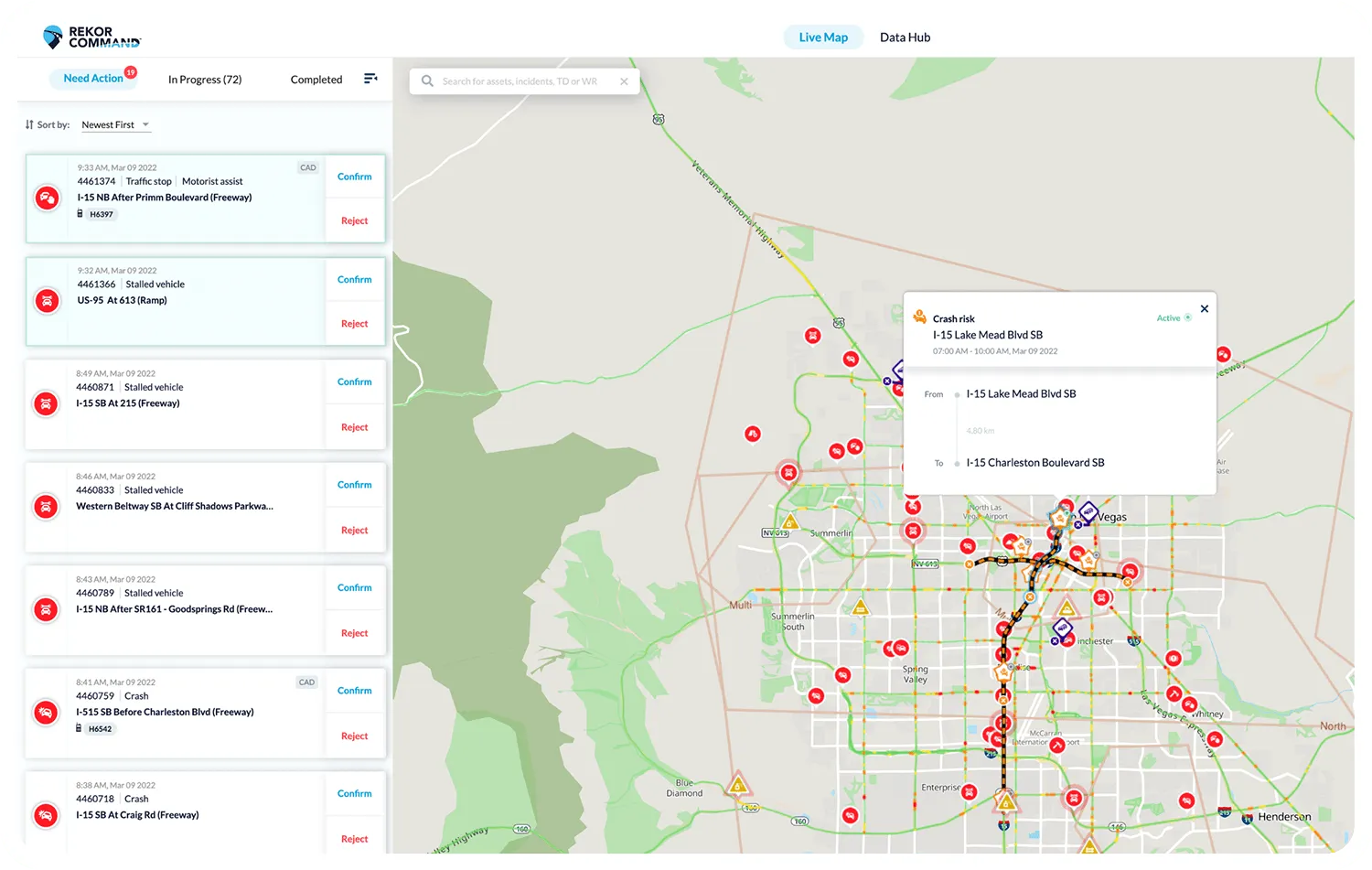
Command serves transportation management centers. It combines multiple real-time inputs, flags events and supports response. Rekor describes a feedback loop in which operators confirm, mitigate and clear incidents, and their actions help improve the model. Ayalon Highways and the Central Texas Regional Mobility Authority appear among the customers highlighted on its product page. The intended outcome is a control room with a clearer view of what needs attention.
There is also a developer-facing route. CarCheck accepts still images through a cloud API and returns plate and vehicle information. An application builder can buy recognition as a component. That is a different purchase from equipping a traffic management center, and it helps explain why describing Rekor simply as a camera company misses much of the business.
The cost of giving a pole a brain
The company’s technology has an unusually approachable ancestor. According to OpenALPR’s official history, Matt Hill released its original recognition software as a free download in late 2015. Rekor acquired the technology in March 2019. The disclosed consideration was approximately $12.397 million, comprising cash, a note and stock. A small, useful software idea had entered a company with considerably larger infrastructure ambitions.
That software-first instinct remains visible. The Scout Axis Agent, launched in July 2026, works with supported Axis cameras using ARTPEC-8 and ARTPEC-9 processors. The agent runs on the camera; the recognition engine runs in Rekor’s cloud. A customer can therefore add the service to compatible equipment it already owns. Compatibility matters more than the comforting phrase “existing cameras.”
Three years: $2,849 · Five years: $4,499
Hardware, installation and connectivity add to the bill.
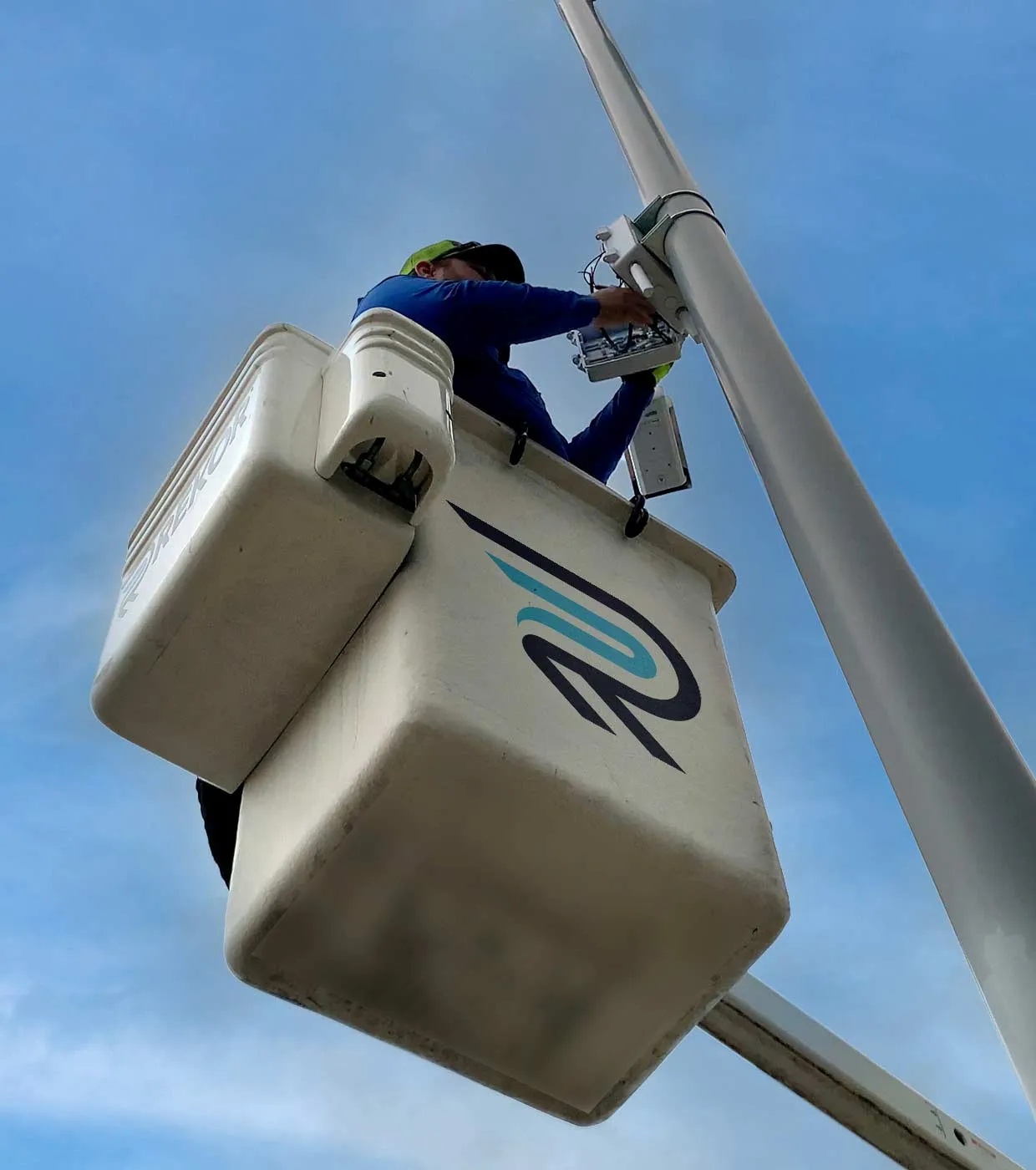
Rekor’s Axis product page estimates roughly $2,300-$2,500 in hardware for a self-powered, cellular-connected site, excluding the pole and installation labor. Camera selection and site conditions affect that estimate. The annual license is another line item, as is the cellular plan. A buyer who mistakes the software price for the deployment price will have a short and unhappy budgeting meeting.
Flock Safety is an alternative for public-safety license-plate recognition, with vehicle attributes and investigative tools of its own. Rekor’s relevant distinction is the choice of deployment and the breadth of jobs around it: compatible cameras, APIs, traffic measurement and incident operations. This does not establish better accuracy. A practical comparison would test the actual lanes, lighting and search requirements of the buyer.
The expensive education of a road company
Rekor’s corporate history is less tidy than a garage-startup legend. The legal company formed in February 2017 as Novume Solutions, combining predecessor businesses, and adopted the Rekor name in 2019. Robert Berman is identified as a founder; James McCarthy also appears in founder records. Hill’s role belongs to the acquired OpenALPR story. Folding all three into one founding scene would produce a better anecdote and a worse history.
In August 2021, Rekor closed its acquisition of Waycare for approximately $61 million, subject to adjustments. Waycare added traffic-management capabilities to a business already able to recognize vehicles. The logic was clear enough: a road has many problems beyond identifying who passed a camera. The price showed how seriously Rekor wanted to address them.
Then came the difficulty familiar to ambitious technology companies: building an organization that could sell and deliver what it had built. On the first-quarter 2025 earnings call, Berman described Rekor as “just overbuilt.” His account blamed bureaucracy and ineffective processes for holding back products with demand. That is management’s diagnosis, but it offers a specific answer to what changed its mind: the next useful advance was getting existing products out the door.
“Rekor was just overbuilt.”Robert Berman · Q1 2025 earnings call
The balance sheet makes that diagnosis consequential. Rekor reported $48.45 million in 2025 revenue, with $23.865 million classified as recurring. It sells a mixture of subscriptions, licenses, data services, hardware and implementation work. Software can arrive through an online purchase; roadside equipment must be deployed. Those are quite different ways of turning an order into revenue.
Nearly half of revenue was recurring. Hardware and service work still carried substantial weight.
Capital was part of the cost of pursuing that model. In December 2025, Rekor priced a public offering targeting approximately $15 million in gross proceeds, with shares and accompanying warrants. This was public-market financing, with the dilution and terms that entails.
In February 2026, the company announced a consolidation of overseas engineering into the United States. It said this and other actions were expected to lower annualized cash burn by about $7.5 million. Coordination, domestic development and operating expense all figured in the explanation. Its careers page advertises employee equity and resource groups for women, remote staff and LGBTQ+ employees; those employer promises now sit alongside a period of contraction.
By the second quarter of 2026, headcount had fallen 20% in the first half. Quarterly revenue was approximately $12.7 million and recurring revenue $6.7 million. Adjusted EBITDA still showed a $1.2 million loss. This is an improving business with a remaining gap, and adjusted EBITDA is a non-GAAP measure. Management’s second-half profitability expectation remained a forecast.
The latest cost move was concrete. In September, Rekor announced termination of two long-term leases, using approximately $2.8 million in cash to reduce about $10 million in lease obligations. It expected more than $2 million in annualized savings. The road company was also learning which rooms it could afford to leave.
The records that deserve to disappear
A camera network becomes politically interesting when it remembers. Traffic measurement and a searchable history of individual vehicles carry different implications, even when both begin with passing cars. The useful question is what information a particular job requires, who can access it and how long it should survive.
In March 2026, Rekor announced a patent for incident-based retention of license-plate and vehicle data. Its described approach lets retention vary with investigatory relevance and the severity of suspected activity, under policies informed by agencies and communities. An active serious-crime investigation need not have the same expiry rule as an unrelated journey. That is an architectural proposition; its effect depends on the policy a customer chooses and enforces.
Go-Secure.Video adds another question: can the footage be trusted? The Axis-agent launch includes a way to verify video integrity from capture. Authenticity and permission remain separate matters. A recording can be intact while its retention is inappropriate; a sensible retention policy cannot rescue a tampered file. Buyers need to assess both.
Buy the decision, then the camera
The lesson a reader can borrow is procedural. Write down the decision first. If it is traffic counting, specify the vehicle classes and reporting needs. If it is an incident alert, specify who confirms it and who responds. If it is a vehicle search, specify the permitted purpose, retention and access controls. Then test whether the proposed camera and software can support that workflow at the intended location.
Rekor itself qualifies camera performance by calibration and site selection. Its cloud-based Axis recognition also makes connectivity part of the operating design, even with local buffering. Poor imagery, unsuitable positioning or a control room unable to act on alerts can defeat the purchase. Better interpretation helps only when the underlying observation and the subsequent decision are good enough.
That is why Rekor is an interesting company to watch. Its ambition is to make roads legible, and its business is learning the cost of doing so. The strongest case for it is wonderfully unglamorous: give someone responsible for a road an answer they can use before the afternoon becomes another file nobody has time to watch.
Take the next exit
Explore Rekor’s website, newsroom, investor updates and technical documentation.
Follow LinkedIn, X, Instagram or Facebook. Developers can explore OpenALPR on GitHub.