Five hundred templates is an impressive collection until you are the person who has to change them. At an unnamed national retirement plan administrator, the collection had grown past that number. Each partner needed its own messaging, branding, and content. The documents were personalized. The maintenance was personal, too: somebody had to keep doing it.
O’Neil Digital Solutions describes replacing those static templates with 15 dynamic ones, built to draw the differences from partner profiles. It reports an 85% reduction in template maintenance workload. That is a useful place to begin understanding this company. Its product may end up as a letter, a statement, or a message on a screen. Much of its work happens before anyone reads a word.
- The job: turn enterprise customer data into communications that can be created, approved, delivered, and tracked.
- The buyers: health plans and financial services organizations with recurring, sensitive communications.
- The proposition: ONEsuite software plus the people and production facilities to carry the message through.
The trouble with 500 templates
The retirement administrator’s change was architectural. The company account describes a move from separate static documents to a profile-driven system, with partner-specific details rendered automatically. A common structure could accommodate variation without requiring a separate template for every variation. Afterward, the administrator extended ONEsuite into welcome kits, statements, and compliance correspondence.
The distinction matters. Sending a more relevant message and maintaining another document are different activities, though businesses often bundle them together. The case suggests they can be separated. Readers running any sprawling document library can borrow the question: which differences belong in the template, and which belong in the data?
A stockbroker’s delivery problem
O’Neil’s original delivery problem belonged to William J. O’Neil, the investor and publisher. His investment business had time-sensitive research to distribute. In 1973 he founded O’Neil Data Systems, a high-speed printing operation. The founder’s memorial describes the purpose plainly: get the information delivered ahead of the competition. A database is considerably more useful when its contents reach the person who needs them.
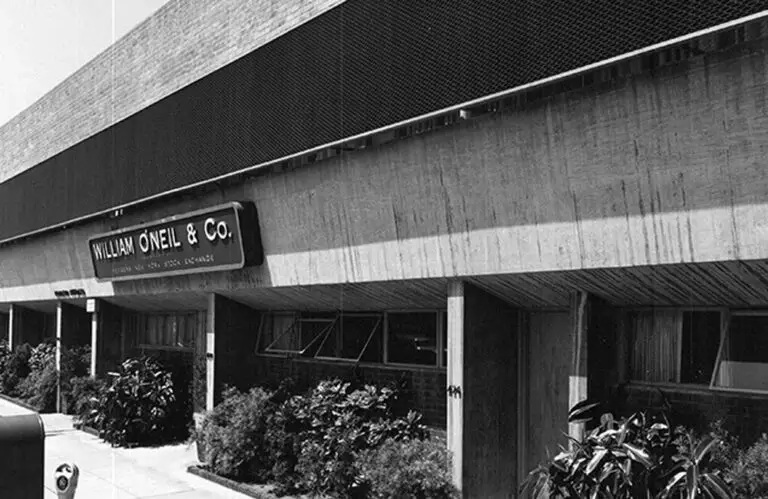
That origin makes the present business easier to understand. Financial research, an insurance notice, and a retirement statement are different kinds of reading. All require an orderly journey from underlying records to a usable document. O’Neil grew into healthcare and financial services communications, where the recipient’s circumstances and the delivery deadline remain central to the job.
The company’s history dates the first ONEsuite platform to 2005. It adopted the O’Neil Digital Solutions name in 2014 and describes a 2025 version, ONEsuite 5.0, with updated SaaS infrastructure and AI features. The evolution connects an old operational concern with newer software: how to produce individualized communications repeatedly, with control over the process.
The document factory behind the screen
Customer Communications Management, or CCM, is a rather bloodless name for work that becomes quite vivid when a statement contains the wrong information. O’Neil’s customers include healthcare payers, pharmacy benefit managers, retirement providers, banks, insurers, and wealth managers. Its FAQ says the company serves communications for more than 125 million members. That describes recipient reach, rather than a count of companies buying the service.
For a health plan, the output can include benefit explanations, ID cards, enrollment kits, provider directories, and annual coverage documents. In financial services, the work includes statements and notices. These are recurring obligations with considerable variation. Their useful qualities include accuracy, timely arrival, and a format the recipient can actually use.
- 01Customer
data - 02Content
+ rules - 03Review
+ approval - 04Print
or digital - 05Track
+ learn
ONEsuite connects the steps; each client’s actual workflow depends on its systems and communications.
ONEsuite brings content creation, data processing, composition, approvals, campaign management, delivery, and reporting into the same platform. O’Neil also offers integration and normalization services to prepare the data. The delivery options include print, email, SMS, and portals. A useful implementation has to account for the recipient’s preferences as well as the sender’s production schedule.
The analytics component is intended to feed results back into communication planning. As Madison Advisors puts it on the ONEsuite product page, “The tracking data can then be used to measure a campaign’s effectiveness in reaching the target audience.” The attraction is a shorter distance between preparing a message, delivering it, and understanding its response.
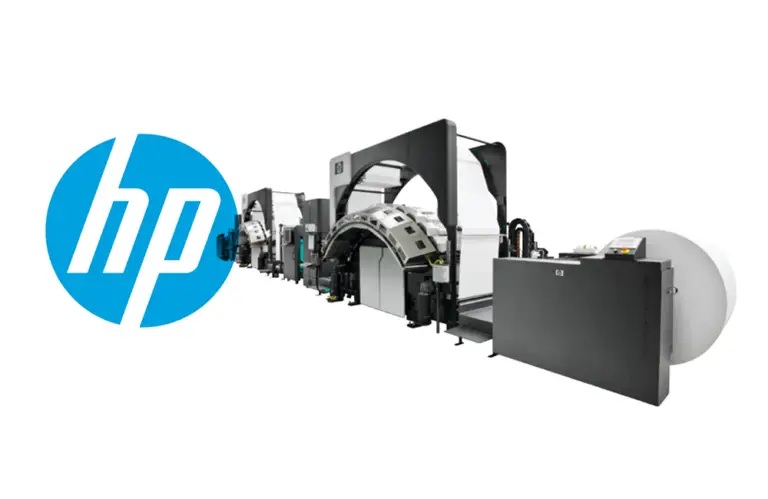
HP’s customer material describes more than a dozen PageWide presses across three US locations. It lists output ranging from membership cards to brochures and statements. The presses give O’Neil a role beyond supplying a software interface: it also handles production and fulfillment. The message’s physical journey is inside the business model.
The savings are in the handoffs
A separate healthcare case shows the proposition in action. The client had multiple vendors, redundant systems, inconsistent communications, and an internal CCM department that was failing its enterprise goals. O’Neil describes beginning with under-65 communications, extending into Medicare, and adding commercial group communications in 2024. ONEcms supported automated content workflows. Following a previous vendor’s exit, Medicare pre-enrollment materials were implemented in 30 days.
The company reports more than $6 million in savings and a 15% reduction in enterprise communication spending. It attributes those gains to removing duplicate software, optimizing fulfillment, and subscription efficiencies. These are results from a company-published account of an unnamed customer. They are useful evidence of the proposed mechanism, rather than a forecast for another buyer.
“We are a customer satisfaction company.”O’Neil’s published declaration
The commercial offer combines enterprise software subscriptions with implementation, integration, and managed services, including print and fulfillment. The natural comparison is therefore partly organizational. Quadient Inspire also offers enterprise CCM across print and digital channels. An institution can buy such software and arrange the other work itself; it can also retain an internal team. O’Neil’s pitch is to bring more of those responsibilities to one provider.
That arrangement needs careful scoping. Fewer suppliers can mean fewer handoffs, but the buyer still needs to assign responsibility for data quality, content decisions, approvals, and integration. Consolidation is valuable when it removes repeated effort while preserving the controls the organization needs.
Someone has to claim the postage
Software is only part of the cost story. When North Carolina announced O’Neil’s Monroe expansion in 2015, it described a planned $90.7 million investment over five years and 250 planned jobs. A performance-based grant of up to $2.25 million depended on meeting investment and employment standards. Those were announced commitments and conditions. They convey the scale of the production investment behind a company that also sells cloud software.
There is another, smaller kind of infrastructure: knowing the postal paperwork. In July 2026, O’Neil reported more than $11.6 million in incentive value captured across 2025–2026 USPS program cycles. It separated that total into $2.99 million in promotion incentives and $8.61 million in Mail Growth Incentive credits recovered across seven client organizations.
$2.99M
Promotion incentives
$8.61M
Growth incentive credits
The account describes a job of matching mail streams to eligible programs, enrolling them, and tracking credits to receipt. O’Neil says these recoveries did not require clients to redesign their mail programs. That is an entertainingly unglamorous form of expertise. Savings can depend on someone remembering to register and then continuing to chase the paperwork.
What to steal from the template cupboard
The useful lesson is to examine repeated work before making it faster. Inventory the documents. Separate shared content from recipient-specific facts. Decide who owns changes and approvals. Start with a communication type whose outputs can be checked against the existing process, and measure maintenance effort as well as delivery speed.
These are deductions from the cases, not universal promises. Dynamic documents depend on sound data and reliable rules. Shared structures help when documents actually have reusable parts. Postal incentives depend on eligibility and program windows. A company sending a few simple messages may have little reason to take on this machinery.
For an institution whose cupboard has become a maintenance problem, however, subtraction is an appealing ambition. The number to watch is the amount of work required when one fact changes. Fifteen templates will still need tending. At least the person doing it has a chance of remembering where everything lives.