On August 25, 2020, a declaration needed an audience. The African region had gone four years without a case of wild poliovirus and was about to be certified free of it. The science was settled. The institutional machinery was ready. The problem was that a historic public-health victory was arriving in the middle of a pandemic, when auditoriums were closed and the world's attention was already badly overdrawn.
Global Health Strategies helped turn that constraint into the event. Working with the World Health Organization's Africa office and the Global Polio Eradication Initiative, the firm organized a virtual ceremony, coordinated speakers, wrote remarks, handled media outreach, created a brand and built a website in English, French and Portuguese. The site carried a livestream, a timeline, worker profiles and a toolkit that let many institutions sound like one campaign without sounding identical.
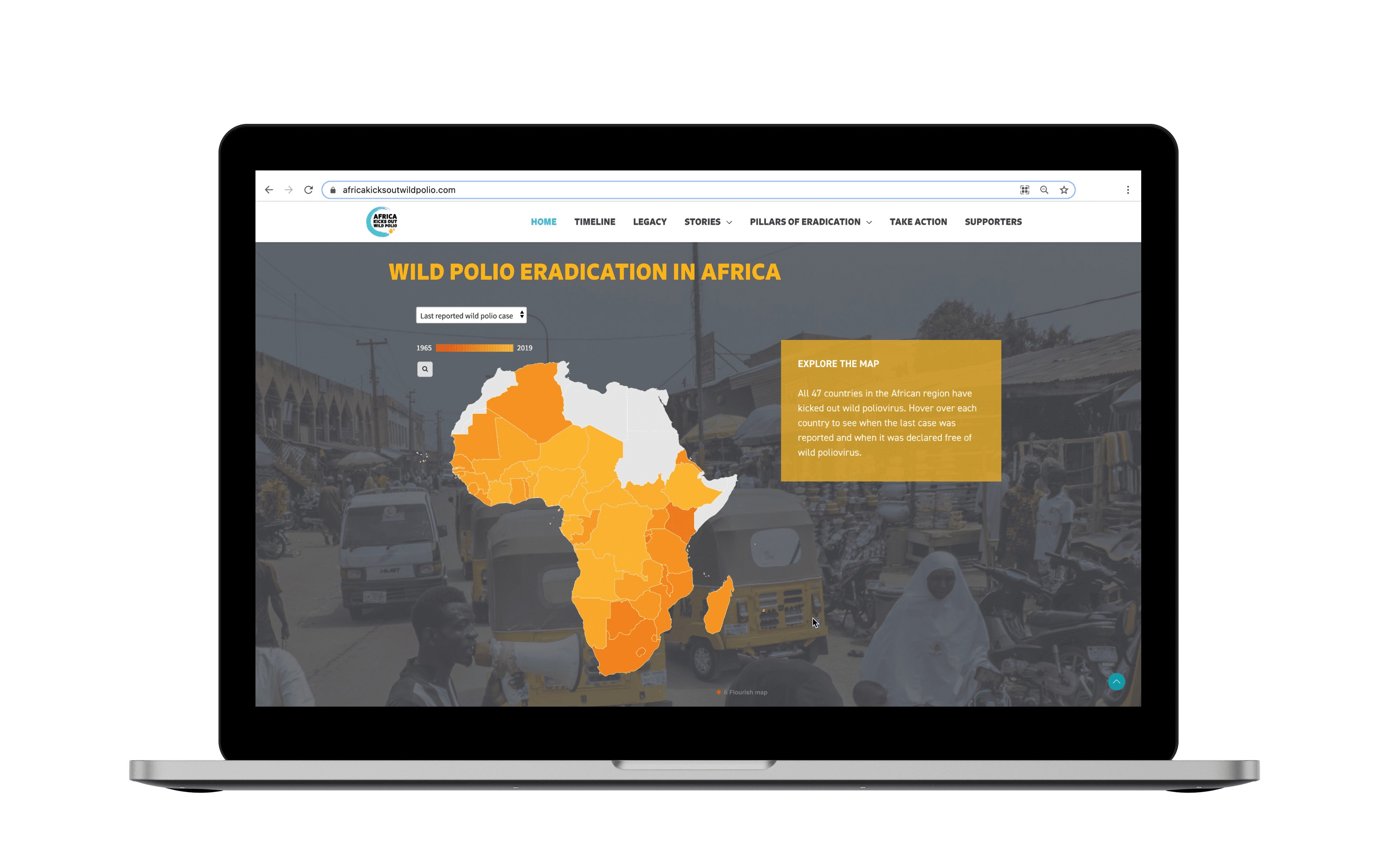
The product is the space between proof and policy
Those numbers are not vaccinations, lives saved or budgets passed. They are attention metrics, and that distinction matters. GHS is not a delivery organization disguised as an agency. It is a for-profit consultancy operating in the crowded interval between a fact becoming true and an institution deciding to act on it. Its customers include foundations, NGOs, multilateral agencies, governments and health companies. They already possess expertise or a program. What they often lack is coordinated movement.
The firm's menu is unusually broad for a communications shop: evidence generation, research, stakeholder and market analysis, messaging, champion recruitment, media relations, digital production, campaigns, events and program implementation. The sequence is the point. A policy paper without a credible messenger can disappear. A celebrity without evidence can become noise. A meeting without a decision attached is catering. GHS tries to assemble the whole chain.
That makes GHS different from a general PR network selling reputation, and from a management consultancy selling a deck of recommendations. The closest alternatives are specialist health organizations such as Vital Strategies, social-impact firms such as FSG, the global-health practices inside large consultancies, or a client's own advocacy team. GHS's argument is narrower: health and development are not verticals inside the firm. They are the firm.
Two founders, four kinds of scar tissue
The firm's origin explains the operating system. David Gold trained as a lawyer, became an ACT UP treatment activist, worked at Gay Men's Health Crisis and later helped build vaccine advocacy at IAVI. Victor Zonana arrived through journalism and government communications, after reporting for The Wall Street Journal and Los Angeles Times and serving in the US Department of Health and Human Services. They founded GHS in 2002 from four experiences that rarely share a conference room: activism, media, industry and government.
Activists learn that urgency must be manufactured. Reporters learn that clarity beats completeness. Officials learn that the right idea can still die in the wrong process. Industry teaches the discipline of a client and a deliverable. GHS turned that mixture into a business model: fee-based consulting and program work, sometimes supported by publicly disclosed foundation grants. A 2022 Gates Foundation commitment of $2.248 million, for example, backed work to raise policy and fiscal priority for eliminating two neglected tropical diseases in India. This was program funding, not an equity round; GHS remains privately held, with no public valuation.
Global is a network; local is a permission slip
The company began in New York and now lists a network across the Americas, Europe, Africa and Asia. That geography is more than décor. In Uttar Pradesh, GHS designed a maternal and child health effort that engaged 487 champions - village heads, religious leaders, members of parliament and state legislators. In Kenya, it worked with the Children's Investment Fund Foundation and the health ministry on maternal and perinatal care, bringing in pediatricians, performers, broadcasters and the country's First Lady. In Indonesia, a 2024 agreement with the health ministry joined immunization and tuberculosis priorities to research, messaging, coalition building and community engagement.
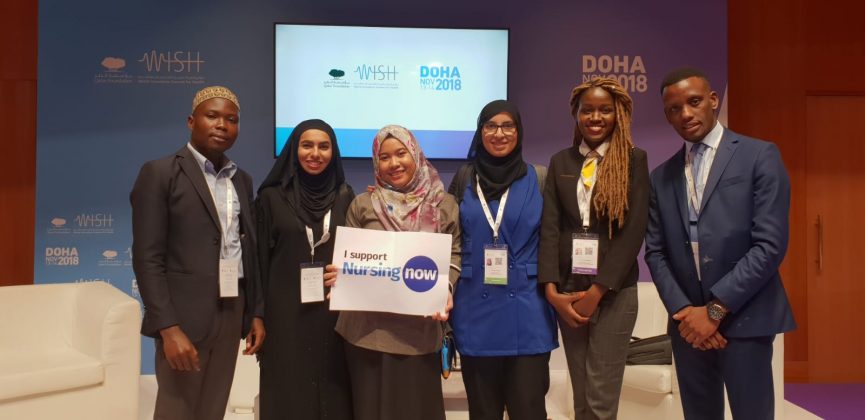
The pattern is consistent: borrow legitimacy instead of importing it. A New York strategist can help frame the decision, but a village head can explain why a clinic day matters. A global event can set tempo, but a local journalist knows which detail survives translation. This is also where the model becomes expensive to imitate. It requires trusted relationships in many places, specialists who understand both health evidence and politics, and enough coordination to prevent a global message from flattening local reality.
The honest case study is its own front door
In April 2025, GHS published a revealing request for proposals. Its website, launched in 2017, had become too text-heavy. Navigation needed work. The site did not adequately display the creative and digital practice in which the firm was investing. A company that advises others to make complicated ideas travel had discovered friction in its own vehicle.
The proposed fix was concrete: a redesigned, multilingual, accessible site with a modern content system, better performance, simpler structure and stronger visual proof. The budget was $50,000 to $70,000, with a desired August launch. What failed first was not GHS's mission; it was the format used to express it. What changed the firm's mind was growth - across markets and into digital work - that the old site could no longer demonstrate. The lesson is delightfully ordinary: expertise does not exempt a company from its own diagnosis.
The useful thing to copy is the order
Most organizations begin a campaign by drafting a slogan. GHS's work suggests a less glamorous starting point: name the decision. Is the objective a budget line, a ministry guideline, uptake of a checklist, attendance at an event or a change in public behavior? Then map the people who can make that decision and the people they trust. Build evidence for those audiences. Recruit messengers with standing. Finally, create a moment - a launch, summit, milestone or deadline - that compresses scattered interest into action.
One decision. One accountable audience. Several trusted messengers. Evidence shaped for each messenger. A public moment. A follow-through plan after the applause.
The order also reveals the limits. Communications cannot rescue weak evidence, make an infeasible policy affordable or compensate for a delivery system that has no staff, supplies or authority. Celebrity attention can distort a cause. A global campaign can crowd out local ownership. Metrics such as mentions and page views show reach, not causation. The model works best when a sound intervention already exists, the requested action is specific, credible local actors can lead and the institutions on the receiving end have room to move.
That is the quiet insight inside GHS's most visible campaigns. Attention is not the outcome. It is an input - scarce, unevenly distributed and perishable. Used carelessly, it produces a burst of noise. Organized around evidence, trusted people and a decision, it can become infrastructure.