Glen Calvert once described a monthly appointment with his own to-do list. He would sit down, identify the two or three things that could move the business forward, and pass the rest to his finance director or another senior colleague. For a founder, this is an unusually revealing ritual. The problem with being needed everywhere is that everywhere makes a poor destination.
He was talking in 2016, while running the advertising technology company Affectv. Years before Kaizan, his current business, he was already occupied by a question that would follow him through advertising and esports: how does a team grow without making its judgement thinner?
The founder’s crowded diary
Calvert’s account of growth included its awkward arithmetic. Affectv had reduced its workforce from 65 to 50 after mistakes in its cost base. He acknowledged ignoring advice from an investor and regretting it later. He also described the difficulty of early employees becoming managers, with responsibilities very different from the work that had first made them valuable.
There is a particular honesty in discussing the gap between a company’s ambitions and its capacity to manage them. A growing payroll gives a founder more people to work with. It also creates more decisions about who should do what, who needs help, and which tasks deserve the founder’s time. Calvert was learning that expansion carries an administrative bill.
Magazines, signals and a Soho office
His route into that world began with magazines. After university, he travelled for roughly 18 to 20 months, visiting the United States, Asia, Australia and Pacific islands. Reading magazines on a beach helped him think about what he might do when he returned to London. Publishing appealed because it brought together subjects he liked, including sport and technology. He entered through advertising sales.
Dennis Publishing, the company founded by Felix Dennis, provided an early setting for that interest. Calvert remembers a culture that gave people responsibility and room to find their own way. Digital advertising offered another attraction: advertisers could see clicks and follow what happened to their spending.
His early startup memories have less glamorous furniture. He recalled desks made from old cupboards and an internet connection borrowed from another office, with cables running between windows. There is something wonderfully literal about a young technology company needing to borrow its connection to the future.
Calvert joined Struq’s founding team as sales director. Affectv followed in 2011. By the time he appeared in the Growing Business Young Guns coverage, the company had worked with more than 60 clients, including American Express, Dell, Sky, Thomson and Microsoft. A £2 million investment from Octopus supported the next stage. The business was moving from winning initial customers to thinking about international presence.
Affectv worked on making digital advertising more relevant to the person receiving it. Its technology used data to identify audiences and deliver messages at an appropriate moment. A 2014 Europcar campaign reported an 11 per cent reduction against its cost-per-acquisition target. For Calvert, the proposition depended on translating information into a result the advertiser could recognise.
By 2015, he was writing about the difficulty of connecting activity across different devices. Someone using a phone and a computer could appear as disconnected pieces of information. His subject was the effort to join them together. That concern with scattered context would later take a different form at Kaizan, where the fragments belong to a client relationship.
The candidate behind the royal we
While Affectv sold technology, Calvert’s management writing kept returning to people. In 2014, he advised hiring managers to ask for concrete examples of the skills they needed. A candidate who talked about a large project should be able to explain their own contribution. The royal we, as he called it, could conceal a surprisingly small personal part.
He also argued that finance and human resources deserved attention early, alongside technical hires. Objectives should make clear what each department and employee contributed, and regular reviews should help identify where training or recruitment was needed. These are sober concerns for someone working in an industry fond of novelty. They suggest an interest in whether a business can function after the sales presentation has ended.
Read alongside his later ventures, the hiring advice supplies a useful clue. Calvert wants knowledge and capability to show up in the work itself. The impressive project name matters less than the decision someone made inside it. The same question can be asked of software: what contribution did it make once the meeting was over?
Seven years, then a handover
In June 2018, Calvert announced that he was stepping back from Affectv’s daily operations. Chairman Patrick Johnson would become CEO as well. Seven years after founding the company, Calvert described the move as a difficult decision made possible by the depth of the management team.
His farewell traced Affectv from a tiny Soho office to operations in the United States and Asia-Pacific. It also thanked the early team, investors, technology partners, publishers and clients. Pravin was among the colleagues he named. Pravin Paratey would later become his co-founder at Kaizan.
The note gives the business a collective cast. Calvert credited its culture and team with helping it build technology and serve clients. A founder’s departure can easily become a story about the founder alone. His account left room for the people who would continue the work. It ended with a single word: Onwards.
A new audience, the same commercial questions
The next chapter put him inside Fnatic. In May 2019, the esports organisation announced $19 million in Series A funding and a leadership team that included Calvert as chief operating officer. Founder Sam Mathews returned to the CEO role; former Mercedes AMG Formula One CEO Nick Fry became chairman. Plans included expansion in Asia and North America, brand partnerships and new gaming products.
A different audience meant a different commercial setting. Gaming communities had already assembled around players and teams; advertisers were still deciding how to participate. Calvert argued that brand spending often follows audience growth with a delay of five to ten years. He compared gaming’s commercial development with the earlier shift from newspapers to internet advertising.
The observation fits his career. He had seen digital audiences become commercially legible to advertisers. At Fnatic, the question concerned brands entering another established community. Its members had their own habits and expectations. A sponsor needed a reason to belong there.
In April 2020, Fnatic announced a multi-year partnership with BMW. The collaboration envisaged work with the carmaker’s engineers and designers, as well as entertainment and performance initiatives. Calvert spoke about shared interests in technology and innovation. The arrangement placed the commercial relationship beyond a logo: there was work for both organisations to do together.
His time as COO ran from January 2019 to May 2021. He also joined Bidstack’s advisory board in 2020 and became a non-executive director in April 2021. Advertising, gaming and company operations were now overlapping parts of his experience.
The work after the signature
Kaizan brought that experience back to client-facing teams. Calvert and Paratey began the venture in 2021. The name draws on kaizen, the Japanese word for continuous improvement. It suits a business concerned with the accumulation of small actions: a useful briefing, a remembered promise, a follow-up that arrives while it still matters.
Calvert’s argument is that the period after a sale deserves more capable software. Winning a contract creates years of subsequent work, involving projects, stakeholders and decisions. Much of the knowledge needed to do that work sits across conversations, emails, messages and documents. His ambition is to bring those pieces together and help teams act on them.
A schematic of Kaizan’s stated approach, rather than a measured performance result.
The current product sits alongside a company’s CRM. Kaizan describes the CRM as the record and its own platform as the place where client work gets supported. It can produce structured actions, draft recaps and return information to other tools. The distinction keeps the ambition practical: the team still needs its established systems, and it needs help using the information that passes through them.
Whose knowledge is it, anyway?
In July 2026, Calvert addressed another consequence of gathering that context: ownership. A company’s conversations, corrections and accumulated understanding are part of what makes its service valuable. He argued that customers should be able to customise their Kaizan setup and take their intelligence with them if they leave.
He also described Kaizan’s use of several models for different tasks, rather than a foundation model of its own. His stated position is that customer information should improve that customer’s service rather than train someone else’s model. Those are commitments about how the product is meant to operate. For a client-service business, making the commitments clear is itself part of the service.
A bigger brief, with the same question
In May 2026, Pembroke VCT reported a £1.5 million investment in a Kaizan funding round of up to £2.5 million, alongside Velocity Capital and industry angels. The plans included developing its AI capabilities and expanding internationally. Its clients already spanned several regions, including the United States, Europe, the Middle East and Asia-Pacific.
Calvert remains demanding about improvement. He has urged teams to ask:
“how can we 10x this?”
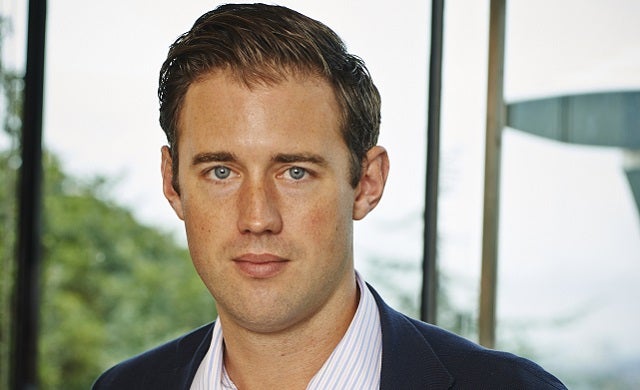
Glen Calvert
The question expresses an ambition, rather than a guarantee of tenfold results. His more personal account of achievement puts the emphasis on building teams and remembering the people involved. That combination is the interesting part of his story: high expectations for the work, and an awareness of how much depends on the people doing it.
The monthly to-do list now has a larger counterpart. At Affectv, Calvert needed to decide which tasks required his attention and which could pass to colleagues. At Kaizan, he is trying to help client teams make more of the knowledge around them. The account has been won. Someone still has to know what happens next.