A customer orders a brochure. Somewhere behind the screen, software must recognize the customer, find the right template, accept the edits, produce a printable file, price the job and arrange its delivery. The customer has done one thing. The machinery has done several. Giri Gondi has spent much of his working life attending to the difference.
Gondi is the founder and CEO of Tecra, the Austin software business established in 1998. Its territory lies between a marketing idea and the systems required to carry it out. This can involve a personalized mailing, an online storefront or a customer notice. The attraction of his work becomes clearer when you consider how many perfectly respectable pieces of software can coexist without being particularly good at talking to one another.
A printer may already have its production software. A business has its customer records. A sales team has its own routines. Replacing everything would be an expensive way to announce one's arrival. Gondi's public explanation of Tecra's approach has favored integration: make the pieces cooperate, and give people an easier way to use them.
The consultant who kept the connections
Tecra began as an IT consulting company in the late 1990s. By 2014, Gondi was describing a business built around print and marketing platforms, including AccuConnect and CCMConnect. The shift matters. Consulting addresses a client's particular problem; a platform has to make useful parts of that solution available again. Tecra kept professional services alongside its software, leaving room for the particularities that a product menu cannot anticipate.
The arrangement puts a founder at an interesting junction. A product needs repeatable capabilities, while a client arrives with particular requirements. Tecra still offers professional services alongside its platforms, including integration and implementation work. That combination helps explain the consulting origins without treating them as a chapter the company simply outgrew. The product supplies a starting point. The work of fitting it into an existing business continues after someone has selected the software.
Gondi described the decision in practical terms: integrate with established print workflow software instead of constructing every component afresh. Systems such as FreeFlow, Prisma and Avanti already occupied parts of that landscape. His company could concentrate on making the ordering and communications process work across those boundaries. It is a modest-sounding ambition with a fairly demanding engineering bill attached.
His technical background fits the work. Gondi is a KL University alumnus, and his Authentys leadership biography lists a master's degree in computer science alongside experience as a software architect and developer. At Authentys, he is listed under software development. Across these roles, the recurring subject is software that helps organizations configure and deliver communications.
The people around him also make the continuity visible. Vijay Vattikonda is Tecra's co-founder and CTO, and appears on Authentys' leadership roster as well. This is a career with collaborators, products and technical responsibilities running alongside one another. The founder's title is only one entry in that picture.
- 01PersonalizeData meets a template
- 02ApproveRules meet the request
- 03ProduceA file becomes a job
- 04DeliverThe order reaches someone
A rebuild with a purpose
There is a useful complication in Gondi's preference for connecting things. Sometimes an existing piece needs more than a connector. In January 2020, Tecra announced that CCMConnect had been rebuilt for the cloud and renamed Quickcoms. The earlier platform's history remained part of the business; its architecture was being reconsidered.
Gondi explained that the team had redesigned the platform for cloud deployment and used the occasion to change its name. He pointed to security, scalability and compliance as reasons customer communications belonged there. These are specific operating concerns. A company sending a high volume of notices needs reliable controls over what goes out, who can change it and how the work is managed.
Vattikonda supplied the companion ambition: business users should have greater control over changes. The release described an administrative interface for business rules and a visual workflow designer. The desired customer was someone able to manage recurring communications without turning every adjustment into another request to a software vendor.
“put business users in control”
Vijay Vattikonda, Tecra CTO, on the Quickcoms redesign, 2020
Seen together, the two decisions reveal the engineering question running through Gondi's work. Which parts should remain? Which should be rebuilt? Where should the person doing the everyday task have more authority? A new name can be settled in a meeting. Moving those boundaries requires rather more work.
The freedom to order less
The packaging business gives this philosophy a physical shape. Distinct Packaging wanted customers to order customized packaging in small quantities through a self-service portal. Its underlying business infrastructure had to support a different kind of buying experience: approachable enough for a novice, while still producing information a manufacturing operation could use.
Tecra's AccuConnect was used for the portal, with a three-dimensional viewing and editing tool, connections to enterprise resource planning and fulfillment systems, and real-time proofs. Development involved partner teams across four US regions as well as an offshore team. The finished interface concealed a coordination problem as much as a technical one.
The portal launched in early 2018. Tecra says the project brought Distinct Packaging hundreds of new customers within months and supported more than ten packaging categories at launch. Those are the company's reported results for this deployment. The underlying change is easy to picture: a customer could personalize a package, inspect a proof and place an order without first acquiring a designer's vocabulary.
Pizza boxes and golf-ball sleeves share an unexpected qualification here. Both can expose a gap between what a person wants to buy and what a production system knows how to accept. In Gondi's line of work, the attractive object on the screen still has to survive its journey into an actual order.
A very useful reduction in choice
Another deployment puts a different demand on the same philosophy. Financial advisors at an unnamed firm with more than 50,000 employees needed personalized materials for client meetings. Their ordering process offered confusing print finishes and too many customization options. An advisor looking for a brochure had acquired an unwanted extracurricular subject.
The AccuConnect implementation connected Salesforce, PeopleSoft and single sign-on. It also narrowed the choices per product, made recurring options into templates and used access controls to match materials to the right departments. Simplicity here depended on quite a bit of preparation behind the interface.
Tecra reports that ordering time fell by 50 percent and order mistakes by 83 percent. These figures describe that particular project. They also suggest why a founder working in this territory might pay close attention to the quality of a form. A screen that asks fewer unnecessary questions can change the workload after the customer clicks submit.
less time spent ordering
fewer order mistakes
This is a useful way to read Gondi's career through the work his company produces. The personalization remains available; specialist decisions move out of the user's path. The brochure still needs to satisfy production requirements. The advisor gets to return to preparing for the meeting.
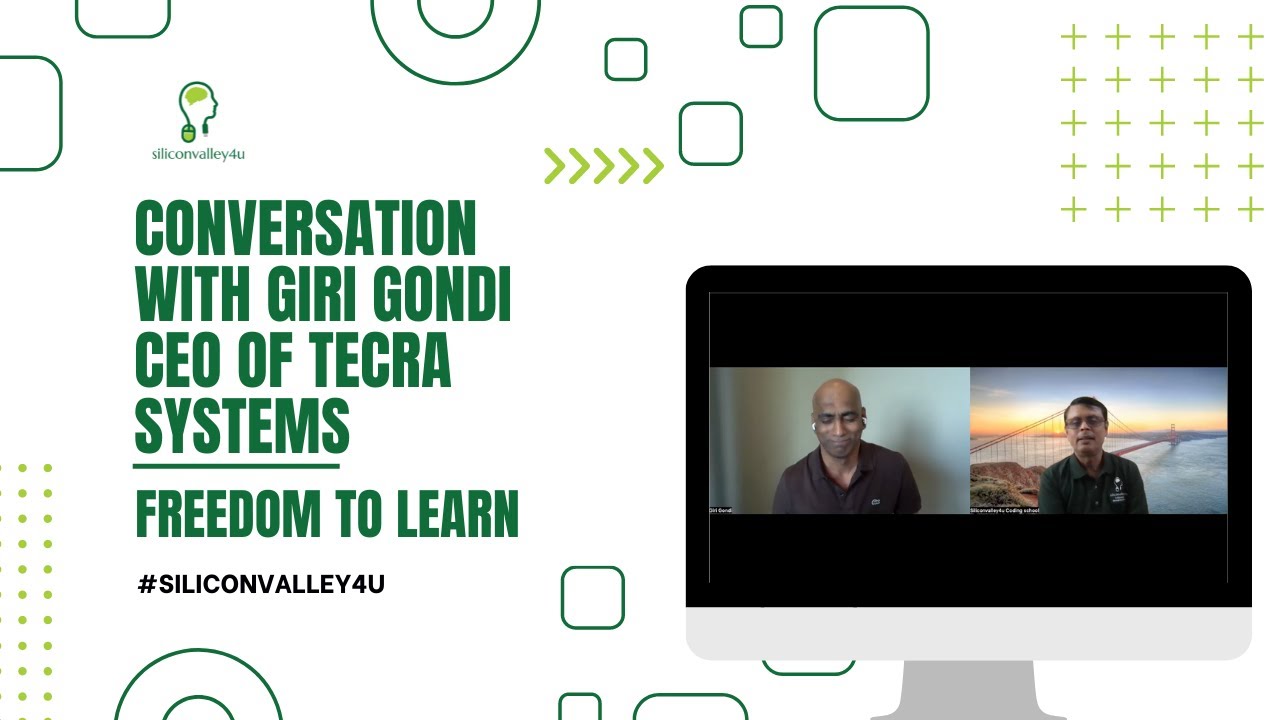 Watch the conversation ↗
Two thousand five hundred versions of Tuesday
The same kind of problem grows rather conspicuous across a restaurant network. In another Tecra case study, an unnamed fast-casual chain had 2,500 locations and close to 3,000 store-level orders to coordinate in a cycle. Staff filtered spreadsheets, assembled the details and routed requests manually.
AccuConnect introduced bulk product assignment and location filters while retaining billing for each store. Tecra says the ordering cycle fell from hours to minutes, with the operation handling $300,000 in monthly orders. The story is specific to that customer, but it explains the attraction of a reusable platform: the next group of locations should not require repeating the entire administrative performance.
Gondi's business has remained close to these uncelebrated repetitions. Buying materials, checking a proof, distributing an order and accounting for it are ordinary tasks. At sufficient volume, an ordinary task can become an organization's unofficial second occupation. Software earns its place when those repetitions become easier to manage.
The next job still needs somewhere to go
By September 2026, Tecra was presenting PrintOps Hub in a product demonstration. Its stated purpose is to connect print production and fulfillment, route work between facilities, track jobs and respond when production conditions change. The emphasis moves farther along the order's journey, into the question of where and how it will be made.
The wider product family describes the scope Gondi now leads. AccuConnect handles personalized storefronts and communications. Quickcoms addresses controlled customer communications. AccuLync extends commerce platforms such as Shopify, BigCommerce and WooCommerce into personalized product workflows. PrintOps Hub addresses production routing and fulfillment. Together, they mark several points at which a customer's intention can become somebody else's manual task.
Gondi's career offers a way of thinking about the founder's job that leaves room for both invention and accommodation. Existing systems carry years of decisions, working habits and investment. A useful new product has to reckon with them. His company's history includes keeping those systems connected, changing the architecture when needed and making room for the person trying to finish a task.
The customer ordering the brochure is entitled to remain unimpressed by all this. They wanted the right brochure, sent to the right place. For Gondi, that apparently uneventful ending is where a considerable amount of the work begins.
Follow the connections
Explore Gondi's work and the projects behind this story.
- Tecra: platforms and services ↗
- Giri Gondi on LinkedIn ↗
- Authentys leadership ↗
- Gondi on print software and integration, 2014 ↗
- The Quickcoms announcement, January 2020 ↗
- Watch the Siliconvalley4u conversation ↗
- KL University alumni profile ↗
- The Distinct Packaging project ↗
- The financial-advisor ordering project ↗
- Bulk ordering across 2,500 locations ↗
- PrintOps Hub demonstration, September 2026 ↗