As a child in Mississauga, Gimmy Chu tried to build a perpetual-motion machine in his basement. It did not work. Physics declined the invitation. Years later, he would help build a company around a more achievable proposition: use less electricity to make light. Even that turned out to require a revision. An efficient bulb could impress an engineer and still leave a customer reaching for something cheaper.
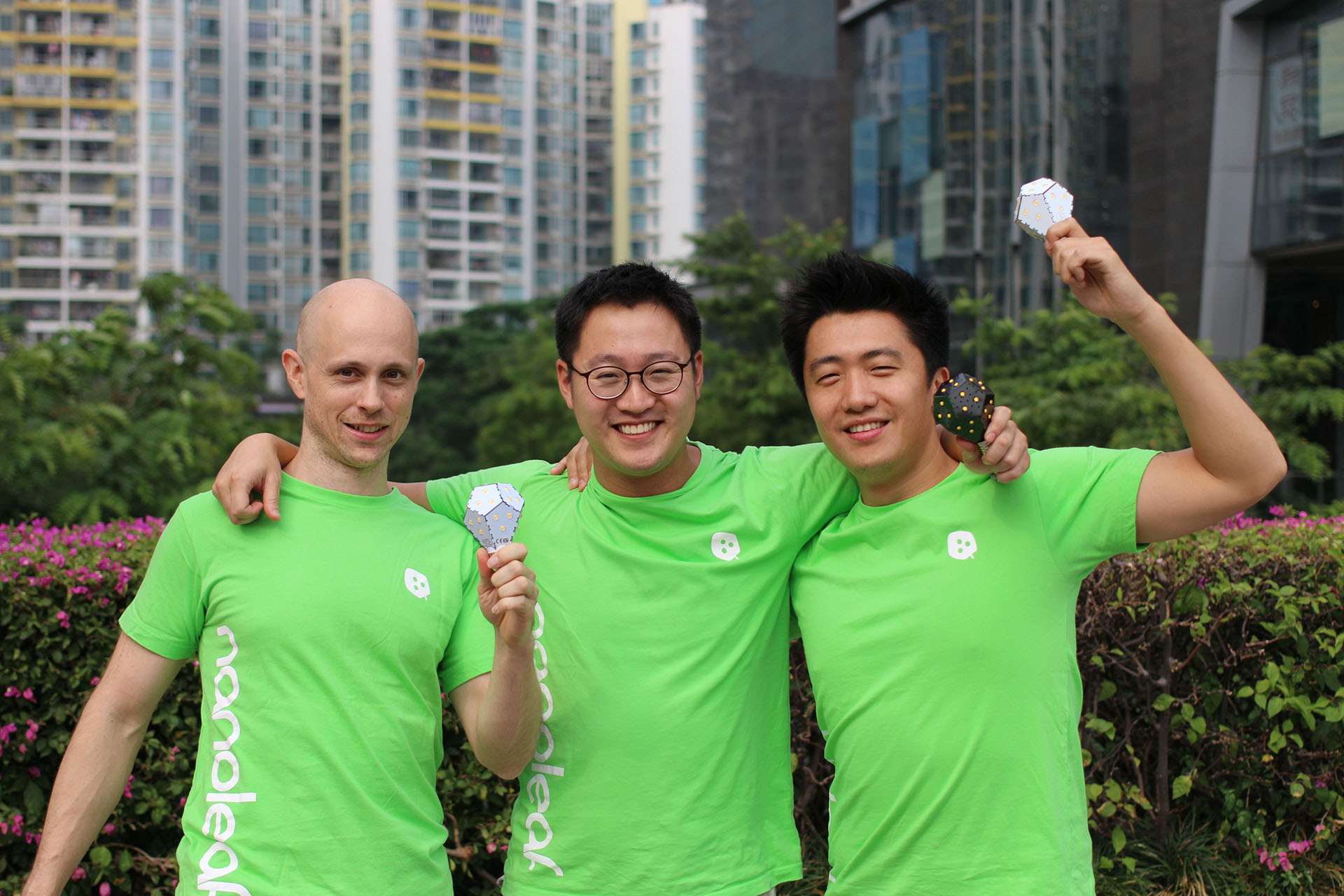
Chu is the co-founder and CEO of Nanoleaf, the lighting company he started with Tom Rodinger and Christian Yan in 2012. Their route from a university solar-car team to illuminated triangles was full of decisions that look rather more orderly in retrospect. They wanted to make useful things. Becoming a lighting business took some figuring out.
A machine that would not stop
The basement experiment makes an appealing beginning because it contains a recognizable childhood ambition: get the world to give you more than you put in. Chu eventually learned to work within the energy budget. His interest in sustainability survived the correction. The impulse to take an abstract idea and see whether it could do something in the world became a more durable habit.
At the University of Toronto, he studied electrical engineering and joined the solar-car team. There he met Yan and Rodinger in 2005. A vehicle that must actually finish a race provides an education of its own. Calculations have to survive wiring, assembly and the arrival of race day. Chu later recalled that their car finished races, which was his succinct test of whether it was any good.
He graduated in 2006 and worked in technology consulting. The friends went into different jobs but continued talking about sustainable technology. Their conversations outlasted the student project. What they had enjoyed was building something together; their working lives had taken them away from that. A reunion around another product offered a way back.
Twelve watts, and a harder question
The friends initially worked on solar technology. Selling and shipping it proved difficult, and they turned to a light bulb. It was a practical choice: people already had places to put one. Their design mounted small LEDs on a folded circuit board, giving the bulb a faceted appearance that made the engineering visible. It looked as though someone had asked an origami enthusiast to reconsider the lampshade.
The early bulb could produce the light output of a 100-watt incandescent while consuming 12 watts. That was a concrete proposition in a business often described with extravagant adjectives. A familiar socket, a familiar amount of light, a smaller electricity demand. In 2013, the team took the product to Kickstarter and raised more than $270,000.
The same job. A smaller electricity bill.
Comparable light output, as reported at the original bulb’s launch. A historical comparison, not a comparison with today’s LED bulbs.
There was an awkward business question underneath the achievement. The proposed price for that 12-watt bulb was $45. The argument depended on what buyers would save over time, while the price confronted them immediately. An efficient purchase could be expensive to make. Chu came to recognize that the bulb’s technical merits could carry the company only so far.
“There’s no point in making tech for its own sake,” he said. Adoption mattered to the environmental ambition: a product had to find its way into enough homes to make a difference. Design and broader appeal began to take a larger place in his thinking. The company’s problem was expanding from how a light worked to why somebody would choose it.
Investment brought a further adjustment. After the crowdfunding campaign attracted attention, Chu asked the investors whether he was supposed to quit his job. It is a wonderfully unvarnished question. The founders had been building products alongside working lives. A business was emerging around their project, with expectations that would not fit neatly into the hours left after work.
“so am I supposed to quit my job now?”
Gimmy Chu, recalling an early investor conversation
An email to Cupertino
Chu’s dealings with Apple began with another direct question. Nanoleaf wanted to develop HomeKit lighting, but he needed to find somebody who could explain how to work with the platform. He emailed Tim Cook. Chu later recalled a reply two days afterward, followed by introductions that eventually reached the people responsible for helping companies build HomeKit products.
He kept the email. Of course he did. For a small hardware company, an answer from Apple’s chief executive was a useful introduction and a rather good item for the archive. It also captures something practical about Chu’s approach. When the route into an organization was unclear, he tried asking someone who might know it.
The company was building relationships closer to home, too. In 2015, electrical engineering student Frank Gu followed up with Chu after meeting Nanoleaf at a university startup career fair. Chu replied and arranged a conversation. They discovered a connection: Gu belonged to the same solar-racing club that had occupied Chu almost a decade earlier.
Gu received an assignment to demonstrate what he could do and went on to work on an experimental project involving networking and cloud systems. In describing the experience, he remembered Chu’s interest in both what he could contribute and what he wanted to learn. The solar-car team had become a recruiting connection as well as an origin story.
That year, the company was already moving beyond its beginnings in the founders’ apartments. It had attracted investment from backers including Li Ka-shing. The business crossed continents; its engineering relationships still led back to Toronto. In 2016, Chu received the university’s 7T6 Early Career Award. Nanoleaf had also earned recognition for efficiency and design, two demands it was learning to hold together.
Borrowing from the sky
Then came a larger question: why should LED lighting retain the shape of a conventional bulb? At TEDxToronto in 2017, Chu described familiar objects as capable of narrowing the imagination. The glass envelope and fixture made sense for an older technology. A new light source gave designers permission to consider other forms.
He looked toward the sky. Light could spread across a surface, with color moving through it, rather than radiating from a single object. Nanoleaf’s modular panels let people assemble a composition themselves. The customer gained something to decide beyond which socket needed filling. A wall became a place to arrange light.
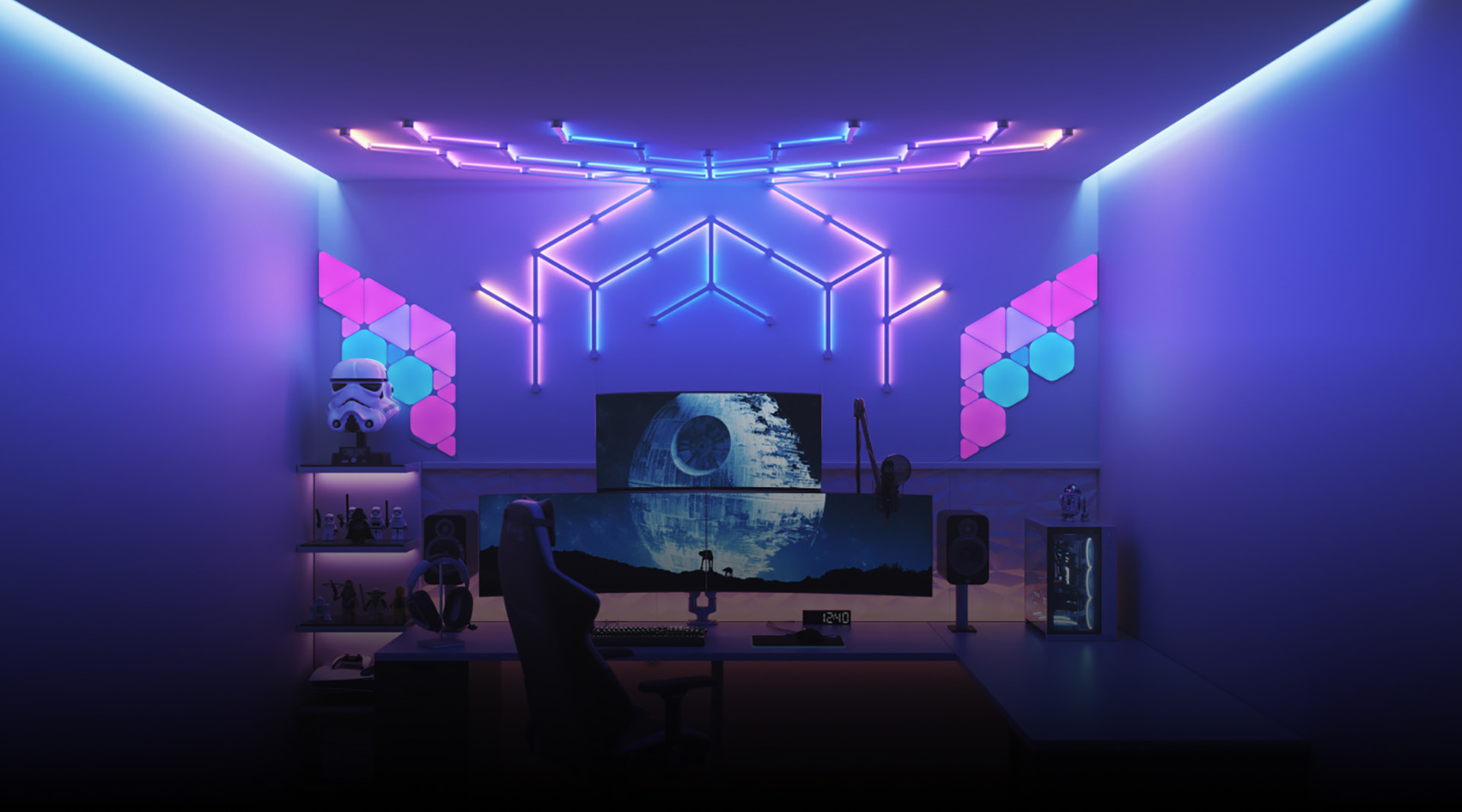
The first Aurora panels arrived in 2016. The modular approach left room for different spaces and tastes: owners could choose an arrangement instead of accepting a single finished silhouette. The object changed as it entered somebody’s home. That participation helps explain the distance the company had traveled from the original bulb’s calculation of watts and lifetime savings.
The idea continued developing. In October 2020, Nanoleaf added Triangles and Mini Triangles to its Shapes family, with connections to Hexagons. The promise was more freedom to mix forms. Smaller panels could fit places that larger ones could not. A lighting company was now making decisions that resembled the decisions of someone laying out a mosaic.
Elements, introduced in June 2021, approached a different domestic problem: what happens when the lights are off? Its wood-look hexagonal panels had a visible grain-like surface, with adjustable white light when illuminated. Chu wanted technology to fit into a home’s design. An object on the wall spends plenty of time waiting for someone to press a button. It still has to live there.
The work behind the glow
The attractive surface does not simplify everything underneath it. In discussing Essentials, Chu described changing course from Bluetooth Mesh to Thread after conversations with Apple. The product team had to rework its plans. Standards decisions may sound remote from a living room, but they eventually determine whether the thing in that room responds when asked.
Nanoleaf subsequently worked on Matter-compatible bulbs and lightstrips, announcing products intended for early 2023. Chu described two years of work with the Connectivity Standards Alliance and Matter Working Group. The ambition was a home where products could communicate across systems. Getting devices to cooperate required work well beyond choosing a pleasing shade of blue.
His aspiration for automation is similarly domestic. He wants lighting to respond to people’s preferences and routines with less intervention. In his account, adding an app or voice command is an intermediate step. The eventual test is the experience of using the room: how much attention does the equipment demand, and how easily can someone get the light they want?
A folded circuit board becomes a bulb.
A light becomes a modular wall composition.
Wood-look panels consider the hours with the power off.
Music provides another thread through the work. At CES 2025, Nanoleaf announced its Premium desktop service, including Orchestrator. It takes audio directly from a computer and generates lighting effects around the music. Compared with a microphone listening to the room, that approach changes where the system gets its information. The pleasure remains easy to understand: put on a song and watch the lights move with it.
In September 2025, Chu discussed open APIs and community integration on the Home Assistant Podcast. By May 2026, Nanoleaf was also talking publicly about AI and robotics, while affirming that lighting remained central to its work. Its statement left parts of that future unrevealed. For the customer, the useful question remains the one that has followed Chu since the early bulb: what does this let me do?
The basement machine never supplied perpetual motion. The company that followed has needed repeated changes of direction, people willing to help, and products somebody would choose to bring home. Chu’s progress has come from allowing the next question to disturb the previous answer. The light bulb was a perfectly serviceable object to start with. It simply could not contain every idea.
Keep the conversation going
- Nanoleaf website
- Gimmy Chu on LinkedIn
- Watch: Chu’s TEDxToronto talk
- Nanoleaf YouTube - company channel
- Read: the Homey founder conversation
- Read: Chu on early decisions and Apple
- Read: the original bulb in 2013
- Read: Nanoleaf’s business lessons
- Listen: Home Assistant Podcast, September 2025
- Read: Nanoleaf’s May 2026 update