Giles Palmer had built a search engine. What he needed next was somebody who wanted it. In 2005, Magpie Search and Alert offered law firms and banks a way to find specialist documents. The prospective customers had a plausible job to do. The software had a plausible job to help them do. Six months after release, no librarian had bought it. The business plan had encountered the customer, and the customer had other plans.
It is a useful place to begin a story that eventually reaches a $450 million acquisition. Success can make earlier decisions look inevitable. Palmer’s career contains enough wrong turns to spoil that illusion. He learned to build a product company through experiments that exposed the difference between technical capability and a reason to buy.
Today, the Brandwatch founder runs Circulor, a company concerned with the provenance of materials in industrial supply chains. Between those two businesses came executive roles at Cision and Cint. Across them runs a persistent practical interest: helping organisations understand activity they cannot easily see.
The trouble with a promising idea
Palmer studied physics at Durham and qualified as a Chartered Accountant. Neither settled the question of what he wanted to spend his working life doing. His father had stayed at one quantity-surveying firm from his twenties until retirement. The son tried several industries and found little to hold him. Accountancy supplied a grounding in business; affection for the work was harder to acquire.
He also worked at Sky. Then, in 1999, came 5Senses, an attempt to sell perfume and cosmetics through interactive television. It lasted three months. In that brief venture he met Steve Crossan, with whom he would start Runtime Collective in 2000. Palmer had discovered that creating a small company could be absorbing even when the company failed.
Runtime built software for clients using open source tools. A product business promised a different relationship with the work: build something once, then sell it repeatedly. Magpie was an attempt to make that transition. Its disappointing reception forced Palmer to reconsider how much he understood about the people expected to pay.
That distinction gave him a better way to evaluate the next idea. Compliments were pleasant. A recurring problem, attached to a customer prepared to spend money, offered firmer ground.
An education in listening
By 2006, online conversations were multiplying. Brands could buy advertising, commission research and polish their websites while customers discussed them elsewhere. Palmer’s idea for Brandwatch took shape around that gap. Friends running the search agency Spannerworks helped make the problem concrete: appearing prominently in search results was less useful if the prominent result said your product was terrible.
Brandwatch’s first SaaS version launched in August 2007. Alliance & Leicester became its first customer. The product collected online material and helped businesses understand what was being said about them. Under the software sat a recognisable human problem: someone was talking about you, and you ought to pay attention.
Early sales involved face-to-face pitching and explaining a category that customers were still learning to recognise. Digital agencies were often quicker to understand the opportunity than brands themselves. A first subscription did not produce an orderly queue. Palmer recalled selling the second only five months after the first.
“Ask what their problems are. Listen. Empathize. Try to help.”
Giles Palmer, on winning clients, 2013
That advice makes a tidy connection between the product and its founder’s education. Brandwatch sold listening to businesses. Selling Brandwatch required listening too. A demonstration could show what the software did; understanding a customer’s problem explained why any of it mattered.
The data itself required relationships as well as engineering. In 2017, Brandwatch expanded its partnership with Twitter, seeking faster access to insights and richer historical material. Palmer emphasised the value of information that was both open and structured. For a business promising to make sense of conversation, access mattered alongside analysis. A customer saw an interface and an answer. Behind those sat the continuing work of collecting material, arranging it and making it available quickly enough to help.
Palmer was also wary of the tidy answer to what made a company different. He described differentiation as the accumulation of many small things. A culture, a reliable product, the way a promise was made and kept: these were harder to fit on a slide than a single supposedly decisive feature.
- 2000Runtime Collective
Software for clients - 2007Brandwatch launches
A product of its own - 2018Crimson Hexagon merger
Combining competitors - 2021Cision acquisition
$450 million transaction - 2025Circulor CEO
Following materials
330 people, and the coffee is still mediocre
In October 2015, Brandwatch announced a $33 million Series C led by Partech Ventures. Palmer’s account of the moment was concerned with what the money would allow the company to do: develop products, enter markets and hire people. Brandwatch had opened in Singapore, launched a French presence and acquired PeerIndex.
There were now 330 Brandwatchers. The number created a management problem as well as a reason to celebrate. Organising and motivating that many people required skills that a smaller company could sometimes get away without. Palmer wondered whether, in a few years, even 330 would seem a modest gathering.
He thanked the employees whose work allowed him the pleasure of announcing the round. He thanked customers for demanding more. Investors received a thank-you for their support and for sharing mediocre coffee at quarterly meetings. The funding was substantial; the refreshments apparently remained a work in progress.
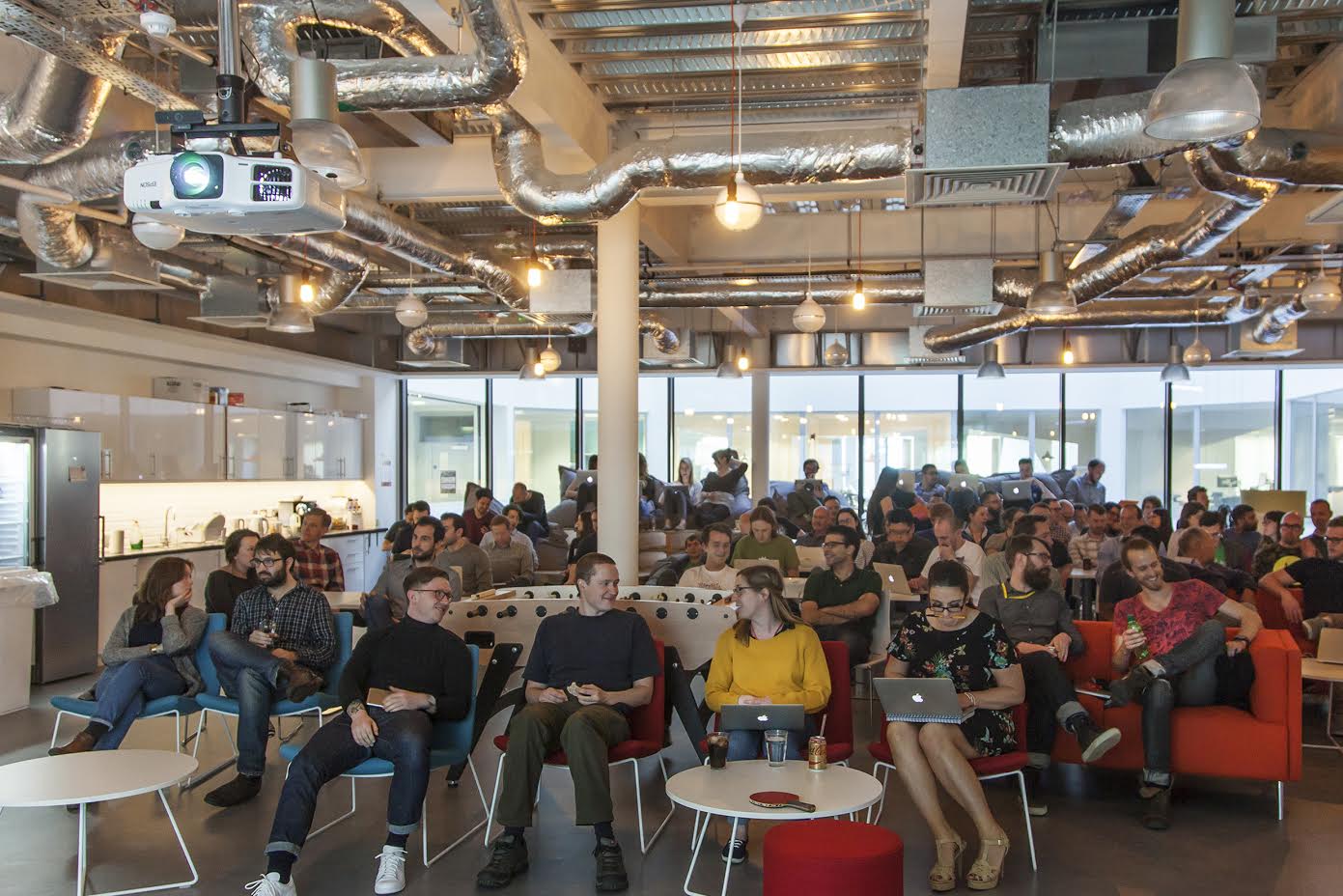
As the company expanded, Palmer’s own job changed. He brought in senior colleagues, worked with business coaches and set aside more time for reflection. The founder who had once needed to persuade people that a market existed now had to help a larger organisation work inside it.
Product decisions were a particular test. Brandwatch developed groups called Magic Circles, bringing together commercial, technical, design and product perspectives. The name sounded like something that might require a wand. The mechanism was discussion among people who held different pieces of the same problem. Its usefulness depended on trust and the ability to disagree without turning every mistake into a prosecution.
The rival at the next desk
Competition had helped make social listening a market. Palmer understood the benefit of other companies educating customers, even while competing for their budgets. In 2018, one of those relationships changed decisively: Brandwatch announced a merger with Crimson Hexagon.
The combined company would use the Brandwatch name and draw its leadership from both organisations. The technical argument was specific. Crimson brought historical data, artificial intelligence and machine learning; Brandwatch brought its data handling and interface. Initially, the products would continue independently while the teams worked towards a combined platform.
A merger announcement compresses an enormous amount of future work into a few paragraphs. Customers need continuity. Teams need to decide what to keep. Products embody years of choices that do not conveniently disappear when their owners agree to a deal. Palmer’s next chapter would involve the patient business of making the combination useful.
Cision’s acquisition of Brandwatch
Company purchase priceBy the time Cision acquired Brandwatch in 2021, the business had more than $100 million in annual recurring revenue and over 500 employees. Those figures describe a different organisation from the one struggling to sell its second subscription. They also help explain why maintaining a company culture had become a deliberate operating task.
Palmer discussed the sale alongside the systems he used to run the business and his enthusiasm for competition. An exit supplied a financial milestone, but it also raised another management question: how should the company work as part of something larger? He joined Cision as Chief Growth Officer, with responsibility for a business unit and for forming and leading its strategy team.
A new question for the same curiosity
In April 2023, Palmer became CEO of Cint, the listed research technology company. Cint had acquired Lucid, and bringing platforms together was part of the work ahead. Here was another version of a problem he already knew: a deal creates possibilities; integration determines how much of them customers experience.
His tenure ended in September 2024, when chairman Patrick Comer became CEO. Cint credited Palmer with developing an integration plan and starting customer migration. The platforms were still being integrated. The distinction matters in a career story: beginning an operating programme and completing it are separate achievements.
In May 2025, Circulor appointed him CEO, with founder Doug Johnson-Poensgen moving to President. Circulor traces materials as they move through manufacturing and recycling supply chains. Its business asks organisations to understand where materials came from and what happened to them along the way.
Palmer explicitly connected responsible sourcing with his personal values. The work gave his interest in information a physical subject: the materials inside products. A battery has a history before it reaches a vehicle. Making that history visible is a considerable data problem, with factories and suppliers where Brandwatch had posts and conversations.
In July 2026, Circulor announced customers operating on its new 2.0 platform, including Ford Otosan, Poweroad, Lucid, Aston Martin and Vale. Palmer described customers wanting to understand and monitor their supply chains so they could identify compliance risks. The practical test remained familiar: could the software give people information they could use?
The sequence of jobs makes sense when read alongside the failed search product. Palmer has repeatedly worked on the distance between available information and a decision somebody needs to make. His early mistake was assuming too much about the customer. The career that followed has required him to keep asking.
Follow the conversation
Palmer’s writing, public profiles and longer conversations.
- His account of building Brandwatch ↗
- LinkedIn ↗ · X ↗ · Instagram ↗ · Facebook ↗
- Different Hats: the full video interview ↗
- Unscalable: deciding when to sell ↗
- Brandwatch writing archive ↗
- Circulor’s July 2026 platform announcement ↗
- Product decisions and Magic Circles ↗
- The 2015 funding announcement ↗
- The Crimson Hexagon merger ↗
- Cint’s 2024 leadership transition ↗
- Circulor ↗ · Brandwatch ↗ · Palmer on Delphi ↗