In an East Texas oilfield, the useful thing was being burned. Natural gas emerged alongside oil; without a convenient route to market, it could end up in a flare. Matt Lohstroh and Brent Whitehead saw another destination: a generator, then computers mining Bitcoin. It was 2019. They were Texas A&M students, and their starting capital came from high-school lawn-care businesses. There is something pleasingly literal about financing digital currency by cutting grass.
- Giga began as an operator of gas-powered Bitcoin mining sites.
- Equipment delays pushed it into manufacturing transformers and switchboards.
- Its next bet: factory-built modules that shorten AI data center deployment.
The more consequential discovery came later. Generating electricity was one problem. Getting the equipment needed to use it, on a dependable schedule, was another. Today, Giga Energy sells that equipment and develops the sites around it. The company’s progression suggests an unfashionable place to look for opportunity: the part of a project where everybody waits.
The lawn-care money went into an oilfield
The original arrangement moved the computing to the fuel. Gas went into a generator; electricity powered miners inside a modular container. Lohstroh studied finance. Whitehead studied industrial distribution and brought an oil-and-gas background. Their complementary knowledge helped join two businesses whose practitioners did not necessarily speak the same language.

Bitcoin mining offered a portable use for stranded energy. But that origin should not become a blanket environmental promise. The outcome depends on what would otherwise happen to the gas and how the equipment operates. Nor does an AI deployment inherit a mining site’s operating requirements simply because both contain computers. The transferable expertise was building and powering a physical facility.
The customer became the supplier
Giga’s account of its early projects describes slow deliveries, absent vendors, and disputes over responsibility. The founders began making the missing pieces themselves. Containers led to transformers and switchboards; equipment manufacturing became a business serving other builders with similar frustrations.
A transformer changes voltage. A switchboard distributes power into outgoing circuits. Neither is likely to dominate an AI conference conversation, yet both sit between an ambitious computing plan and a working installation. Giga offers liquid-filled padmount transformers, substation transformers, and custom UL 891 low-voltage switchboards. Its California switchboard manufacturing and Houston transformer operations sit alongside a global supply chain.
That last detail matters. American engineering and domestic factories do not imply every component comes from America. Giga competes on coordinating equipment, engineering, delivery, and support. Buyers can purchase individual products, commission a site, or use colocation. The customers span data centers, electrical contractors, miners, utilities, renewables, and industrial operators.
The commercial scale has changed, too. In a November 2025 interview, Lohstroh said Giga had surpassed $150 million in revenue that year. It is a founder-reported figure, rather than audited accounts, but it helps explain the shift in emphasis. Equipment is something a company can sell to many operators, including those who prefer to develop their own sites and retain control of their computing business.
Eight weeks, and a very real deadline
Consider RC Power. In Giga’s April 2026 case study, the electrical contractor needed a transformer and main switchboard for AI/GPU lab capacity at a semiconductor company. An expiring permit, a financial review cycle, and limited space made the schedule unusually tight. The switchboard arrived eight weeks after signed drawings.
RC Power’s switchboard delivery.
A specific project result, not a universal lead time.
Then the breaker requirements changed after production had begun. The account describes on-site installation, daily coordination, and factory involvement through completion. RC Power said the project finished on time and on budget. That is a more useful test of the business than a sweeping claim about speed: did the supplier remain useful when the specification moved?
“The biggest thing in Bitcoin mining is timeline, timeline, timeline.”
Omar Alatorre, Satokie Mining
A data center, in pieces
In July 2026, Giga introduced GigaBase. Its premise is to manufacture connected modules while site construction proceeds. GigaPod supplies the compute space, with integrated power and cooling; racks are installed on site. Other modules provide voltage conversion, distribution, battery backup, generators, and heat rejection.
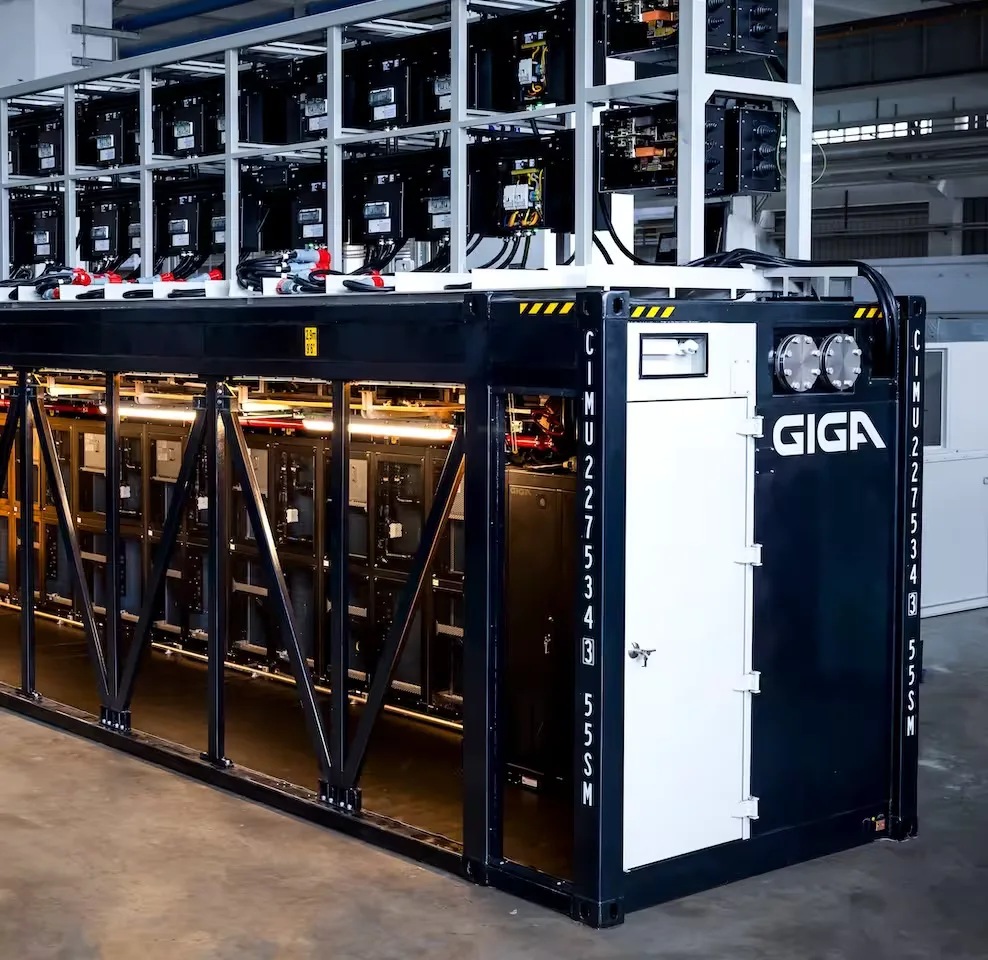
The connecting pieces deserve attention. Giga calls them electrical and cooling “glue”: engineered interconnections that let the modules join without inventing the interfaces anew. In his May 2026 essay about joining Giga, former Tesla and Google infrastructure builder Angad Sandhu identified those connections as essential to making modular construction repeatable.
Giga markets a nine-month journey to rack readiness. Its published sequence overlaps civil work with manufacturing, then brings modules to the prepared site for integration and final commissioning. Treat that as a deployment proposition to examine against a particular site, rather than a stopwatch that starts whenever someone orders a pod.
The price of the box. The price of waiting.
Giga’s May 2026 price guide places distribution transformers roughly between $40,000 and more than $150,000, depending on size and voltage. Substation units range from $150,000 to well above $2 million. These are budgeting ranges, not offers. Custom specifications, cooling, insulation, and voltage class change the bill.
Procurement’s harder calculation includes delayed revenue, idle crews, and missed energization windows. An inexpensive unit that arrives too late can be an expensive purchase. The practical response is to settle specifications early, obtain written delivery commitments, and compare equipment against the whole project schedule. Factory acceptance testing adds another checkpoint before problems travel to the site.
Giga’s testing guidance distinguishes checks at the factory from checks after installation. The first verifies equipment against drawings, components, wiring, and intended functions. The second confirms it works in its final environment. Buyers should understand both: a tested component and a commissioned facility are different milestones, with different responsibilities.
What travels beyond Texas
Giga’s lesson is useful beyond computing: examine the delay between teams before assuming you need a better machine. Bringing work inside a company makes sense when the problem repeats and the company can acquire the engineering and operating competence to solve it. Ownership alone cannot supply that competence.
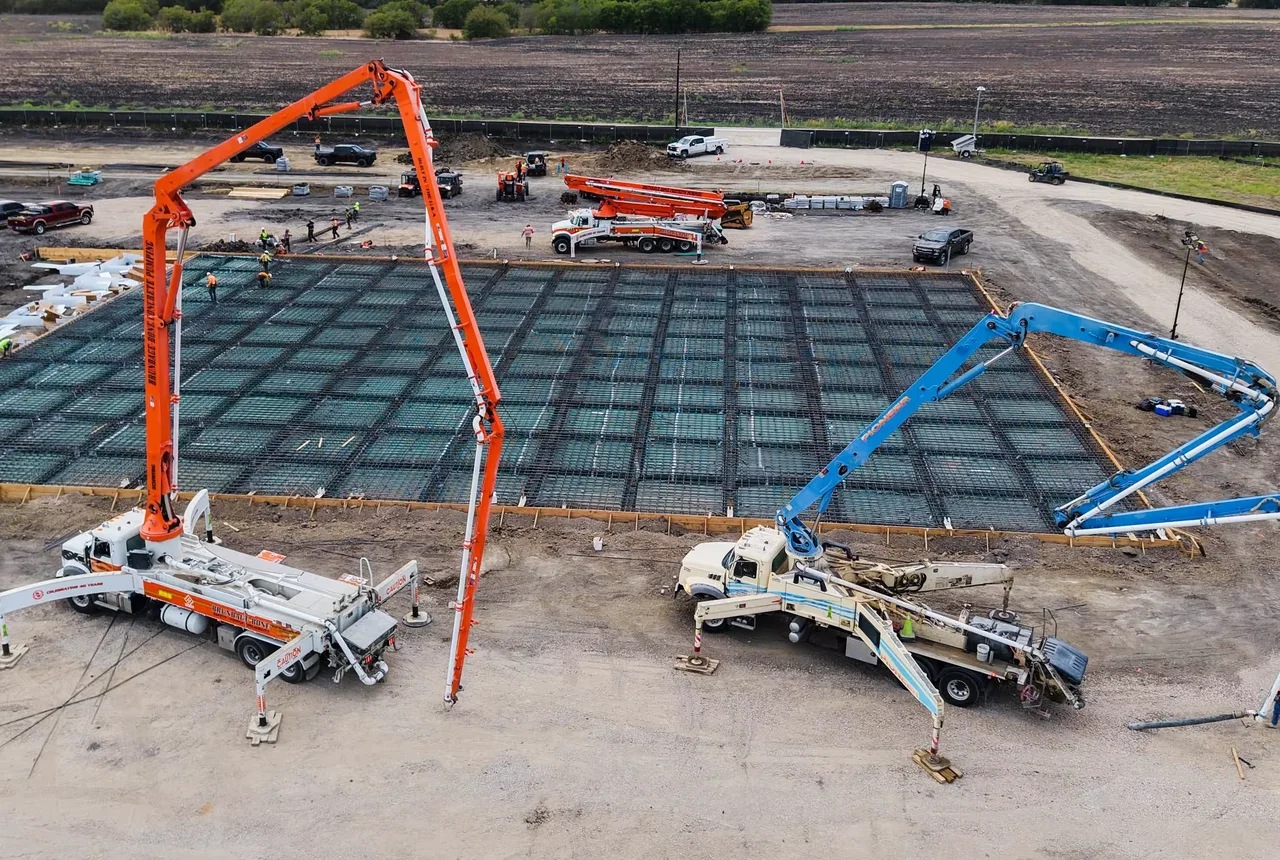
A factory-built system still needs suitable land, available power, permits, and a design that fits the workload. Giga also offers power-market services for flexible loads; that flexibility cannot be presumed for every AI job. The attractive part of its approach is concrete enough to investigate: fewer interfaces to coordinate, more work completed before delivery, and a supplier whose responsibility continues after the truck leaves.