Georgina Merhom had secured the bank partnership. That was supposed to be the difficult part. She had counted the effort: 102 pages of proposals, 73 hours of meetings, and, at the time, no team. The National Bank of Egypt agreed to work with her. Then came the larger problem of making the business she imagined possible.
Her early platform helped independent workers receive payments and manage their money. But the infrastructure required for her broader ambitions was harder to negotiate into existence. She offered to help pay to build it. Eventually, she accepted that determination alone could not make the market ready. The founder who described herself as bold had acquired a less photogenic skill: changing her mind.
Today, the founder and CEO of SOLO is working on another institutional puzzle: how to let a customer carry verified information from one financial relationship into the next. Her route there runs through economics, investigations, lending, and a sustained interest in what people can actually prove.
Before the application form, the investigation
Merhom studied economics and international relations at the University of Toronto. Her early work at the G7 and G20 Information Centre involved research and compliance. A 2019 G7 compliance report lists her as a compliance director. The work concerned whether governments followed through on commitments, an education in the distance between an announcement and its execution.
She later trained as a cybersecurity investigative analyst and worked at Flashpoint Intelligence. Her company biography describes developing algorithms to detect illicit activity on the dark web. This was work in which information needed context, connections, and a reason to be believed. A disconnected fact was only the beginning of an investigation.
That professional history makes her arrival in financial data easier to understand. She had spent time examining information across networks before asking why banks keep collecting it in isolation. The subject changed; the questions about provenance survived. Who supplied this? What happened before it arrived? How does one piece fit with another? Those questions now sit inside her business.
A freelancer is a business, too
The lending venture Zivmi connected Merhom with Egyptian digital freelancers and the National Bank of Egypt. Her later professional biographies describe invoice factoring for workers who lacked conventional access to banking, followed by an exit to the bank. These were people selling skills across borders while encountering financial systems built around more familiar working lives.
In a public account of the early business, Merhom said it had facilitated payments for more than 4,000 Egyptian freelancers, remote professionals, and independent contractors since June 2021. She singled out a young software engineer in Mansoura working on infrastructure for Silicon Valley companies. His geography and the market for his work did not line up neatly. The financial plumbing had to bridge the distance.
It is an unusually concrete starting point for a company now concerned with data infrastructure. Before a record could be portable, a worker had to be legible to an institution. An invoice, a payment, a customer relationship: each offered evidence of an economic life that a familiar application form might fail to capture.
“take no for an answer”
Georgina Merhom, on a lesson from building her early business
The borrower who never wanted to be a startup
Another revision came through a diligence conversation with Carey Ransom of BankTech Ventures. Merhom later recalled the distinction he drew between businesses that were small because they were young and businesses that were small by choice. Her team had initially assumed more borrowers belonged to the first group. Many actually belonged to the second.
A family business can be successful without wishing to become a venture portfolio's next growth chart. Its owner may have little interest in maintaining the sort of continuously updated dashboards a technology founder regards as ordinary furniture. Building lending software around the founder's own habits risks misunderstanding the person applying.
Merhom's response was to examine the work hidden behind onboarding: assembling financials, translating different records, and preparing information for underwriting. A handsome interface could leave all that labor intact. The observation puts a practical edge on her willingness to revise an assumption. The customer was already running a business. The software needed to accommodate how that business ran.
Five systems, one very patient customer
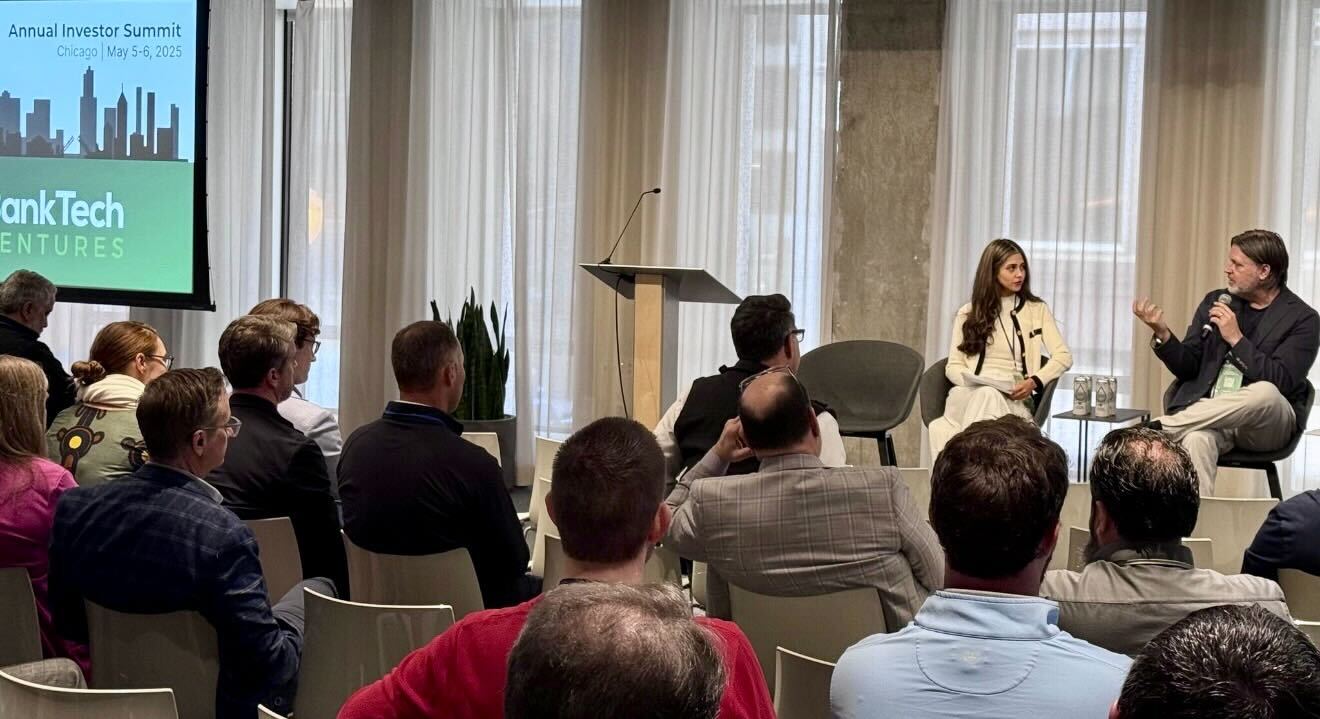
At a BankTech Ventures gathering in Chicago, Merhom discussed data portability with Tim Heilman, Choice Bank's chief innovation officer. Their subject was the strange persistence of manual work inside institutions equipped with plenty of technology. Information could exist in an email, a scanned document, an outside feed, or software that another department could not readily use.
Her diagnosis focused on fragmentation. Adding another system could leave someone typing the same facts into yet another place. Skilled credit staff became translators between files, workbooks, and applications. The borrower, meanwhile, could be asked to supply information the institution already possessed somewhere in its own machinery.
That exchange helps explain why Merhom works closely with bankers rather than treating them as an abstract market to persuade. Heilman and other credit and risk leaders helped inform SOLO's approach. Their experience supplied a test a product roadmap could miss: whether information remained useful after it crossed a department, document format, or workflow. The bank had acquired the facts. Keeping them usable was another job.
A table with room for disagreement
Merhom also convenes conversations away from the product demonstration. At Fintech Meetup in Las Vegas, SOLO hosted a dinner with Alex Johnson, founder of Fintech Takes, bringing together a dozen bankers and credit specialists. Her account of the evening made clear her preference for conversations in which people could speak freely.
The discussion questioned whether familiar credit products still matched what customers wanted. Merhom and Johnson shared an interest in separating the information about a person from the narrow menu of products through which institutions often interpret it. Her imagined alternative was an ongoing relationship: one application, with options that could change as the customer's circumstances changed.
The dinner gives her work a social dimension that the term data infrastructure tends to conceal. A shared record requires institutions to agree about what they can accept from each other. Conversation is part of that construction. A dozen people at dinner cannot settle the architecture of credit, but they can stop pretending every awkward question has already been answered.

Who gets to say the record is right?
In her 2024 OneTrust framework, Merhom argued for a financial identity that could develop through successive verifications and activities, with the user controlling permissions. The ambition was to give decision makers a shared body of information while allowing them to interpret it for their own purposes. One score could only convey so much.
She also took that argument into a formal policy setting. An October 21, 2025 comment letter signed by Merhom asked the Consumer Financial Protection Bureau to reconsider how participants in data sharing were classified and rewarded. SOLO advocated standards that accounted for responsible collection, use, and maintenance of information, alongside the technical question of moving it.
The distinction matters to her project. A person who authorizes sharing needs ways to understand and challenge the record being used. An institution receiving it needs to understand its origins. Merhom's proposal connects those interests through governance and incentives. The information can travel, but responsibility for what it says must travel with it.
- 01 / VerifyAn institution completes a check.
- 02 / PreserveKeep the evidence and the standard it met.
- 03 / ReuseWith customer permission, another institution assesses it against its own policy.
The credit card that refused to retire
In September 2026, Merhom offered a decidedly personal example of network efficiency. She had canceled a card she could not find, expecting to put an end to subscriptions attached to it. Later, while doing her accounting, she discovered charges continuing on its replacement. The payment network had kept the billing relationship alive.
Her irritation became an argument about incentives. Institutions could cooperate remarkably well when keeping payments flowing rewarded that cooperation. She wanted financial data networks to develop comparable mechanisms for accountability, correction, and resolving disputes. Her comparison was a chargeback layer for data: a way to handle what happens after something goes wrong.
A month earlier, she had challenged the idea that certifying a company as trustworthy could substitute for examining particular work. For her, reliance requires evidence of the steps actually performed. A reassuring badge offers little help when the missing detail is the very detail the next institution needs. The former investigator remains interested in the trail.
A future with fewer introductions
On September 28, 2026, SOLO released its GraphQL schema for consumer and business data. The company described a permissioned graph linking information with verification evidence, policies, and provenance. The release aimed to let more institutions contribute completed work and query what others had supplied, while retaining their own acceptance standards.
In an October conversation with Katie Perry, Merhom described the difficulty of getting institutions comfortable relying on one another's checks. Her goal includes customers knowing what information is used, correcting it, and revoking permissions. She also sees these questions growing as software agents begin acting on people's behalf.
The arc of her career gives that ambition a personal logic. She has investigated information, helped freelancers present it, reconsidered how business owners produce it, and listened to bankers explain why they cannot reuse it. Each experience has added a condition to the same proposition: a financial relationship should be able to remember something. Merhom is building toward a customer who can arrive with a history, and an institution prepared to read it.