At Baystate Medical Center, the ambulance could be well into its journey before the hospital heard about the heart attack. Radio coverage meant some reports arrived only minutes before the patient. The road trip had already begun. The preparation clock inside the hospital had barely started.
That gap is a useful way to understand General Devices. The New Jersey company, usually called GD, builds technology for the conversation between people treating a patient in the field and people preparing to receive that patient. Its raw material is information. Its practical ambition is to make that information arrive while someone can still act on it.
- Who uses it: EMS crews, emergency departments and specialty teams.
- What it connects: patient alerts, ECGs, calls, messages and review records.
- The useful lesson: find the repeated handoff before adding another screen.
The message arrives late
An ambulance report has several audiences. An emergency nurse needs to know what is coming. A physician may need an ECG. A catheterization team needs enough warning to prepare. A phone call reaches a person; the information must then reach everyone else. Each relay can consume part of the warning the first call provided.
GD occupies this space between organizations. Its customers include hospitals, EMS agencies, fire services and healthcare networks. Baystate, Southeast Health and Rush Copley appear in its customer accounts. GD now reports more than 500 partnering organizations nationwide. The product has to accommodate the routines of people who work together without necessarily sharing an employer.
An engineer on both sides of the radio
The company began in 1979 under founders Michael and Rhea Smith. Its early products included an electrode impedance meter, followed by equipment for transmitting cardiac information and an EMS console. Those are specific, physical problems: is the connection sound, and can the information get through?
Curt Bashford joined in 1986 during his final undergraduate engineering year. He also had EMS experience. That combination put the designer and the field user unusually close together. In 2011, Bashford and longtime colleagues Greg Lowe and Bin Zhu took over the business. A later rebrand emphasized the shorter name, GD, as telemedicine and communication became more central.
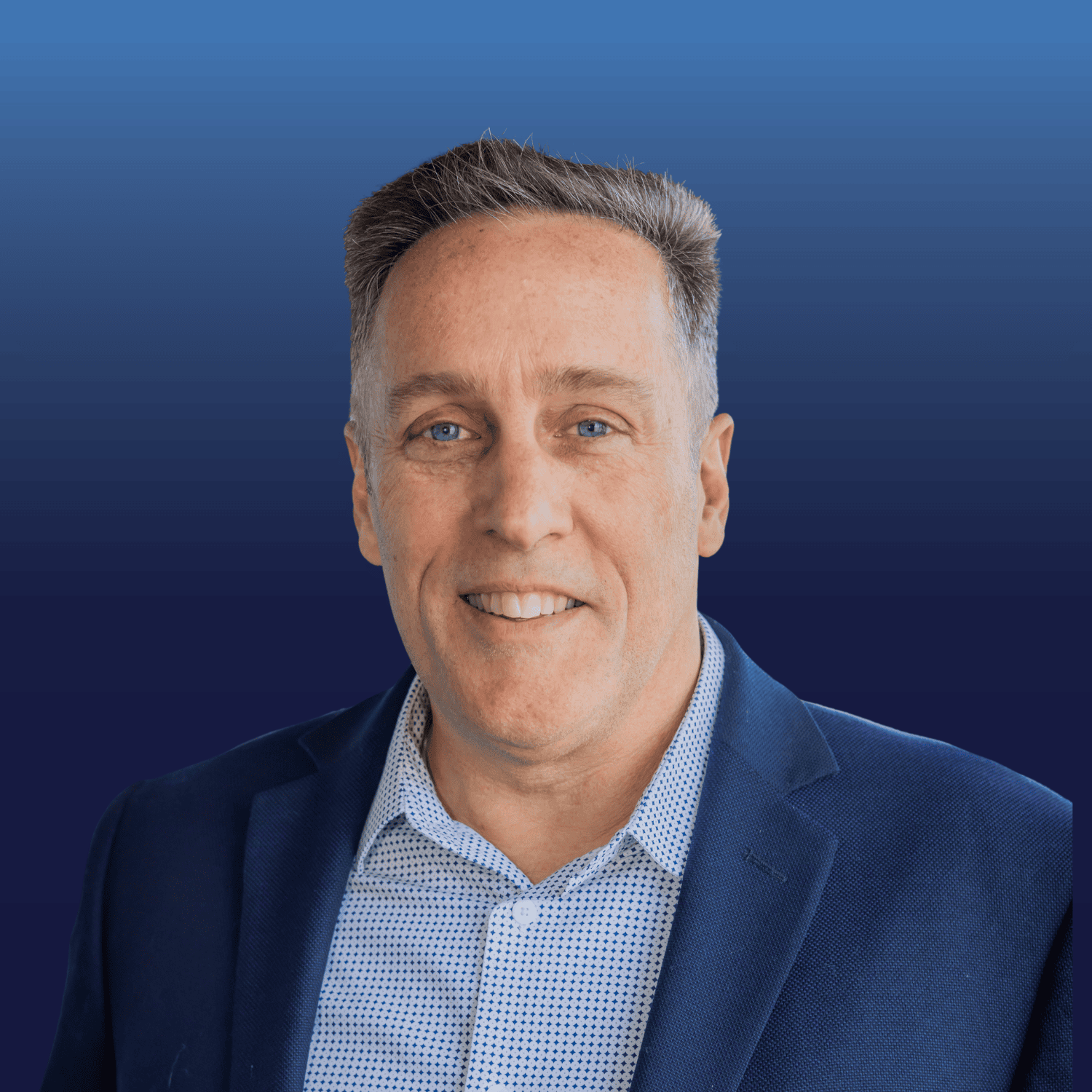
“GD is my forever job.”Curt Bashford, CEO · 2022
Three jobs, one patient
The present system divides the work across three products. e-Bridge carries a patient case between care teams, with secure messaging, pre-arrival notifications, ECGs, photos and video. Configurable forms help teams collect information for different presentations. GPS and estimated arrival information give the receiving team a moving timetable.
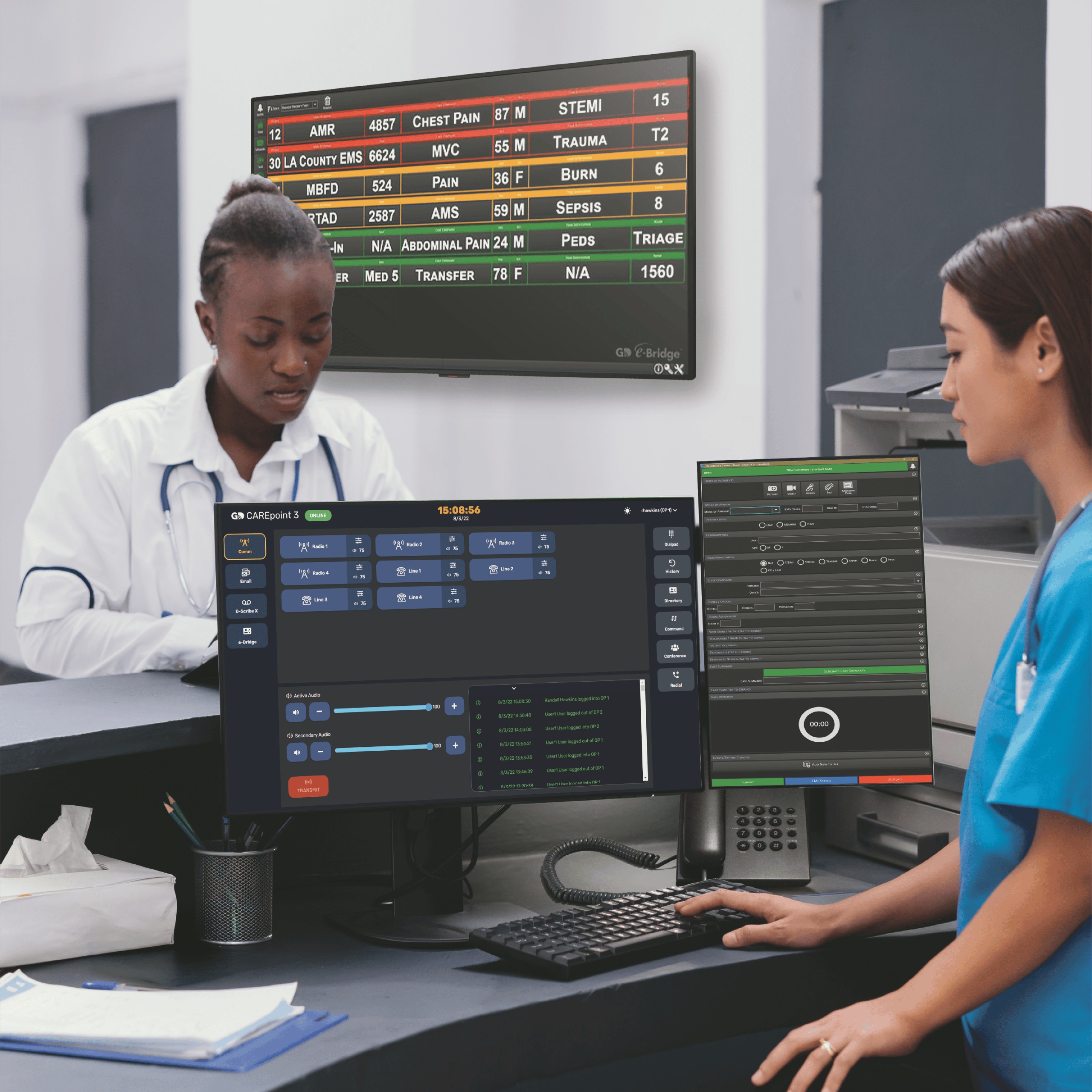
CAREpoint gives the emergency department a place to handle incoming radio, telephone and digital communication. D-Scribe X gathers records and workflow information for later review. GD says the reporting hub is included with CAREpoint or e-Bridge. The sequence matters: communicate, coordinate, then examine what happened.
e-Bridge
CAREpoint
D-Scribe X
This is GD’s market position: mobile clinical communication connected to the hospital’s existing communication desk and its quality-review work. Pulsara also competes for emergency team communication. For buyers, GD’s particular proposition is the combination of those jobs, especially where radios and phones remain part of daily operations.
There is an engineering sensibility here. GD describes a culture of responding to customer problems, while its leadership spans software, manufacturing and support. Its current careers page advertises small teams and many remote positions. For a hospital, the relevant question is whether that experience translates into configuring the awkward parts of its own routine, then supporting them after launch.
The pager that refused to retire
Installing e-Bridge did not finish Baystate’s work. The hospital still had a separate manual paging process. Staff could create an app case and then have another notification task waiting for them. The upgrade had left a small piece of duplication alive.
GD and Baystate connected the paging system to e-Bridge so the case could trigger the necessary pages. The detail is almost comically ordinary. Yet it explains the company better than a sweeping promise about digital healthcare: the next improvement involved finding the extra job a busy person still had to remember.
The pandemic brought another adjustment. Baystate needed its COVID communication to fit established clinical workflows. GD adapted the module, and the hospital described using alerts to send an EMS-ED liaison to assess arriving patients. The workflow changed because the receiving team’s needs changed.
What seven minutes can prove
A 2024 Baystate study examined 428 cases, including 132 using e-Bridge. Mean door-to-balloon time was 61.2 minutes with the app and 68.4 without it: a 7.2-minute difference. That measures the interval from hospital arrival to balloon treatment during a heart attack.
Single-center observational study · published 2024 · bars begin at zero
The difference was larger at night. Daytime door-to-balloon results were not statistically significant, and neither was the overall first-medical-contact-to-balloon result. The retrospective, single-center design also limits generalization. The research measured timing; it did not assess net clinical benefit.
Start with the duplicate step
Buying GD is an organizational decision involving software, equipment, configuration and support. Pricing goes through its sales team. At Baystate, EMS accounts and training were provided at no cost to participants; the deployment also included tablets inside the hospital. A free account says little about the complete purchasing decision.
For a buyer, the demonstration should follow a patient case all the way through. Who sends the first alert? Who sees the ECG? Does somebody have to re-enter the details, find a telephone number or send a second message? These are useful questions because a feature list can hide the work that remains between features.
The repeatable part is the implementation discipline. Baystate involved EMS partners and tracked treatment intervals. HCA TriStar’s rollout advice emphasized physician participation and phased implementation. Start with a defined clinical problem, involve the people on both ends, then watch what they actually do.
The record matters afterward, too. A team reviewing a slow handoff needs to distinguish a late report from a late response. Capturing the communication gives that conversation something more concrete than everybody’s recollection of a difficult shift.
That approach needs connectivity, participating teams and agreed responses to alerts. A message cannot prepare a room by itself. But it can give the people responsible a chance to prepare it sooner. GD’s story invites a practical question for any organization with handoffs: what useful work could begin while the next person is still on the way?