A dermatologist in Lubbock is not much help to a patient who cannot get to Lubbock. The expertise exists. The suspicious mole exists. Between them sit an appointment book, a long drive and the perfectly human tendency to put things off. This is the kind of problem GlobalMed sells equipment to solve: getting enough clinical information across the distance that the patient can stay closer to home.
- The product: software, examination tools and connected clinical stations.
- The buyers: health systems, rural providers, corrections and government agencies.
- The useful question: can the specialist get the evidence needed to act?
01 The appointment that moved
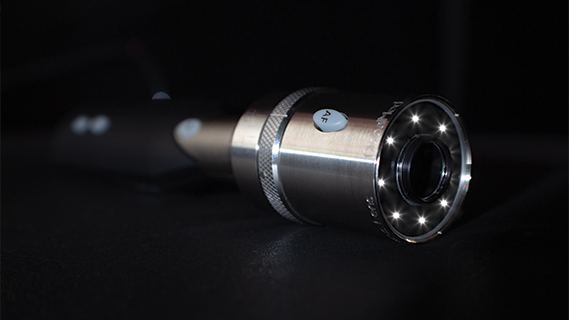
Texas Tech University Health Sciences Center took GlobalMed’s Transportable Exam Station, TotalExam 3 camera and a polarizing hood into rural communities. Local clinics became temporary dermatology access points. Specialists could remain in Lubbock. GlobalMed’s clinical-care materials report that appointment waits fell from about a year to a week and travel exceeding four hours was eliminated.
The first bottleneck was access. Another was belief. In GlobalMed’s 2022 case study, Pamela Irvin describes clinicians who doubted that remote images would be accurate enough. Seeing the camera in use changed their minds. Her colleague Charli Grinie offered an unusually concrete endorsement: “You can run a whole practice with it.”
02 Give the specialist something to examine
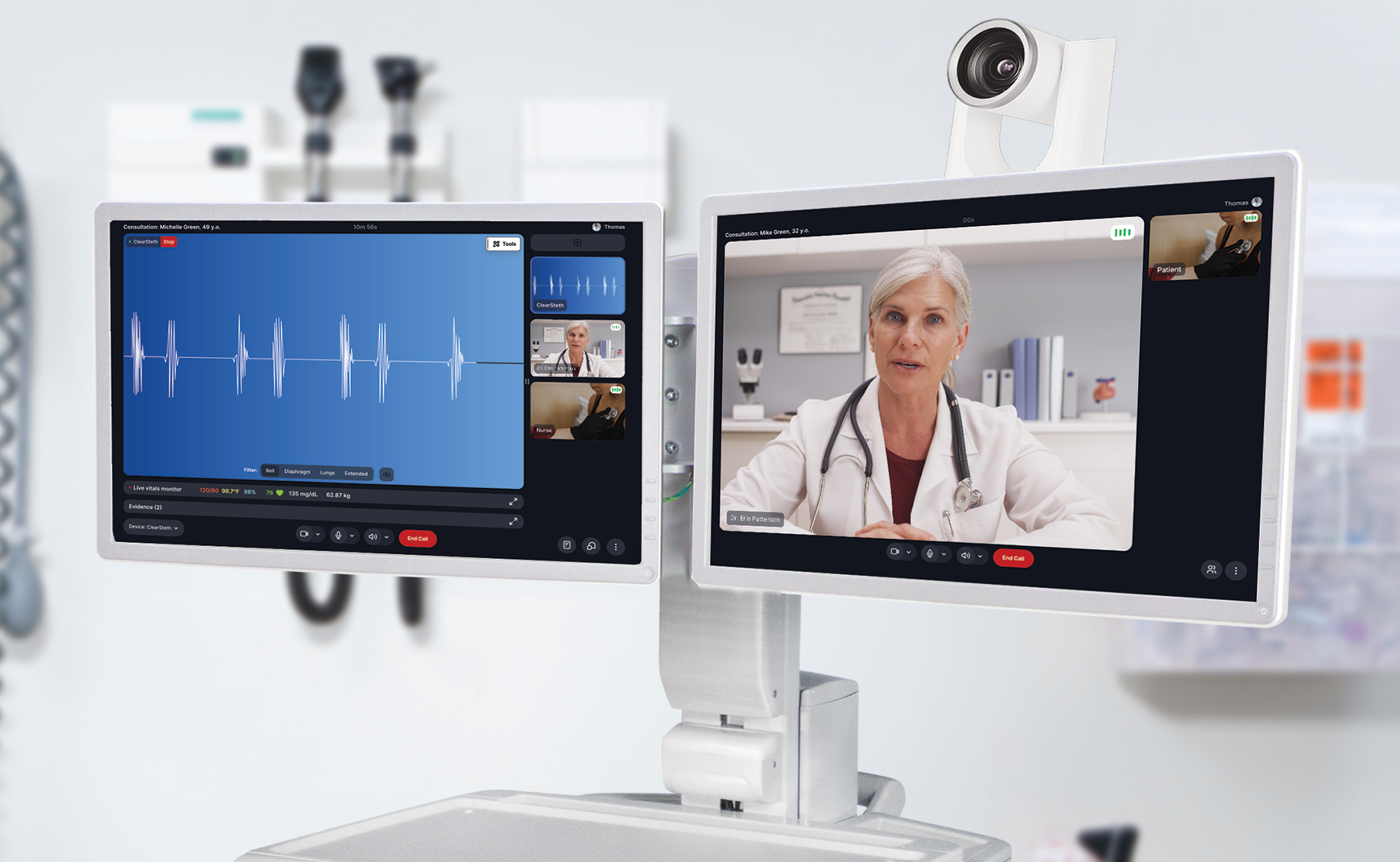
That distinction explains GlobalMed’s place in telehealth. A face on a screen carries conversation. An examination needs evidence. Through eNcounter, its software platform, a local clinician can share diagnostic information with a remote specialist and connect the encounter to a medical record. The commercial proposition is the coordinated examination, including the equipment beside the patient.
ClearSteth sends body sounds. TotalECG captures cardiac information. TotalVitals handles measurements such as blood pressure and oxygen saturation. The TotalExam 3.2 camera supports general examination and otoscopy; its capture feature selects the clearest image from the previous 16 frames. That is a pleasingly unglamorous detail. Sometimes the better picture happened a fraction of a second before someone pressed the button.
- 01 / CapturePatient + local team + instruments
- 02 / ConsultRemote specialist reviews the findings
- 03 / ContinueRecord, treatment plan and follow-up
The physical packaging follows the setting: a workstation for a clinic, a transportable station or backpack for mobile care. GlobalMed also offers direct-to-patient software. Its October 2025 announcement described booking, messaging, digital intake, payments and AI-assisted triage. These are different care arrangements. A patient joining from a phone does not automatically acquire the instruments or assistance available in a staffed clinic.
03 The network has a gatekeeper
Joel E. Barthelemy, a Marine Corps Reserve veteran, founded the company in 2002. GlobalMed’s account connects his motivation to his veteran father’s difficulty accessing rural care. In 2011, the business shortened its GlobalMedia brand to GlobalMed. Even then, its portfolio combined cameras, mobile carts and image-management software. The connection between an instrument and a usable record has been part of the business for years.

Its customers include the Department of Veterans Affairs, Defense Health Agency and White House Medical Unit, alongside civilian providers. GlobalMed reports roughly 100 million consultations supported across more than 60 countries. Treat that as a company-reported cumulative measure, rather than an annual patient count.
For federal customers, permission to connect is part of the sale. A December 2025 announcement described renewed authorization on the Defense Health Agency’s Medical Community of Interest network, following authorizations in 2017 and 2021. GlobalMed also reports a SOC 2 Type II examination and ISO 13485-certified manufacturing. Security review, device quality and record integration help explain why this business reaches beyond selling video subscriptions.
04 The cart gets a monthly bill
GlobalMed sells to organizations assembling a care service: software, devices, configured stations and deployment support. In April 2018, it introduced Cost Simplified packages advertised at $799 to $1,099 a month after activation, against traditional capital purchases it said started around $42,000. The offer bundled equipment and software with installation, training, maintenance and support.
After activation. Hardware and software together. Historical launch terms, not a current quote.
The company expanded its rental program in January 2024. The underlying idea is easy to understand: spread the equipment expense over time and include the work needed to use it. For buyers, the real calculation still includes clinical staffing, connectivity, specialist coverage and utilization. A monthly payment cannot rescue an examination station that spends its days waiting for a clinician.
The technology changes where work happens; the care organization must arrange for it to happen.
The operational lesson
05 Copy the workflow
The practical lesson is to begin with one obstructed journey. Choose the specialty. Arrange the specialist’s time. Put trained people and appropriate devices near the patient. Demonstrate the examination to doubtful clinicians. Decide where the findings go and who handles follow-up. Then measure waiting time and avoided travel. This is an operational reading of the deployments, rather than a promise that purchasing the equipment reproduces their results.
Those conditions also define the limits. A clinic without local assistance cannot copy a facilitated examination unchanged. A connection without an available specialist leaves the access problem unresolved. Store-and-forward images can help when schedules do not coincide, but somebody still has to review them. The technology changes where work happens; the care organization must arrange for it to happen.
06 More of the exam comes along
GlobalMed’s 2026 announcements extend that logic. June partnerships covered contactless monitoring with Smart Meter and Neteera, and portable X-ray with OXOS Medical, both with exclusive federal-market rights described in the agreements. An August Iveda partnership added government procurement opportunities for intelligence technologies; deeper native integration was still being evaluated. These are announced directions, not evidence of clinical results.
The company’s useful test remains refreshingly specific. Can a clinician, somewhere else, get enough reliable information to make the next decision? In a rural dermatology program, that can mean the difference between another postponed trip and a specialist looking at the mole this week.