The black bag is back. In FONEMED’s product photograph, it sits open on a table, its lid carrying a screen and its compartments holding diagnostic equipment. Beside it stands a wheeled care cart; behind it, a private care pod. The old house call has acquired a network connection. The important person may now be miles away.
For a company whose name still sounds like a telephone service, this is a revealing collection of objects. FONEMED began in 1996 with telephone-based health information. It now supplies virtual clinical services, remote patient monitoring, and the software that connects those activities. Its proposition is easy to grasp: patients should be able to reach clinical help even when they cannot conveniently reach a clinic.
- The nurse comes first. Around-the-clock triage remains a core service.
- The buyer is usually an organization. Hospitals, agencies, insurers, and colleges buy access for their populations.
- The screen is gaining instruments. Connected diagnostic kits extend what a remote clinician can observe.
01 / A telephone was enough to begin
The University of Arizona’s telemedicine directory describes a founding group of physicians, philanthropists, and businesspeople in Kansas City. One documented co-founder, Kenneth Bleakley, had spent a previous career in the US Foreign Service. Diplomacy and nurse advice make an unusual pairing, though both depend on finding out what somebody actually means when they speak.
FONEMED’s first client was in Oregon. In a Government of Canada profile, Charlene Brophy described the company’s early expansion with refreshing restraint: “We have had slow but progressive growth.” She attributed much of the client-building to word of mouth. The same account links the development of a health management platform to an aging population and increasing chronic disease needs. The business widened its attention from a caller’s immediate concern to problems that required continuing contact.
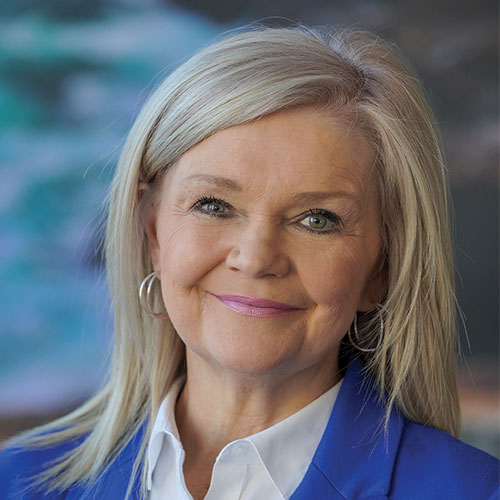
Brophy, a nurse, became president and CEO in 2015. The board’s appointment announcement described her work establishing telehealth centers in locations including Bangladesh, Haiti, and the Philippines. It also described a Newfoundland and Labrador operation that had grown from nine employees in 1998 to more than 100 by the announcement. The geographic lesson was already present: the person receiving care and the team organizing it did not need to share a postcode.
02 / Someone has to decide what happens next
A patient calling after hours often needs something more specific than a reassuring voice: a decision about the next step. FONEMED’s registered nurses assess symptoms using Schmitt-Thompson protocols. Their recommendations can range from self-care and primary-care follow-up to urgent or emergency evaluation. The company says its nursing team averages at least ten years of clinical experience.
The distinction matters. Nurse triage is a sorting and guidance task, with clinical judgment attached. It does not promise that every problem can be settled over the telephone. A well-run service needs to recognize the encounter that should end somewhere else. In that sense, an appropriate referral is part of the product’s usefulness.
FONEMED also offers nurse practitioner primary care. Its published workflow includes booked appointments or escalation from an RN triage center, assessments, referrals, test requisitions, and prescriptions sent to local pharmacies. Its urgent-care offering supports facilities facing staffing shortages. Behavioral health programs add supportive counseling and dedicated nurse case management, with plans developed alongside the patient and primary care provider.
These are different jobs, even when they arrive through the same screen. For a patient, the benefit is a clearer route through care. For the organization, it is an additional way to make clinical capacity available. Access depends on the particular program and its arrangements; a list of services is not an appointment guarantee.
- 01ContactPhone, text, or video
- 02AssessNurse + protocols
- 03ActAdvice, visit, or referral
- 04ReportReturn the encounter record
Illustrative workflow, not a clinical decision guide.
03 / The software follows the conversation
Florizel, FONEMED’s cloud platform, brings call-center functions, scheduling, triage protocols, virtual meetings, and remote monitoring into the same product family. Clients can select the functions they need. This is the software side of a company that also supplies clinical labor.
Its three named functions make the arrangement unusually legible. Connect gives clinicians access to patient profiles and supports assessments by phone, video, or text. Monitor receives readings from remote devices through Bluetooth and supports alerts and reports. Virtual Visit enables consultations, appointment booking, self-queueing, and access to healthcare history.
Consider the organizational problem implied by those functions. A device produces a reading. Someone must notice it, judge its significance, contact the patient if appropriate, and leave a record for the next clinician. Buying the device solves only the first part. FONEMED’s combination of platform and services addresses more of that sequence.
That combination is its market position, although it is not exclusive territory. TriageLogic also offers nurse triage services and software. An organization could staff its own advice line or assemble separate consultation and monitoring tools. FONEMED’s case rests on how well its people and platform fit the buyer’s existing workflow. The useful comparison is who handles each step, what reaches the health record, and how escalation works.
“We have had slow but progressive growth.”Charlene Brophy, in a Government of Canada business profile
04 / Access has an invoice
The customers paying for this arrangement include health systems, hospitals, physician practices, insurance providers, universities, and government agencies. FONEMED’s public-sector work makes the economics visible in a way a commercial sales page rarely does.
Five years of Newfoundland and Labrador HealthLine services, March 2022-February 2027, as reported by the NLMA.
In December 2022, the Newfoundland and Labrador Medical Association questioned the renewed 811 agreement. Its letter put the five-year value at C$31,362,525 and said the rate bundled all HealthLine services. The association estimated first-year average costs of about C$82 per service call and sought a separate price for virtual appointments.
That is a legitimate purchasing question, and a bundled service complicates the comparison. Staffing availability, software, reporting, and consultations are different units of work. A buyer needs to know which costs are fixed, which rise with demand, and what outcomes the agreement measures. The contract figure is neither FONEMED’s company revenue nor a price a patient pays for a single visit.
Public money also supported development. A Government of Canada account describes more than C$2 million from the Atlantic Canada Opportunities Agency for service infrastructure expansion. In September 2021, SE Health acquired FONEMED after an earlier investment. The acquisition announcement connected virtual care’s expanding demand to SE Health’s focus on people living and aging at home, while keeping FONEMED’s management in Newfoundland and Labrador.
05 / The camera needed company
In November 2025, FONEMED introduced three connected diagnostic formats: the Care Pod, portable Black Bag, and bedside Mobile Care Cart. The lineup combines its software and clinical support with instruments including digital stethoscopes and otoscopes. PolyUnity contributed design expertise and locally produced, 3D-printed antimicrobial materials.
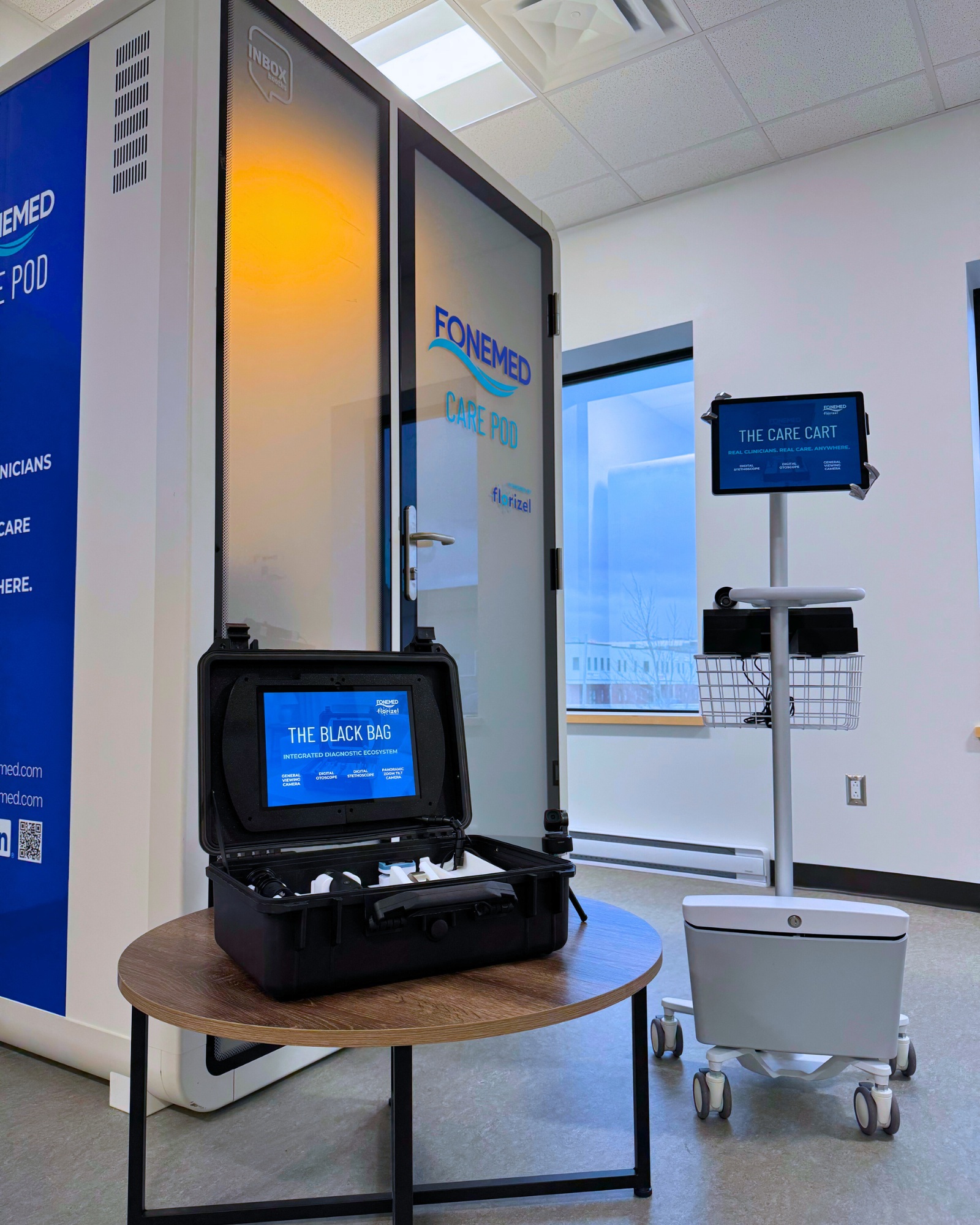
The three formats acknowledge that healthcare happens in different places. A community site can accommodate a station. Outreach needs something portable. Bedside work needs wheels. The surrounding logistics are as consequential as the connection: equipment has to arrive, be used correctly, and deliver information a clinician can interpret.
The company also announced its first in-person clinic in St. John’s for 2026. Brophy described the expansion as giving patients more options across physical, virtual, and community-based care. It is a useful development in a telehealth story: a company built to bridge distance is adding a place people can visit.
06 / Copy the follow-through
The transferable idea is practical. Start with the recurring interruption in the customer’s life, then decide who owns the response. FONEMED’s evolution suggests how a service business can build software around the work its people already understand. The assessment, the record, and the next appointment belong in the same design conversation.
For a healthcare buyer, the corresponding discipline is to examine the entire route. Who receives an alert overnight? Which clinician is licensed to respond? Can records reach the existing system? Where does a patient go when a physical examination is necessary? Connectivity and usable devices matter, but so does an available local service at the end of a referral.
FONEMED is interesting because its tools keep returning to that ordinary obligation. The phone, the platform, and the black bag all serve a patient who is elsewhere. The test is whether that patient can get a useful answer, and whether the next person responsible for their care knows what happened.