In 1995, Ronald Gaboury walked into York Telecom by way of the finance department. It was a small New Jersey video-communications company doing roughly $4 million in annual revenue, and he was its new chief financial officer. A less patient executive might have treated the job as a rung. Gaboury made it a residence. He learned the ledgers, then the operations, then the peculiar physics of a business that promised to put people in the same room without moving any of them.
The technology changed. Dial-up connections gave way to broadband. Video conferencing escaped from dedicated corporate suites and arrived on laptops and phones. Yorktel bought businesses, entered markets and grew. Gaboury’s title changed with it: president and chief operating officer in 1999, chief executive in 2011. By 2021, Yorktel’s annual revenue was reported at about $140 million. The arithmetic is striking. The patience behind it is more revealing.
Gaboury is now best known as the co-founder, chairman and CEO of Caregility, a connected-care company born inside Yorktel and separated from it in 2019. The neat corporate chronology disguises the interesting part. Caregility did not begin with a eureka moment in a garage. It grew from an assignment, a wall-mounted video system, a group of nurses and an old company discovering that one of its capabilities mattered much more in a new setting.
The accountant learns to see around corners
Gaboury studied finance and accounting at Ohio University. Before Yorktel, he worked as a senior consultant at Haag & Company and as the chief operating officer of a startup reported to have grown 400 percent in two years. His early vocabulary was business planning, accounting systems and marketing plans. This is not the usual costume for a technology founder, which may be why it suits his story so well.
At Yorktel, finance quickly became a vantage point. The company said it grew more than 300 percent during his first several years. After taking the president and COO roles, Gaboury led acquisitions that widened what Yorktel could do. The purchase of Madge Networks’ ISDN division added digital connectivity at a moment when that mattered. Univision Crimson Group added audiovisual depth. Smaller deals filled other gaps. Yorktel moved beyond its base in federal work and toward a broader mix of integration, conferencing and managed services.
Those moves were less cinematic than a product launch, but they furnished the cupboard. The later hospital platform would need secure networks, audiovisual hardware, remote support and a tolerance for fussy integration. Companies often speak of innovation as if the future arrived in a parcel. In Gaboury’s case, it arrived as capabilities accumulated over years and then rearranged themselves around a demanding customer.
In 2007, Yorktel entered medical-device work through an acquisition involving smart operating rooms. Several years later, Gaboury recalled, a virtual-hospital company asked whether Yorktel could build a resilient telehealth configuration that could hang on a wall. The request was awkward enough to be valuable. Yorktel had the integration experience, but the arrangement required the team to assemble something new from first-generation components.
They built it. The customer bought it. Then came the response that turned a project into a thesis: nurses liked it because it let them distribute some floor work to colleagues working virtually. The camera was not the invention. The altered pattern of work was.
“Telehealth should be as fundamental as oxygen in the hospital.”Ronald Gaboury, 2025
A side project asks for its own front door
Yorktel’s healthcare line developed into a video platform built for hospitals, spanning software and purpose-made bedside devices. The distinction mattered. Consumer video can forgive an occasional frozen face or dropped call. Hospital infrastructure is judged by a colder standard. It must be available, secure, supportable and comprehensible at an hour when nobody is interested in rebooting a clever gadget.
By 2019, several large health systems had adopted the platform. Keeping it as merely one line inside Yorktel began to look like timidity disguised as tidiness. Caregility was formed as a separate company, with Gaboury among its founders and at its helm. He later said he passed on a lucrative offer to sell the young business because he had a feeling it could become much more. This is the sort of decision that sounds like destiny only after it works. At the time it was a wager, and wagers are what accountants call decisions before the result comes in.
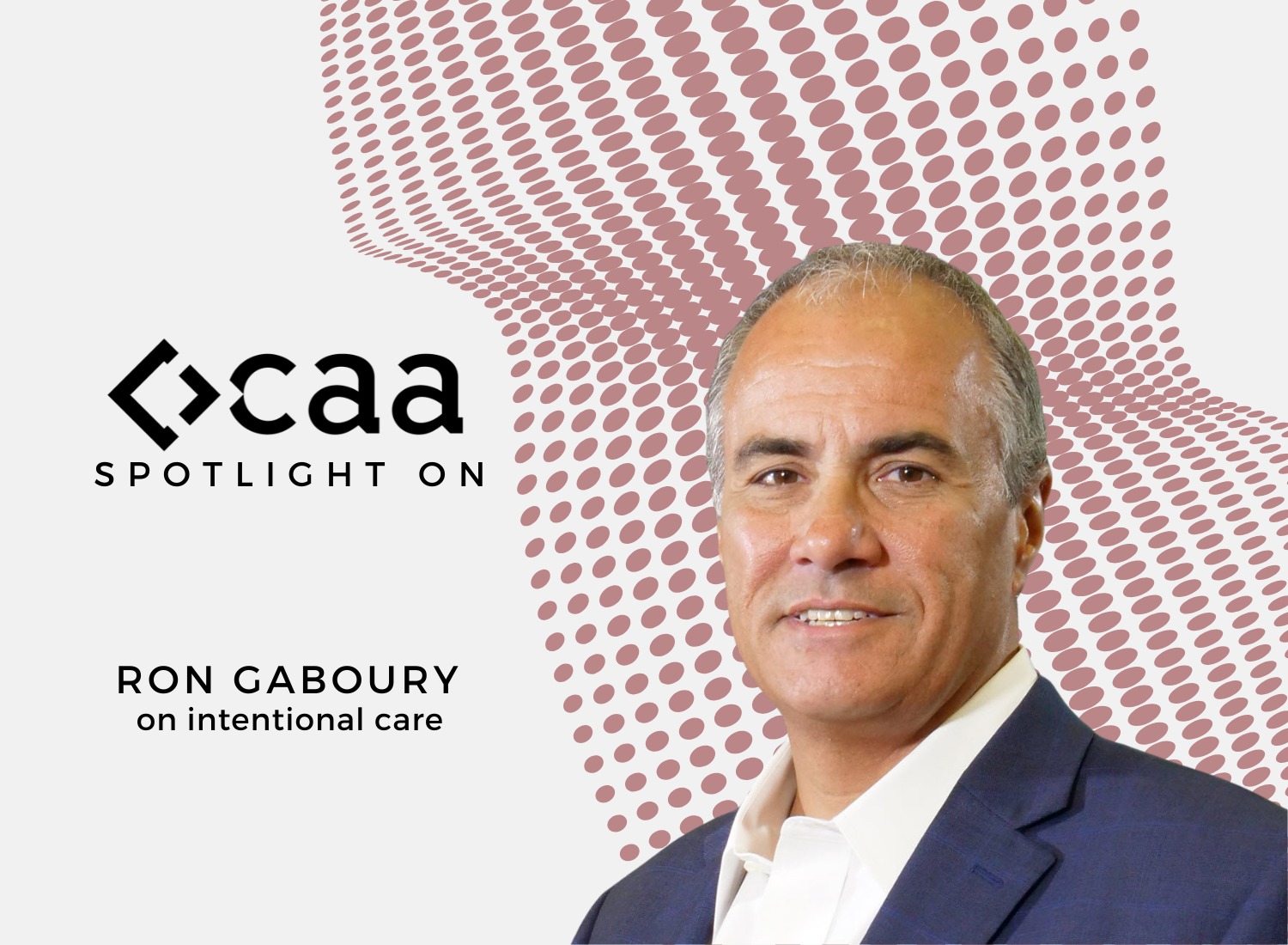
Caregility first concentrated on intensive-care settings, which Gaboury described as about 10 percent of the potential market. The larger opportunity was the rest of the hospital: virtual observation, virtual nursing, specialist consultation and the administrative tasks that consume a clinician’s time without requiring a clinician’s shoes beside the bed. His oxygen analogy is useful because it removes novelty from the picture. A hospital does not ask which rooms deserve oxygen and then wheel people toward it. The utility is available wherever work requires it.
Making video similarly ordinary creates a difficult commercial problem. Equipping hundreds or thousands of rooms can collide with annual capital budgets. In 2024, Caregility introduced an Accelerated Adoption Program that let customers deploy under contract without the same upfront investment. In a March 2025 interview, Gaboury said the program had helped push the company’s pipeline above $100 million and that orders once counted in dozens of endpoints were arriving in the hundreds.
Recognition followed. Gaboury won a SmartCEO Voltage Award in 2014. Caregility’s non-EMR virtual-care platform received Best in KLAS recognition in 2021 and 2022, and a later interview described a third consecutive year. The Association for Corporate Growth’s New Jersey chapter honored Caregility for corporate growth in 2022. Awards are agreeable mantel furniture. More telling is how Gaboury discusses the product: in terms of workflow, budgets, integration and support at scale.
The year of substance
In September 2025, Caregility announced $25.1 million across Series A-2 and Series C financing. The company said the money would support computer vision, ambient listening, sensor-based tools and international growth. It also said its systems then connected more than 30,000 devices, handled over six million virtual sessions a year and reached 1,500 hospitals across more than 75 health systems. Those are company figures, but they make the operating burden legible. At that scale, reliability stops being a slogan and becomes a queue of small promises that must all be kept.
Gaboury’s public treatment of artificial intelligence is notably free of robot pageantry. He has described AI as an assistive tool rather than the lead actor. The use cases are concrete: help an observer notice an event, make sense of signals in a room, reduce clerical load or preserve continuity when a network is disrupted. The ambition is substantial, but its language wears sensible shoes.
After HIMSS in 2026, Gaboury called it a year of substance: fewer features, fewer proofs of concept, more attention to security and resilience. He spoke about Caregility’s CUBE, an on-premise option meant to maintain core functions during disruptions and add local computing power for AI. The idea reaches back to Yorktel’s inheritance. Secure communication was not an accessory acquired for healthcare. It was part of the family furniture.
“When I stepped into this role, I made a promise - not to be the smartest person in the room or to have all the answers, but to be a steward of our values, our people, and our potential.”Ronald Gaboury on Yorktel, 2024
That comment came as Yorktel was acquired in 2024. Gaboury wrote that the announcement left him with a mixture of pride, gratitude and sadness after roughly 30 years. The word he chose for leadership was steward. It is a revealing choice from someone whose career has been built less around rupture than custody: take a company, understand its assets, widen its possibilities, then know when one possibility needs to leave home.
Caregility’s next chapter is aimed beyond video alone. Sensors, analytics and AI may make the connected room more perceptive. International expansion may carry the platform into different health systems and constraints. Gaboury’s stated aspiration remains practical: give clinicians more reach without pretending software can replace their judgment. The future he describes is not a hospital emptied of people. It is a hospital in which expertise can travel farther than a corridor.
There is an old temptation in technology to confuse visibility with importance. The newest object gets the stage; the infrastructure waits backstage and makes the show possible. Gaboury has spent three decades in the latter business. He began with numbers, moved through networks and ended up arguing that virtual care should become so available that nobody remarks on its presence. That is a peculiar founder’s ambition: to build something consequential enough to become ordinary.