Gary Beall began with a problem familiar to anyone who has peered at a food packet and wondered what was actually inside. The packaging did its job, but it concealed the product. His research at Texas State University aimed to make a transparent barrier: protection that would let the shopper see the food. Then he began considering a more awkward question. What if the barrier went directly onto the food?
The shift sounds small until you consider the consequences. A material intended for a wrapper would have to work on the irregular surface of fruit. A laboratory result would need a place in a grower’s or packer’s routine. And a chemist with a long career in nanoparticles would have to help build a company around something people might never notice.
Beall dates the idea’s beginnings to 2015. It grew into NatuWrap, the produce-protection technology commercialized by Nabaco, based in San Marcos, Texas. He is now its founder and chief technology officer. The company’s biography credits him with 48 U.S. patents across his career. The smallness of his materials has kept him occupied with some decidedly large practical questions.
Twenty-one years of practical chemistry
His formal training came in a quick sequence: a chemistry bachelor’s degree from Tarleton State University in 1972, a master’s in physical chemistry from Baylor in 1974, and a Baylor doctorate in the same subject in 1975. Physical chemistry asks how matter behaves. Beall’s career would repeatedly ask what that behavior might be useful for.
His first job was at Oak Ridge National Laboratory, studying the environmental fate of actinides associated with the civilian nuclear fuel cycle. He subsequently spent 21 years in industry. There, his research centered on modified clay nanoparticles and their applications in paint, grease, cat litter, water treatment, and polymers, among other products. Cat litter is a useful corrective to any tendency to make materials science sound too grand. A substance must earn its keep.
Clay offers a particularly interesting subject for that kind of work. Its usefulness depends on structure, surface, and its interaction with other materials. A familiar mineral can acquire unfamiliar properties when a researcher works at a different scale. Beall’s industrial years gave him a long acquaintance with that possibility, across products whose customers had little reason to care about the chemistry underneath.
He joined Texas State in 2001. His work there included service as Associate Dean for Research and Commercialization in the College of Science and Engineering. He also helped develop the university’s doctoral program in Materials Science, Engineering and Commercialization. In 2017, the Texas State University System named him a Regents’ Professor, recognizing achievements in teaching, research, and service.
Physical chemistry
Texas State
Regents’ Professor
The commercialization in that doctoral program’s name matters. It makes a promise about where research might go after the dissertation. A material may be fascinating under an instrument and difficult to explain across a conference table. Beall’s university work took both situations seriously. The questions of engineering and use belonged beside the question of discovery.
The architecture inside the coating
In 2011, Beall and fellow Texas State researcher Clois E. Powell published Fundamentals of Polymer-Clay Nanocomposites with Cambridge University Press. Its contents move through thermodynamics, analytical methods, engineering properties, and gas diffusion. That last subject supplies a connection between the seemingly remote world of nanocomposites and the rather immediate disappointment of fruit that has deteriorated before it can be sold.
A barrier is an exercise in controlling passage. Structure affects the route a gas molecule must take through a material. Clay platelets can make that route less direct when arranged within a polymer. Think of a journey through offset partitions: the distance across a room can be short while the available route through it is longer. Arrangement does work that a list of ingredients cannot explain by itself.
Nabaco describes its materials platform through the example of an abalone shell, where the organization of components contributes to the finished structure’s performance. The company studies how materials interact and self-assemble, then translates those relationships into systems for use outside the laboratory. The appeal is architectural. What sits next to what can be as consequential as what goes into the mixture.
For Beall, this line of work eventually led back to the food packet. The original transparent-packaging project offered a different application: a protective barrier applied to produce itself. NatuWrap is intended to limit moisture loss and gas exchange during processing and storage. Its job is easy to understand even when its formulation is specialized. Help the fruit remain useful for longer.
That everyday purpose puts an unusual demand on an inventor. The coating needs to matter to the supply chain while staying unobtrusive to the person looking at the fruit. The product’s value comes from the change it makes to preservation. Its appearance is supposed to provide very little entertainment.
A chemist who makes room for designers
Beall’s own description of his approach is less solemn than the titles suggest: “I like to do interesting things and have fun doing it.” There is room in that sentence for experiments, companies, and the pleasure of seeing a student do something unexpectedly well. His record at Texas State includes the practical business of giving young researchers a way to test their ideas beyond the classroom.
“I like to do interesting things and have fun doing it.”
Gary Beall
A 2016 account of student entrepreneurship offers a compact example. Beall was advising a four-person team called aRPM on a sensor for the alignment and speed of a rotating shaft. Its initial version used a handheld device with an LED display. He challenged the students to make the information available on an iPhone or iPad. They came back the following week with the job done.
The anecdote catches him in two roles at once: experienced enough to see a more usable product, and still capable of being surprised by the people building it. It also catches the students doing the part that matters. A suggestion becomes useful when somebody makes it work. The professor’s intervention offered a destination; the team supplied the speed.
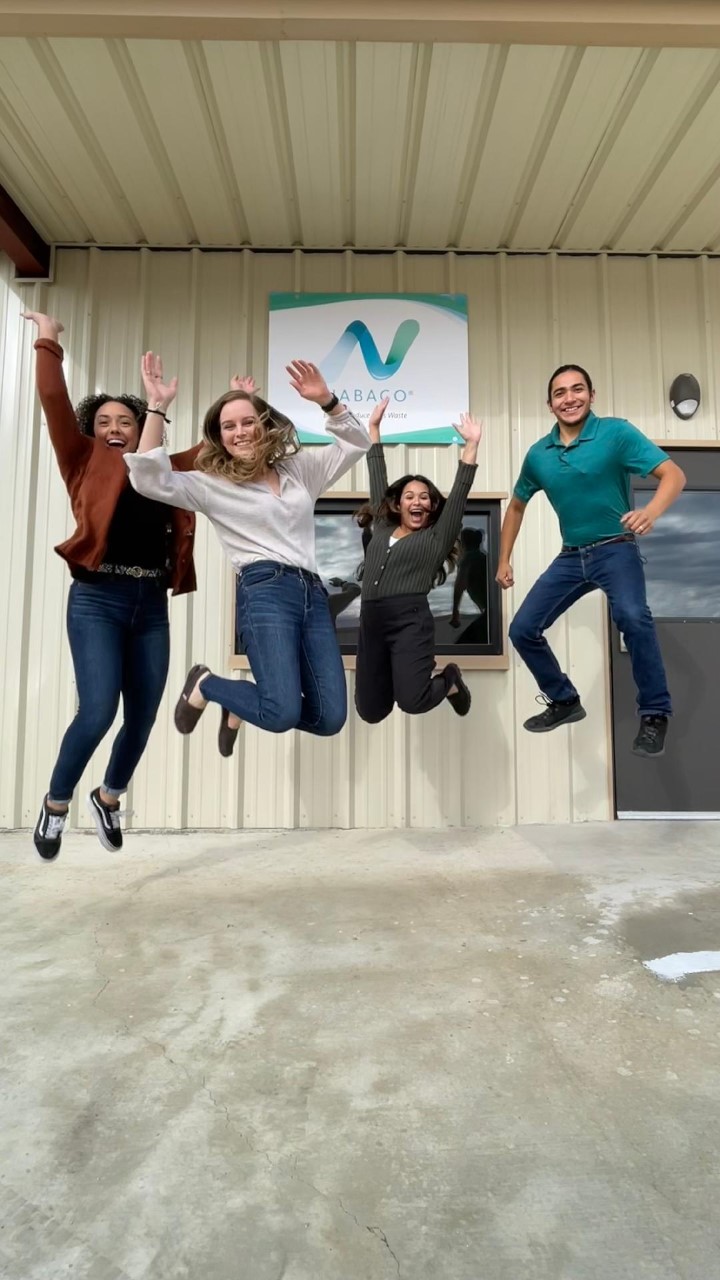
Another piece of the story is his willingness to recruit skills that do not fit neatly inside a chemistry department. In student ventures, he has sought a combination of technical knowledge, business understanding, and graphic-design ability. An MFA student could help make the pitch and its materials coherent. Someone with business training could work on the questions that scientific training alone leaves open.
That is a generous view of expertise. The designer enters while the venture is taking shape. The business student gets a real technology to work with. The researcher has to explain why another person should care. Each member knows something the others need, which is a sound reason to have a team in the first place.
The distance between a pitch and a packing line
Nabaco’s research reached the Rice Business Plan Competition in 2019, where it won the Texas Business Hall of Fame’s Best of Texas prize. By February 2020, Alsop Louie Partners had invested at seed stage. The company was acquiring the resources and relationships needed to carry its materials work into commercial use.
Beall’s path also crossed that of fellow chemist and entrepreneur Rusty Phillips at Texas State. Their work together brought complementary experience to Nabaco. In a 2022 company announcement, Phillips described Beall’s ability to work across industry and academia. Beall, in turn, emphasized Phillips’s experience with entrepreneurship and intellectual property. The connection fits the approach he encouraged among students: bring people whose knowledge makes the venture more complete.
The produce industry adds its own requirements. A packer needs an application that fits the operation. A grower needs a reason to bear the cost. A distributor needs something that can be explained and supported for customers. Technical promise must survive contact with those separate decisions. Every decision belongs to somebody with a working day already full of other tasks.
Best of Texas prize
Rice Business Plan Competition
Exclusive distribution agreement
AgroFresh becomes NatuWrap’s global commercial partner
In June 2025, AgroFresh and Nabaco announced an exclusive distribution agreement for NatuWrap. AgroFresh would serve as its global commercial partner, bringing the technology to fresh produce packers and processors worldwide. Distribution provided another kind of connection: a route from a specialist materials company to the organizations that might use its work.
That agreement is a concrete milestone in Beall’s stated ambition to give Nabaco global reach. The scale comes through the produce business and the people who operate it. A coating does not need a prominent place on the shopping bag to become part of a larger commercial system.
The wrapper returns, with a different job
Nabaco’s present platform extends beyond its original produce application. The company describes a scientific foundation expressed through NatuWrap, Envello, and Vanterra, with room to adapt materials to different settings. For Beall, the continuing subject is the relationship between structure and function. A particular product gives that relationship a particular assignment.
His career has supplied several such assignments, from industrial clay applications to university teaching to produce protection. The path includes a textbook, a doctoral program, student ventures, patents, and a company. Together, they show how many forms the work of an applied scientist can take. Sometimes the result is a material. Sometimes it is a person better equipped to build something.
The original transparent wrapper makes a fitting place to leave him. It began as a way to see food more clearly. The research led toward protecting food through the journey that precedes the shopping basket. Somewhere between those two problems, Beall found another use for a material he had spent decades learning to understand. A fruit gets more time. A long career gets another question.