At fourteen, Gabe Lozano found himself offering career advice to his father. Bob Lozano was building a technology company, money was tight, and the family had been brought into the conversation. Gabe’s recommendation was to keep trying if the business failed. He later remembered that exchange as the moment he decided to become an entrepreneur himself. Some families pass down silver. The Lozanos appear to have passed down a tolerance for uncertain payrolls.
Years later, the advice travelled in the other direction. Gabe was approaching his wedding with an unpromising product, no customers, and one prospective investor. His father helped him see that a single possibility was still something to work with. Gabe secured the check, missing a pre-wedding party to finish the paperwork. It was an early lesson in the awkward scheduling habits of opportunity.
That history gives his career a useful starting point. Long before machine-learning marketplaces or AI training programmes, he had seen enterprise as a human arrangement: people committing their time, other people’s money, and their credibility to something whose outcome remained unsettled. The product could change. The obligation to the people involved would remain.
Baseball, before the algorithms
Lozano played baseball at Millikin University in Illinois and graduated in 2005. The university’s 2004 baseball guide listed him among the outfield options, able to play across those positions. Years before his company would try to organise sporting lives online, he was living one of them. This was a founder with some firsthand knowledge of the difference between a spectator and a participant.
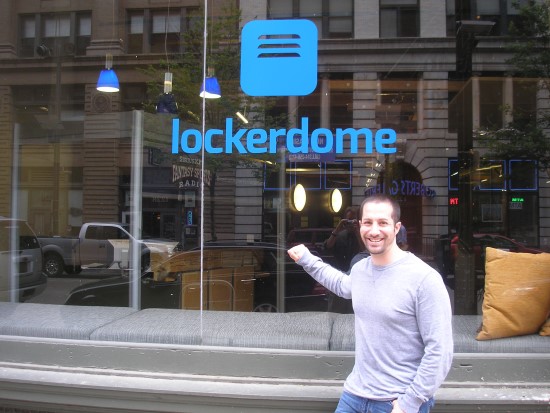
LockerDome launched in July 2008. Its early proposition was straightforward: the internet had places for friendships and professional identities, but sporting interests deserved their own gathering place. Athletes, clubs, and fans could organise around the things they cared about. For a baseball player turned entrepreneur, the starting material was close to hand.
In January 2012, a $750,000 financing round helped bring the company wider attention. Square co-founder Jim McKelvey was among its backers. McKelvey saw someone who understood both sports enthusiasm and technology. That combination mattered because the pitch depended on recognising a kind of attachment that a generic social profile did not quite capture.
The ambition soon widened. By June 2013, Lozano was describing a service that could connect people through interests beyond sports. Contests, polls, and quizzes gave publishers ways to engage those audiences. LockerDome was learning that a useful idea could travel beyond the category that had first made it legible.
One weekend. One problem. A real buyer.
The same period brought GlobalHack, which Lozano co-founded with Drew Winship and Travis Sheridan. Its early competition format had an appealing impatience with make-believe. A sponsoring company supplied a problem, revealed when the event began. Teams worked on that shared brief, competing for a $50,000 prize. The sponsor acquired the winning intellectual property.
A customer was built into the arrangement. The judges had a business reason to care about the answer, and teams could not arrive with a conveniently completed project. At the first event, TopOPPS founder Jim Eberlin even paid an additional $10,000 for the runner-up’s work. A weekend had produced something a buyer considered worth purchasing.
Lozano’s argument about St. Louis extended beyond the competitions. He wanted talent to develop, people to work near one another, and products to find users. He was already pointing to LaunchCode as part of the city’s answer to technical training. In that view, an entrepreneurial community depended on repeated exchanges between institutions, employers, and people willing to build.
The distinction is practical. A good idea can survive indefinitely in conversation, requiring very little beyond another cup of coffee. A product with a customer faces less forgiving tests. GlobalHack shortened the distance between the two, and put an actual price on crossing it.
The social network changes its job
LockerDome’s own product continued to change. The company moved from its sports roots into broader interest-based content and advertising. By a September 2019 Startup Grind appearance, Lozano was leading an advertising platform powered by its in-house AI, Neo. The event described the business as profitable and cash-flow positive since the first quarter of 2017.
In February 2022, LockerDome relaunched as Decide. The new name accompanied the Decision Marketplace, an environment for developing and deploying machine-learning models that competed to select advertisements and price impressions. The company said its analysts could build and test models in minutes, replacing an earlier process in which a handful of models took months to develop.
The announcement also described a move away from third-party cookies, whose limited use the business had phased out in November 2021. Its proposition was to make advertising decisions without relying on intrusive identity data. That placed the emphasis on the machinery behind each advertising decision.
For Lozano, this chapter added a different kind of experience to the founder’s toolkit. He had helped a company change what it sold and how it operated, while keeping the organisation going. Reinvention looks tidy when reduced to a new name. Inside a business, it asks rather more of the people who have to make it work.
- 2008LockerDome launches around sports.
- 2013Interests expand beyond the playing field.
- 2022Decide introduces the Decision Marketplace.
- 2024Lozano becomes LaunchCode’s CEO.
The etiquette of taking people seriously
His writing about business offers a less technical view of the same person. In 2015, he set out rules for handling an email introduction: reply promptly, make a clear request, remove the introducer from the scheduling thread, and report back when something happens. He also described maintaining a changing list of ten priorities across his personal and professional life.
There is a small comedy in discovering how much entrepreneurial advice comes down to answering the email. But his explanation had substance. An introduction borrows someone else’s standing. Handling it carelessly spends their credibility along with your own. His own missed wedding party served as an unusually persuasive illustration of taking an offered meeting seriously.
He could be sharp about the advice industry, too. In a 2014 essay, he recalled using a nuclear-explosion image while criticising mediocre mentorship programmes in front of civic and entrepreneurial leaders. It was hardly the visual language of a man hoping to be appointed chair of the refreshments committee.
His preferred mentors challenged assumptions, made time when needed, and put their reputations behind a founder. They also recognised that old successes could become poor instructions for a changing market. Read together, these essays suggest a demanding standard for relationships: attention, follow-through, and enough humility to let another person improve the answer.
“I like that sort of math.”
Gabe Lozano, on improving an organisation to expand its impact
A plumber makes a persuasive case for work
During a sabbatical, Lozano travelled without a rigid itinerary. He described choosing destinations loosely and staying until it felt time to move on. One conversation, at Little Toad Creek Brewery & Distillery in Las Cruces, stayed with him. A regular named Shane explained how much he enjoyed being a plumber, particularly solving problems with his team.
The appeal was ordinary and therefore rather inconvenient for a restless entrepreneur. Meaning could come from familiar colleagues doing useful work together. Lozano also spent days shadowing eight friends in leadership and business roles, watching the routines that held their working lives together. By July 2024, he was writing about spending more time in his hometown of St. Louis and beginning new projects.
Later that year, McKelvey encouraged him to consider LaunchCode. Lozano visited a sales-training discussion on October 10. Conversations with Kemata McCline, Lin Wang, and Lexi Baysinger helped persuade him that he wanted to join the team. Eleven days after that visit, he did.
The announcement of his arrival opened with a task: finding jobs for graduates still waiting for placements. The sequence is revealing. After years building products and considering the shape of his own working life, he accepted responsibility for helping other people get theirs started.
AI training with a destination
Lozano now leads LaunchCode as CEO and is listed as co-founder and chairman of Decide. LaunchCode’s newer undertaking, Hire Human, connects free AI education with employment. The premise asks an old question under new conditions: as tools change, how does someone gain enough useful experience to be hired?
The programme currently offers AI 101 and specialist or engineering tracks. Its introductory course requires no coding, and the specialised work culminates in a capstone built around a real workflow. Job seekers can enter LaunchCode’s candidate pool for matching with employers. Completing training opens a route into that process; it does not itself constitute a job offer.
There is continuity with the earlier experiments. A practical brief gives learning a destination. Employer relationships connect the work to someone who might use it. LaunchCode brings an organisation and hiring network that existed well before this particular wave of AI tools, giving Lozano something concrete to work with beyond enthusiasm for the technology.
In July 2026, Maryville University announced a partnership to deliver LaunchCode’s AI curriculum in person across the St. Louis region. Maryville would supply instructors, facilities, and programme operations, while LaunchCode contributed curriculum and updates. In-person training was scheduled to begin August 1. The arrangement distributed the work across two institutions with different capacities.
The challenge ahead is to keep education connected to what employers actually need as those needs change. Lozano’s career supplies several approaches to that problem: begin with a community he understands, put builders near customers, revise a product when its purpose shifts, and pay close attention to the people doing the work.
A teenage son once urged his father to keep trying. The adult version has become more specific about what trying requires. There must be a problem worth tackling, someone willing to tackle it with you, and a way into the room. At LaunchCode, helping people find that way in is now his daily business.
Keep following the thread
Lozano’s writing, work, and conversations.
- Gabe Lozano on LinkedIn
- Gabe Lozano on Twitter / X
- His essays on Medium
- LaunchCode
- Hire Human: learning and employment
- Why he joined LaunchCode
- His essay on routines and road trips
- The LockerDome conversation on YouTube
- The Decision Marketplace announcement
- Maryville’s AI training partnership
- The LockerDome and GlobalHack interview