The founding grievance was a car commercial. Ellen Fruchtman was a television producer in Toledo, Ohio, watching local dealers smash windows to symbolize smashing prices. The metaphor was not subtle. It was barely a metaphor. She thought advertising could behave better, so in 1981 she left television, borrowed $750 from her husband Michael, and started an agency.
The number is almost comically small now. It would not cover one of the more elaborate video productions the firm sells today. But the useful part of the story is not thrift. It is irritation sharpened into a point of view. Fruchtman Marketing was born because its founder noticed that an entire local category had accepted a lazy way of communicating.
Then the agency made a second, stranger decision. In 1999, after years as a general full-service shop and several years learning the jewelry business, it went all in on jewelry. Retailers, designers, manufacturers, wholesalers, importers, vendors, and trade groups became the market. Everyone else became somebody else's prospect.
The value of knowing what a loupe is
Agencies usually boast about versatility. The pitch is that an intelligent team can learn anything. Fruchtman's pitch is more economical: the client does not have to pay for the learning. The firm already knows that a bridal customer behaves differently from a self-purchasing woman, that a designer's co-op dollars must work at the retailer level, and that a store can be rich in inventory but poor in reasons to visit.
This category knowledge changes the questions. Fruchtman begins a full-service relationship with an assessment of the business, its brand position, its market, and its numbers. It builds an annual budget, then assigns a team that can include an account lead, coordinator, designer, media planner, digital specialist, and social strategist. Monthly sales, new-customer counts, and promotion results can enter the conversation. The agency calls the arrangement an outsourced in-house department. The joke in its process copy is that clients do not merely own a loupe; they are kept in the loop.
The services are broad precisely because the market is narrow. Fruchtman plans campaigns, buys media, writes copy, runs paid search, manages social channels and email, develops Shopify stores, produces video, handles public relations, and advises owners on finance, operations, HR, and sales training. Its leaders include people who have owned jewelry stores and a manufacturing company. That makes the consulting practice more than an agency's attempt to add a higher-margin workshop.
The handoff that took a year
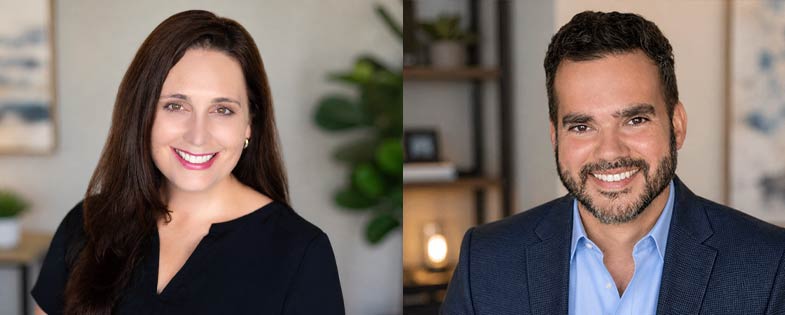
In May 2026, Ellen and Michael Fruchtman sold the business to another husband-and-wife team, Erin Moyer-Carballea and Manuel Carballea. Headquarters moved to Miami. Erin became chief executive; Manuel became chief operating officer. David Turgeon, the former retail and manufacturing operator, moved into the chief client role. Shane O'Neill, a 20-year Fruchtman veteran, became chief strategy and growth officer.
An acquisition announcement is normally written in the language of acceleration. This one was organized around continuity. The parties spent a year planning, evaluating, and working together. The same team would remain. The boutique structure would remain. The jewelry-only rule would remain. Ellen would assist through the transition and continue advising into 2027.
The interesting promise was not what the new owners would add. It was what they had agreed not to disturb.
That restraint makes sense because specialization is stored in people as much as in documents. A media plan can be handed over. The instinct that December is not merely another month, or that an engagement-ring shopper may research online and still insist on touching the product, takes longer. Fruchtman's asset is a collection of such instincts.
The new influence is visible. Erin's background is in entertainment, media, and global consumer brands; Manuel's is in communications software, enterprise sales, analytics, and AI-driven systems. In September, the pair attended the Emmy Awards wearing pieces from client Lewis Jewelers. They treated the night as a miniature campaign: red-carpet photography, social content, a dedicated landing page, and a trail from spectacle back to shoppable products. It was publicity designed with plumbing.
A black screen can sell diamonds
An older campaign explains the firm's operating idea even better. Harold Jaffe Jewelers wanted younger customers without alienating its established, older clientele. Fruchtman kept a familiar local jingle, then made television spots that used short messages on a black screen. No rings. No necklaces. No glittering product turntable. The restraint made the store feel contemporary while the familiar sound preserved continuity.
The lesson was not minimalism for its own sake. It was that jewelry is a proxy. People buy an anniversary, a proposal, an apology, a memory, a small public claim about who they are. A product specification can confirm a decision, but it rarely creates the desire. Fruchtman's enduring belief is that emotion opens the door and repetition makes the door familiar.
This is also where the first failures become instructive. Saxon's Diamond Centers worked with Fruchtman, left for another jewelry-industry agency, then tried a local firm. Neither arrangement worked well enough, and Saxon's returned. The company's public testimonial does not offer performance figures, but it supplies a useful sequence: specialist, industry alternative, local alternative, specialist again. Proximity and a relevant client list were not substitutes for a team that understood the business in the same way.
Per customizable video spot, with no minimum.
Per spot, built around real people and gift-giving stories.
Those published video prices make one part of the model unusually concrete. A custom high-production commercial can cost more than $25,000, according to the agency. Fruchtman's Spot Envy library spreads production cost across jewelers, then adds a local logo and store tag. Custom audio costs another $350; an additional market costs $500. The tradeoff is equally clear: there are market restrictions, and exclusivity is generally unavailable. Efficiency comes from reuse.
What another business can steal
The portable lesson is not to become a jewelry marketer. It is to narrow the field until your questions improve. Pick a customer group with shared economics, rituals, vocabulary, and anxieties. Learn the calendar. Learn where margin disappears. Learn which metrics owners watch when nobody is presenting a campaign deck. Then package that knowledge with execution.
There are conditions attached. Fruchtman's method asks clients to share numbers, attend regular meetings, agree on a position, and let the agency help drive the train. A retailer looking only for occasional graphics will not receive the full advantage. A company outside jewelry is, by design, a poor fit. And a brand that requires absolute local exclusivity should read the fine print before licensing a reusable commercial.
The market around Fruchtman includes other jewelry agencies, local firms, freelance specialists, and in-house teams. Its defense is not that nobody else can buy an ad or build a Shopify store. It is that each task arrives with context. In an industry where a sale can begin with a Google search, continue through a showroom appointment, depend on a salesperson's confidence, and end with an object meant to last for decades, context is expensive to rebuild.
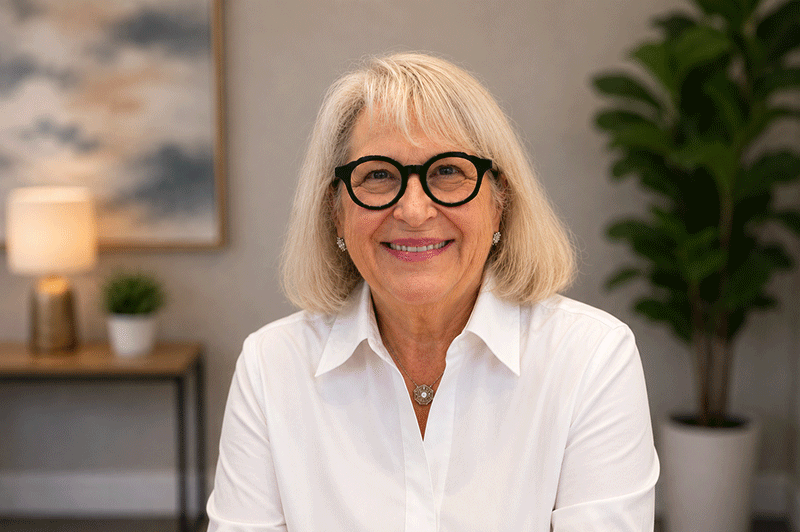
Forty-five years after the $750 loan, the agency sells newer machinery: answer-engine optimization, segmented media, analytics, Shopify integrations, and an initiative called Fruchtman.AI. Yet its oldest belief survives the technology. A jeweler should know whom it wants to matter to, say one memorable thing, and keep saying it long enough to become familiar.
The best niches are often described as small markets. That misses their appeal. A niche is a large amount of accumulated knowledge compressed into a short conversation. Fruchtman Marketing's real product is the moment a jeweler begins explaining a problem and realizes the agency already understands the nouns.