The calculator came with homework for its borrower. A schoolmate had a Casio graphing calculator he did not know how to use. Freddy Vega could take it, along with the manual, provided he figured it out and taught him. At thirteen, without a computer of his own, Vega had found both a machine to program and a reason to explain what he learned.
He learned BASIC. He made the little device play tic-tac-toe and calculate what a person would weigh on another planet. The machine’s memory was tiny; its owner’s expectations were manageable. For a boy in Bogotá, it offered something considerably larger than arithmetic: the chance to make a piece of technology obey an idea.
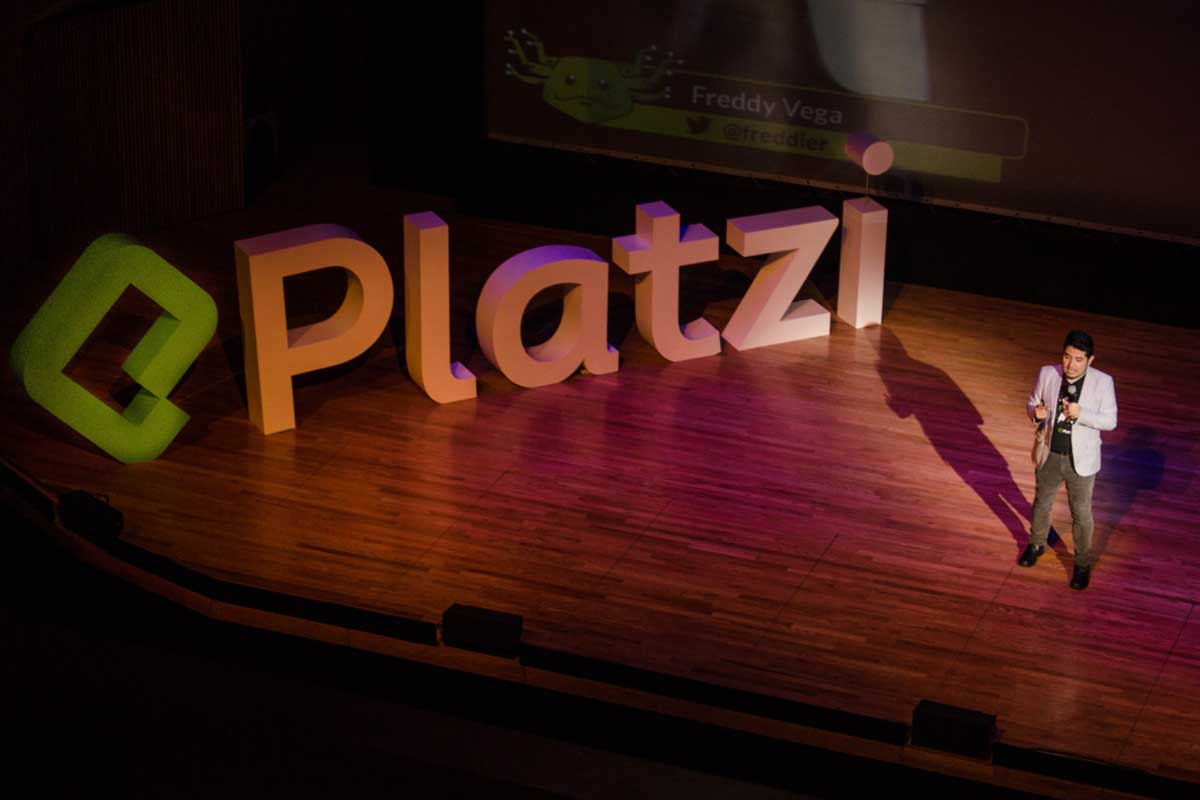
Decades later, Vega is the co-founder and CEO of Platzi, an online education company that reports seven million students. That number is a company-reported reach, rather than a roll call of graduates. Still, the distance from the borrowed Casio is considerable. The original arrangement remains recognizable: learn how something works, then help somebody else understand it.
The calculator came with a condition
Vega grew up in Suba, in Bogotá. His mother ran an advertising business, Naser Publicidad, and his grandmother helped raise him. Money for a home computer was scarce. His early encounters with computing therefore depended on someone else letting him near a machine. He remembers the wonder of typing his name into a computer as a small child and watching it emerge from a printer.
He also had an early appreciation of a recurring customer. As a child, he drew Pokémon cards, sold them to neighborhood children and devised a battle game. Losing cards went to a “Pokémon center,” operated by Vega, where their owners paid to recover them. Eventually, the neighborhood mothers closed the enterprise. The customers’ purchasing department had intervened.
Later, he found another exchange. At a training center, he taught Windows and Office in return for computer access. Teaching supplied the equipment he needed to keep learning. Software projects followed while he was still a teenager, including work controlling internet cafés. Before he had an education company, he had repeatedly made education part of the transaction.
A rival worth keeping
In 2004, Vega founded Cristalab, a Spanish-language community for people making websites and interactive work. Flash was part of that world: animation and programming occupying the same screen. Tutorials and conversations gave people a place to learn from one another. A project could draw a response from someone far beyond the classroom or neighborhood.
There was already another gathering place. Guatemalan entrepreneur Christian Van Der Henst had founded Maestros del Web. Vega became his competitor. Both were building communities around the people creating the Spanish-speaking web. They understood the audience from inside it, including its appetite for practical explanations and its willingness to argue.
Advertising made that community work commercially possible, until the financial crisis damaged the revenue. Vega and Van Der Henst began collaborating. A rival who knows the same problem can turn out to be useful company when the old business stops working.
They took teaching on the road. Between roughly 2010 and 2013, their in-person courses reached twenty cities in twelve countries. Hotel rooms could accommodate audiences who brought their own computers. The people attending became an early base for what followed online. The classroom was traveling before the platform could stay put.
A school acquires a name
The naming process had less ceremony than the eventual company biography might suggest. In 2010, the partners launched Mejorando la Web as a parody of Maestros del Web. An attempted switch to mlw.io proved unhelpful. In 2011, they settled on Mejorando.la. The joke had acquired responsibilities.
Their first online courses arrived in 2013. Vega wanted interaction between students and teachers, shared notes, questions and projects. Platzi was initially the name of that learning experience inside Mejorando.la. In January 2015, it became the company brand. The company dates its founding to 2014, between those first courses and the change of brand.
Y Combinator accepted the company on its second attempt. The partners joined the Winter 2015 batch, taking their Spanish-language education business into Silicon Valley’s startup system. Years of teaching and audience-building preceded that moment. The accelerator entered a story already underway.
The live events supplied their own education. Vega recalls a first Cristalab gathering in 2005 that started two hours late, with students arriving after a six-hour bus trip. At a later event in Peru, promised registration volunteers failed to appear. Those are awkward details for an organizer to remember, which makes their survival in his account useful. An online community becomes very real when it is waiting outside a room.
Three months left
The less picturesque lesson arrived in 2017. Platzi believed it had a year of money remaining. A revised calculation reduced that to six months. When Vega examined the finances himself, he says he found three. A company teaching people to prepare for the future had very little future left on its balance sheet.
The response was painful and direct. The team was told what had happened. People were laid off, costs came down and prices went up. Vega says Platzi became profitable in about a month and a half. The company survived; the decisions had consequences for the people inside it.
He has since cautioned against casually encouraging everyone to become an entrepreneur. Failure is a likely outcome. That warning gives his account some needed weight. The calculator, the community and the accelerator can make the journey seem charmingly inevitable. The bank account interrupts that reading.
“Nuestro ADN es enseñar.”
Freddy Vega, on the move from Mejorando.la to Platzi
In December 2021, Platzi announced a $62 million Series B led by Prosus. Vega explained what the money was for: broader access, English education, Brazil, courses and company training plans. He also addressed the obvious misconception. A funding round belongs to the business and its work; founders do not simply put the announced total in their pockets.
The education after the education
The recognition accumulated. MIT Technology Review selected Vega for its Innovators Under 35 Latin America list in 2020. One Young World named him among its five Entrepreneur of the Year winners in 2022. In 2024, he won the inaugural Latin America Education Medal and was selected as Forbes Colombia’s Entrepreneur of the Year.
The education he sells has had to expand beyond code. Learning to program does not automatically supply English, or experience negotiating with a manager, or the confidence to explain your work. Platzi added language and professional skills as those gaps became clear. A person can be technically ready for a job while still missing much of its unwritten instruction manual.
Vega has his own unfinished syllabus. He attended Universidad Piloto and the National University of Colombia without graduating. Calculus was a problem at the former; building his company competed with university at the latter. Later came executive programs at Harvard Business School, INSEAD and Stanford. His route includes both institutions he left and classrooms he sought out.
Outside work, there are comics, science fiction and aircraft. He writes and enjoys flying. Curiosity supplies a consistent thread without making every interest a business lesson. Sometimes a person who teaches software also wants to know how to fly a Cessna.
Mexico, and the people already at work
By November 2025, Mexico had become the focus of Platzi’s strongest investment push. Vega described it as the company’s second-largest market, with Colombia first and the United States third. Mexico also housed its largest office. The next stretch of the business would involve more than persuading individual students to subscribe.
Corporate and government education offered another route. Many adults will never independently decide to buy a course. Employers, meanwhile, need people who can adapt to changing work. Vega’s argument is practical: helping the workforce learn can help the company grow. It brings education to people already inside an organization, rather than waiting for them to seek it out.
The regional aspiration remains explicit. He wants Latin America to become a technology economy, with more of its own people building companies and participating in skilled work. His earlier writing returns to minds as a resource and to the possibility of knowledge traveling across borders. For someone whose first useful machine was borrowed, the appeal is easy to understand.
The teacher who worries about the shortcut
AI makes Vega’s educational project more complicated. He teaches people to use it and speaks about its commercial possibilities. He also worries about people delegating the work of thinking. In his October 2026 essay, “Schools must be like gyms,” he argues for stronger foundations and supervised learning, including algebra worked out by hand.
Earlier that year, he described a shift in education’s bottleneck: access to information had become easier, while sustained attention had become harder to obtain. His concern is especially pointed for a business that delivers lessons through screens. The same device can hold a course, a distraction and an answer generated before the student has understood the question.
In discussing AI and work, he also returns to usefulness. Producing more software or trying more tools means little if nobody benefits from the result. There is an echo of the first arrangement with the calculator here. Someone else needed to understand the machine. The borrower had a responsibility beyond enjoying the experiment.
That gives Vega’s story a more demanding ending than an enrollment count. A lesson has to survive beyond the screen. Someone must be able to use it, explain it, or make something with it. The schoolmate who lent him a Casio expected a demonstration. Millions of students make the same request in different forms.
Keep following the lesson
Writing, conversations and places to find Freddy Vega.
Personal essays ↗His life, in his own words ↗Watch: PlatziConf Bogotá 2025 ↗The BOCAS conversation ↗The Mexico education strategy ↗Read: Schools must be like gyms ↗