At nine, Iba Masood sold jewellery to her school friends in Dubai. The school closed the business. At eleven, she rented out her books and donated half the proceeds to charity. A missing library had become a small market. Before venture capital, before artificial intelligence, before anyone asked her about a software development lifecycle, she had already encountered the entrepreneur’s recurring problem: a customer may welcome your idea even when the institution does not.
The books are a useful place to begin. They belong to a childhood in which she found something people wanted and worked out how to supply it. Years later, she would build a recruitment portal with Syed Ahmed, turn towards engineering software and eventually co-found Optimal AI. The machinery became more complicated. Her attention kept returning to the awkward space between what people could do and what their surroundings allowed them to get done.
The graduate with the wrong amount of experience
Masood grew up in the United Arab Emirates in a Pakistani family. She finished her finance degree at the American University of Sharjah in 2010, with marketing also part of her studies. Her early career included GE and McKinsey. There was a respectable corporate route available. There was also a recruitment market whose instructions to graduates could sound like a practical joke: please bring experience to the job that is supposed to give you experience.
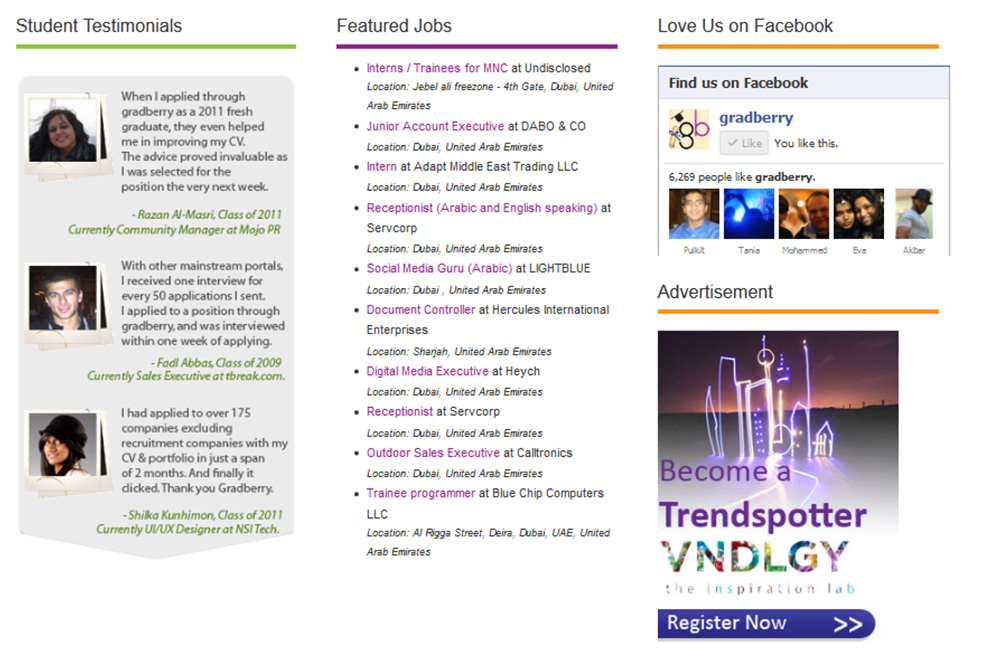
She and Ahmed knew the difficulty personally. A graduate portal could contain plenty of vacancies while offering little to somebody just leaving university. Their response, Gradberry, arrived in 2011. Its audience was deliberately narrow: students, interns and people with no more than two years of experience. That constraint gave the service a reason to exist. A smaller pile of relevant openings could be more useful than a vast pile of unsuitable ones.
Her own route through university had hardly been a perfectly drawn career map. She had considered mass communication, moved towards marketing and then finance. She understood the student who needed help choosing a direction as well as finding an opening. Gradberry’s career advice was free. The business would ask employers to pay; the people trying to get started could keep their wallets shut.
A fruit bowl, a business plan and a ticket out
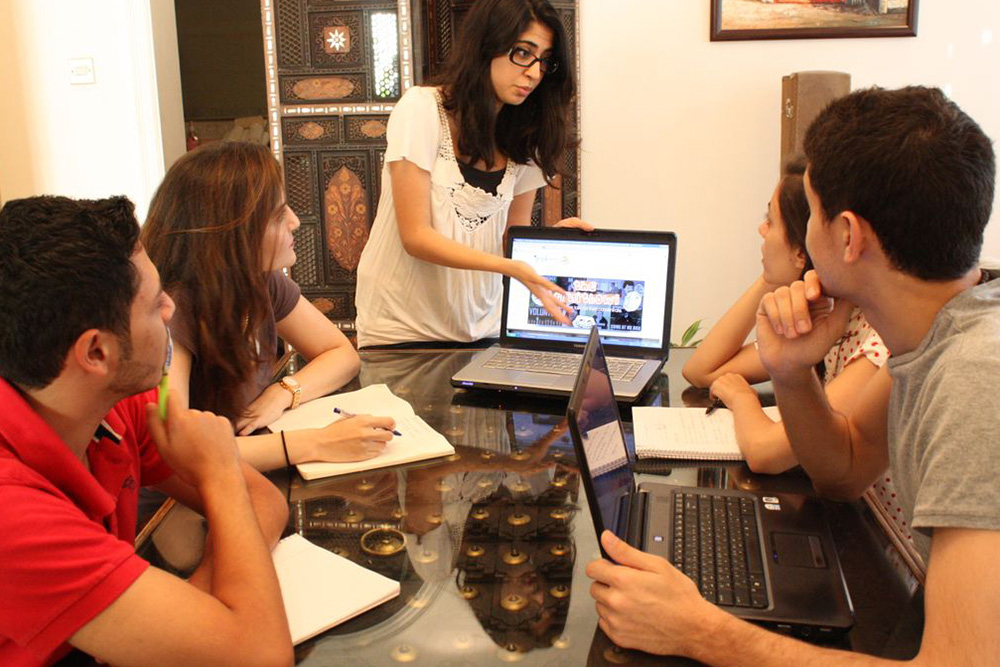
Gradberry had a career blog called the Fruit Bowl and a section for prospective founders called Startup Shizzle. Recruitment did not have to dress like a bank manager. The names made room for a younger audience in a business usually conducted in the language of requirements and eligibility. Behind the informality sat an unglamorous task: persuading employers to offer internships and helping them understand how those arrangements worked.
The company’s first audience was in the Gulf, but recognition travelled. In 2012, Masood won the Cartier Women’s Initiative award for the Middle East and North Africa. The award brought $20,000, a year of coaching and access to an international network. For a young founder, the coaching and introductions mattered alongside the cheque: they offered ways to test a business beyond the circle that already knew her.
Gradberry also changed. It added courses and explored the gap between what employers wanted and what graduates had been taught. Masood and Ahmed went through MassChallenge in Boston. In 2015, their company joined Y Combinator’s winter batch. The route from Dubai to California included revisions, applications and new markets. Anyone looking for a single moment when the business became inevitable will have to settle for a succession of decisions.
First jobs
Coaching + capital
Winter batch
Engineering work
Code review agents
Changing the question underneath the company
By 2016, Gradberry had become Tara, short for Talent Acquisition and Recruiting Automation. The product used software to assess developers’ code and match people to projects. Looking at work itself offered a way to move beyond the names on a résumé. That was an attractive proposition for founders who had crossed markets carrying qualifications and experience that new audiences did not automatically recognise.
The ambition widened again. Finding a developer was only one part of getting software built. Somebody still had to decide what the project required, which tasks belonged together and how long the work might take. Tara moved into project planning and delivery. A recruiting company was becoming an attempt to organise the work that made recruiting necessary.
That shift explains why a simple company label never quite captures Masood’s career. Calling her a recruitment founder describes the beginning. Calling her an AI founder describes a method. In each version, she was dealing with a practical handoff: a student to an employer, a requirement to a developer, a plan to a finished product. Those handoffs supplied the next set of questions.
“I don’t look like any other founder in the [Silicon] Valley. I wasn’t born and raised here.”Iba Masood, 2016
Buffalo enters the itinerary
The expanding company took her to places beyond the familiar Bay Area circuit. Tara won investment in the 2017 edition of Buffalo’s 43North competition. By April 2018, roughly half its thirteen full-time employees worked in Buffalo. For a company building tools for distributed engineering work, the geography was more than a footnote. Building a team involved deciding where people could live and where a young business could afford to grow.
Recognition continued. Masood and Ahmed appeared on the Forbes 30 Under 30 Enterprise Technology list for 2018. In July 2019, Tara announced a $10 million Series A led by Aspect Ventures, with Slack Fund participating. These were milestones in a developing business, rather than a substitute for the daily problem of making the product useful. More funding meant more capacity to build and more people expecting the next version to work.
Her public appearances preserved some less solemn details. A 2018 live podcast in Buffalo promised to explain how she learned the opening rap from The Fresh Prince of Bel-Air. A founder’s biography can accumulate so many awards that the person disappears beneath them. Knowing there is a sitcom theme tune somewhere in the repertoire helps restore the proportions.
The programmer on the dashboard
Masood’s account of running Tara becomes particularly revealing at the level of small decisions. In a 2022 conversation about engineering and growth, she described tying technical work to an explicit customer or business purpose. An infrastructure upgrade needed a reason people outside engineering could understand. Weekly demonstrations could be about a customer problem or a difficulty encountered while building, rather than a polished victory lap.
She also described a dashboard emoji: a brown woman at a keyboard, representing work in progress. The choice had happened naturally. Around 72 percent of Tara’s team were women or people of colour at the time, she said. Representation appeared in an ordinary product detail, chosen by the people making it. The programmer on the screen resembled the people in the room.
Her approach to software could be equally specific. In a discussion of the future of work, she argued for reducing the steps required to start a sprint. The useful question was how many repetitive actions a developer had to perform between an idea and its execution. It is a modest unit of ambition: count the clicks, understand the workflow, remove the unnecessary interruption. Repeated across a working week, such details become consequential.
A dinosaur walks into a code review
In February 2025, Masood announced Optimal AI’s $2.25 million pre-seed round, co-led by Act One Ventures and Chingona Ventures. Ahmed was again her co-founder. The announcement introduced Optibot, an agent for engineering, security and compliance workflows. Her argument had acquired a new complication: AI could help developers produce more code while creating more work for the people responsible for checking it.
The launch video introduced Compliance Rex, a dinosaur struggling with paperwork and code reviews. Its arms were too short for the typing. The joke belonged to the same family as Startup Shizzle: an invitation to discuss a cumbersome business process without pretending the process was fascinating in itself. Underneath it sat a concrete product proposition, bringing reviews and checks into the tools engineering teams already used.
By October 2026, Optimal AI’s public product offering includes code reviews, engineering insights and agents for tasks such as investigating failed build checks. The setting has changed considerably since Gradberry’s graduate vacancies. Masood is still working on the surrounding process, where an increase in activity can expose a new constraint. More code creates a different question from more applicants: who checks the work, and how does it reach production?
Knowing which work to give away
Starting again also changed how she ran her own company. She described getting Optimal AI’s accounts ready during an approximately four-week interval between incorporation and the first funding round. At an earlier company, her operations team had spent too much time supervising the accounting service. This time, she wanted the administrative work handled without turning colleagues into unofficial bookkeepers.
That is a quieter ambition than the usual founder speech. It concerns the hours a team gets back, the questions somebody else can answer and the work people were actually hired to do. From a school book collection to a software review agent, Masood’s businesses have kept discovering demand inside an inconvenience. The task now is to make useful software that handles the inconvenience without becoming another one.
Keep following the work
Conversations, company pages and more from Masood.