A project board has a way of making everything look orderly. Work arrives as a ticket. Someone assigns it. A little box moves from “to do” to “done.” In the code repository, meanwhile, a pull request may be waiting for review, a fix may have taken three attempts, and the release may still be days away. Tara AI built its business in that gap between the neat account of work and the untidy work itself.
- Tara AI links plans, tasks and source-control activity so software teams can see what is moving and what is stuck.
- Founders Iba Masood and Syed Ahmed began with Gradberry, a skills-focused recruiting venture, before turning toward software delivery.
- The company has shifted from project scoping to a Jira alternative, then toward engineering efficiency analytics.
- Its lesson is practical: use the data teams already create before asking them to produce another status report.
A hiring problem in disguise
Masood and Ahmed did not begin by counting pull requests. They met a much older problem first: who gets seen. Both graduated from the American University of Sharjah in the United Arab Emirates. Their own experience of being overlooked by employers who did not know the school helped inspire Gradberry, a recruiting platform meant to judge technical workers by what they could do. The venture entered Y Combinator's Winter 2015 class.
The move from recruiting to Tara AI was more than a change of name. When a company hires engineers for a project, it must still decide what the engineers will build, how long it will take, and whether the work is on course. By 2016, the founders had extended their matching engine into a platform that could scope software projects, predict tasks and timelines, and find developers to carry them out. Gradberry's AI engine became the company's identity. The recruiting idea had led them to a harder question.

There was money for that question. Tara AI won a $500,000 award in the 2017 43North startup competition. In July 2019, it announced a $10 million Series A led by Aspect Ventures, with Slack Fund, Y Combinator and Moment Ventures participating. Contemporary reports put the total raised near $13 million. The public record does not say how much of that money was spent on any single product turn, so the funding is best read as a measure of the bet, not a bill for the pivot.
The board meets the branch
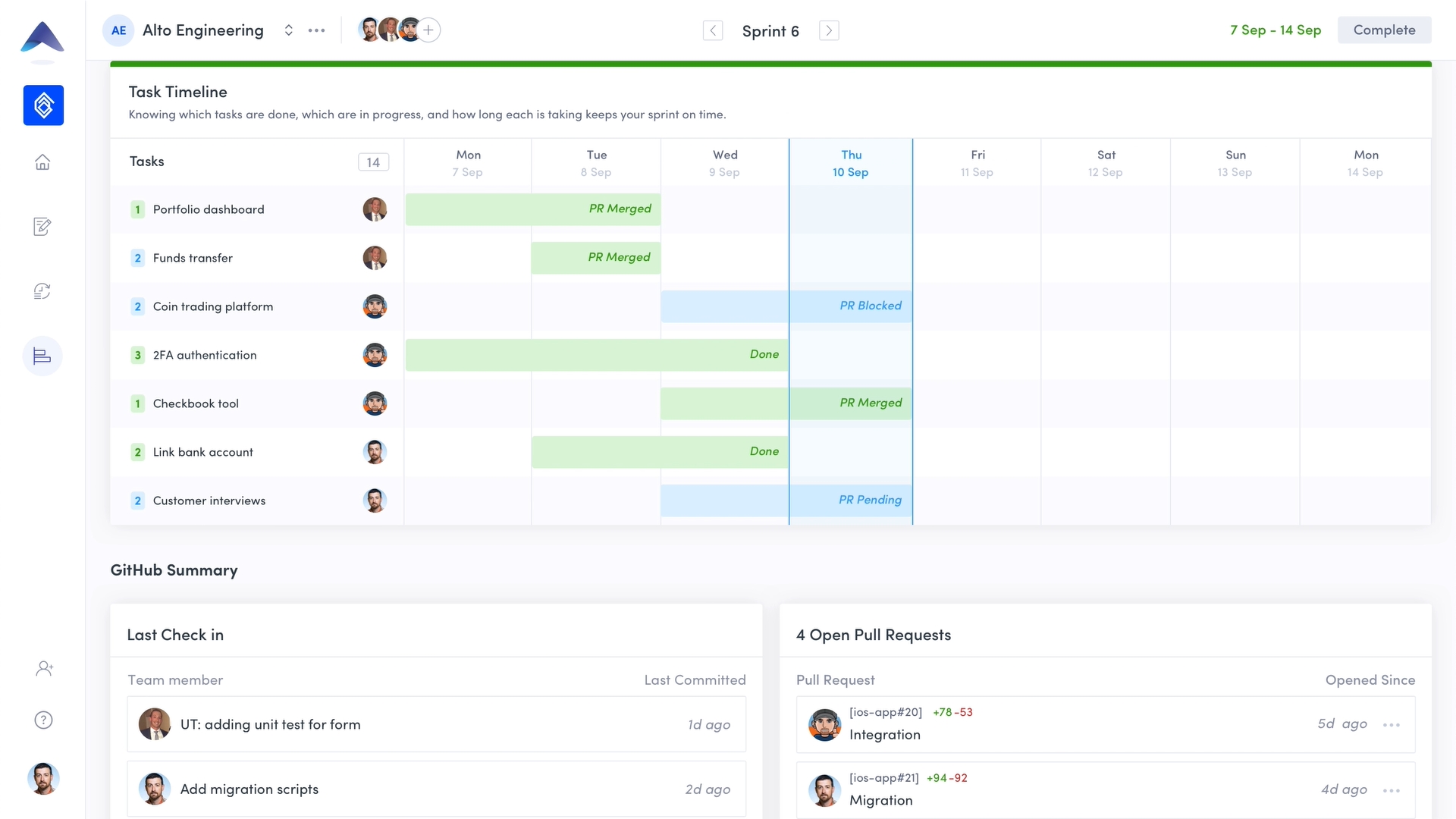
By 2020, Tara AI's public pitch had changed again. It launched as a smart, free alternative to Jira. Teams could put requirements, tasks, sprints and documents in one workspace, connected to GitHub. A later launch added GitLab. The idea was attractive because software teams often maintained two stories of the same work: the manager's version in the task system and the developer's version in the repository. Tara wanted the two accounts to talk to each other.
Its 2021 update pushed that idea further. Git events could trigger status changes; progress views could show live commits and pull requests; sprint planning gained automation. A blocked pull request would no longer need to wait for the next meeting to become visible. This did not abolish judgment. A merged branch does not prove a customer got value. It did, however, remove some of the clerical work between doing something and reporting that it had been done.
“Our largest customers are heavy Slack users and they are already having conversations in Slack related to projects in Tara.ai.”Iba Masood, speaking about the 2019 funding round
Slack Fund's investment made sense in that context. The point of an integration was not another badge on a pricing page. It was to make an event in one place useful in another: a project update where a team already talks, a pull-request change where a manager already checks progress. Tara AI also presented itself as a place to plan work directly, so it competed with Jira and, later, newer project tools such as Linear. Its more durable distinction was the connection between the plan and evidence of execution.
Then the question changed again
The latest substantial public product announcement found in Tara AI's own materials came in 2023. Masood described a new engineering-impact view that connected GitHub and Jira data, showing timelines by epic, pull-request cycle time, work allocation, and the difference between new features and technical debt. The company said it had interviewed 250 engineering leaders before building that version. In the demo, the useful moment was plain: an executive could ask where a team had spent its time and discover that a refactor had consumed attention intended for new features.
This was a shift in buyer and in question. A small team shopping for a sprint board wants to organize next week. An engineering leader wants to know whether months of effort produced the intended result. Tara AI's current Y Combinator description calls the product an engineering efficiency copilot, with views of cycle times, benchmarks, investments, and the scale and speed of engineering activity. It names MongoDB, Clearbit and Prometric as customers. Tara AI's LinkedIn page reports 10,000 workspaces and more than 45,000 developers; those are company-reported figures, rather than independently measured usage.
The business model follows the same path as many developer tools: a free entry point and paid software subscriptions. A public G2 listing shows Premium at $5 per user per month and Co-Pilot at $8, though directory prices can lag a company's actual sales terms. Tara AI's later pitch is aimed at engineering organizations willing to pay for a clearer picture across teams and repositories. It sits between project management, where Jira and Linear are obvious alternatives, and engineering analytics, where tools such as Jellyfish and LinearB ask similar measurement questions.
The part worth stealing
Tara AI's sequence can sound like three different companies: recruiting marketplace, project builder, engineering dashboard. The thread is narrower than that. Each version searched for the missing information that made a software decision difficult. The first asked whether a candidate could do the work. The second asked what work a project required. The third asked where the team's work actually went.
A manager can copy the method without buying a dashboard. Take one promised feature. Compare its ticket history with its commits, pull requests, reviews and release date. Ask where the waiting happened, which work was unplanned, and whether the result reached a customer. Repeat with enough features to see a pattern before treating a single slow pull request as a performance verdict. The method needs reasonably clean links between issues and code, and a team willing to discuss what the numbers mean. Without those conditions, the chart becomes another polished version of the same old status meeting.
That is Tara AI's most interesting proposition. It does not promise that a metric can understand engineering by itself. It bets that a better account of the work begins when the ticket is allowed to meet the code.