At eighteen, Fred Swaniker had three teachers to manage and twenty-five children expecting an education. His mother had agreed to start a school in Botswana. She already had a teaching job and four children of her own to support. Her solution was wonderfully direct: her children would run the new school, and she would supervise. Fred became the headmaster.
There are gentler ways to spend the interval before college. Swaniker remembers the unnerving business of managing teachers older than himself, along with the satisfaction of seeing children learn something on the very first day. Long before he could write an investment pitch, he had encountered a practical test of leadership: people had turned up, and somebody had to make the place work.
Today he is founder and CEO of Sand Technologies, working on artificial intelligence for utilities, telecommunications and other infrastructure. Between that small school and the AI company sit an academy, a university and a technology training organization. The institutions differ. The question running through them is remarkably consistent: how do you give capable people enough opportunity to become useful?
A childhood with several addresses
Swaniker was born in Ghana in 1976. Before adulthood, he had lived in Ghana, The Gambia, Botswana and Zimbabwe. That gave him an unusually early education in how much the person in charge could matter. His later argument about leadership grew from observing countries where institutions offered fewer protections against the decisions of powerful individuals.
In his 2014 TEDGlobal talk, he connected that childhood to a larger proposition: the quality of a country's leadership could profoundly change its prospects. His response was to develop future leaders deliberately. An institution could look for promising young people, bring them together and give them practice at taking responsibility before the stakes became national.
Education was already a family preoccupation. His parents made books central to childhood; television arrived only when he was twelve. The BBC World Service and discussions of world events helped furnish the family conversation. Knowledge came with expectations. Being educated meant having an obligation to do something with the opportunity.
The young headmaster eventually became an economics student at Macalester College in Minnesota, graduating in 1999. He worked at McKinsey before earning his Stanford MBA in 2004. He received the Arjay Miller Scholar distinction, awarded to the top tenth of the graduating class. The conventional next chapter was available. He had a different project in mind.
The business plan that needed a school
At Stanford, Swaniker worked on a plan for an institution that would identify and develop African leaders. He also met Chris Bradford, who was a year behind him at the business school and became a co-founder. The academy's founding team included Acha Leke and Peter Mombaur. This was a collective undertaking from the beginning.
African Leadership Academy opened outside Johannesburg in September 2008. Its inaugural class comprised ninety-seven students from twenty-nine countries. Bringing them together made the idea tangible: young people whose lives might otherwise have remained separated by borders could spend their formative years learning alongside one another.
The academy offers a two-year pre-university education, with entrepreneurial leadership woven into its purpose. The premise asks more of a school than good examination results. It asks what students will eventually build, whom they will employ and how they will respond when a community needs something that nobody has yet organized.
Global Leadership Adventures grew out of the same early enterprise, extending leadership experiences to students from around the world. Swaniker's work was already branching into organizations with different audiences. A single school could demonstrate an idea. Reaching more people required other ways of putting it to work.
A university with homework outside the university
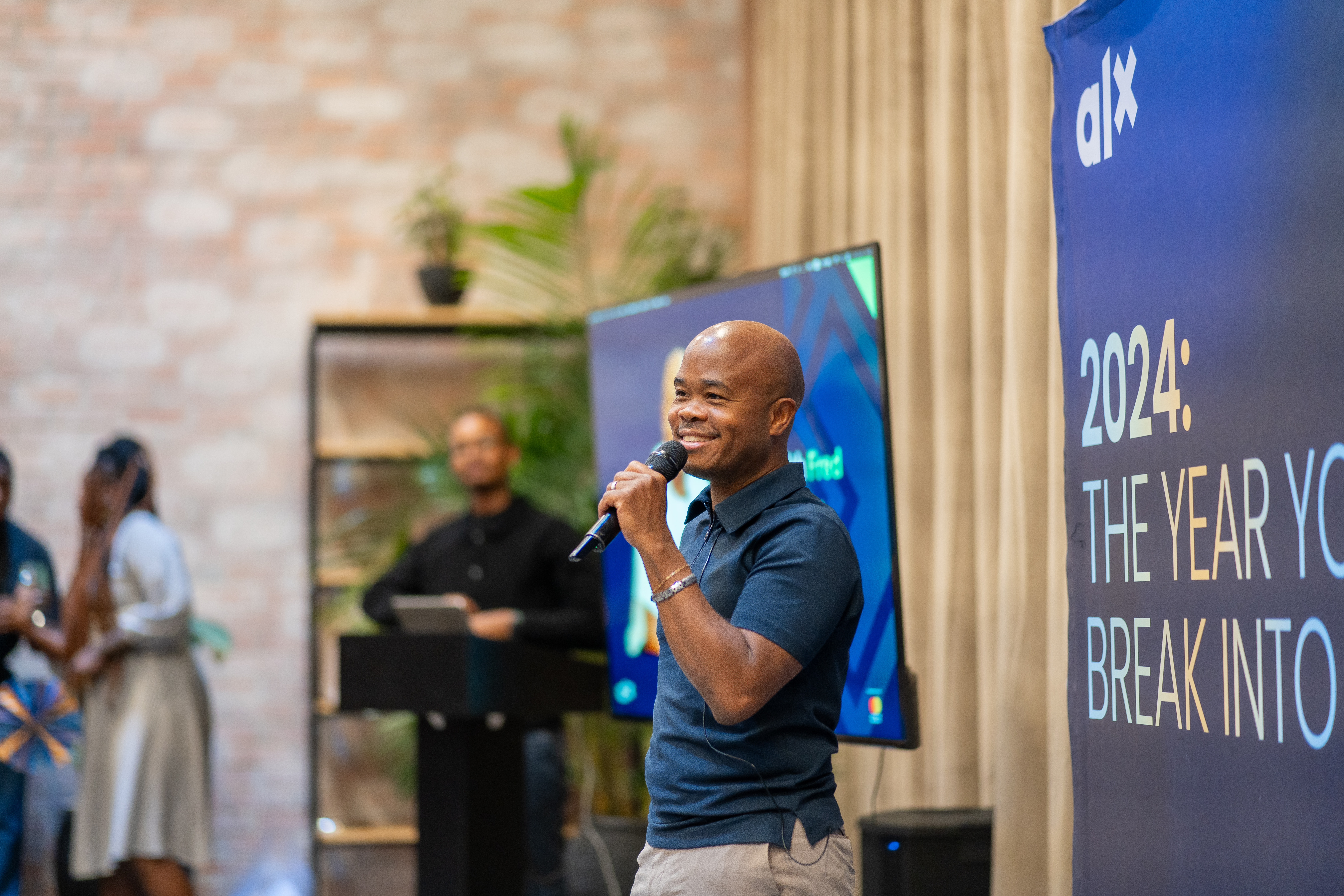
Success at preparing students for college produced an awkward question. Many academy graduates were leaving Africa for their higher education. In a September 2022 interview, Swaniker put the share at 80 percent. He wanted talented students to have a reason to continue their education on the continent, while reaching more people than an intimate school could accommodate.
African Leadership University launched in 2015, with a presence in Mauritius and, subsequently, Rwanda. Its educational proposition linked learning to problems students wanted to address. A student's chosen purpose could guide the subjects, projects and experience they pursued. It was a way of asking for direction earlier than the customary post-graduation panic.
Swaniker explained the teaching approach through a 10-20-70 model: a tenth of learning in the classroom, a fifth through relationships, and the remaining seven-tenths through experience. Internships, projects and ventures belonged inside the education itself. The proportions describe an educational philosophy, rather than a guarantee about every student's timetable.
The approach also changed the economics. Swaniker described local learning hubs as a way to reduce the expense of moving away for years of study. Accommodation, travel and everyday living costs could make a nominally accessible education unaffordable. The design problem extended well beyond what happened at the lecturer's desk.
Impatient, with a long planning horizon
Swaniker has called himself impatient. In 2019, he described a difficult episode at ALU: some staff wanted a smaller, more conventional institution, while the founders wanted expansion and financial sustainability. Roughly thirty people left after being offered three months' pay and assistance finding other work. He presented it as a painful lesson in hiring for shared values.
That account complicates the agreeable portrait of a founder who simply wants everyone to flourish. Building an organization around a mission involves decisions about pace, money and whose version of the mission prevails. Swaniker's own account includes those disagreements. His impatience has consequences for the people trying to keep up.
“Execution beats ideas any day.”Fred Swaniker · 2019 interview
He also has a sense of occasion. At the 2019 TIME100 gala, he teased Dwayne Johnson about the apparently endless future of the Fast & Furious films, then thanked his wife, Amanda, for accompanying him through the difficulties of building his ventures. The public message was demanding. The acknowledgment was personal.
ALX added another route into his education work, combining leadership development with technical training. Software engineering, data and other digital skills allowed the effort to reach people beyond the academy and university. The aim of developing three million leaders by 2035 remains a stated goal. It should be read as the direction of travel, rather than an alumni count.
Then the classroom acquired a utility bill
Sand Technologies brings a commercial outlet to Swaniker's interest in talent. The company builds AI applications for organizations and governments, including work involving water systems and telecommunications. Here, the people being developed can apply their skills to the machinery of daily life. A problem that began in education has led him toward pipes, networks and operational decisions.
He has described technology as something that needs an educational philosophy underneath it. That is a revealing position for an AI executive. Better software does not settle the questions of what a person ought to learn, how they should practice or whether a skill will be useful to an employer. Those questions have occupied him since well before the current AI boom.
At Sand's Evolve 2026 summit in Miami, Swaniker's keynote focused on physical AI: connecting intelligence with infrastructure and industrial operations. The announcements included an infrastructure marketplace, an operating system for infrastructure and the Frontier Institute of Technology. Once again, a technology project arrived with an education project attached.
The institute's appearance beside the industrial tools is characteristic. His organizations keep returning to the relationship between learning and opportunity. Training creates capacity; employers and customers create occasions to use it. Neither side can carry the whole argument on its own. Sand gives him a place to try bringing them together.
- 01AcademyDevelop young leaders before university.
- 02University & ALXBuild knowledge, practical skills and networks.
- 03Sand TechnologiesApply technical talent to customers' infrastructure problems.
A cathedral for an impatient builder
For someone eager to accelerate, Swaniker favors a surprisingly slow architectural metaphor. He asks students to think like cathedral builders: people contributing to an undertaking whose full results may arrive after their own lifetimes. In his telling, the cathedral is Africa, and each generation must leave something that the next can continue.
The metaphor makes room for an uncomfortable truth about leadership education. A school can count students immediately. It takes far longer to know what those students will do with responsibility, influence and money. His ambition depends on effects that reach beyond an enrollment figure or a graduation photograph.
In 2024, Stanford recognized Swaniker with its President's Award for the Advancement of the Common Good. The citation brought him back to the university where he had written the early business plan. By then, the project had developed several institutional forms, each addressing a different stage between a young person's ability and a useful opportunity.
The eighteen-year-old headmaster could see a child's progress by the end of a day. The founder now works on a timetable that extends beyond his own career. That leaves him with an interesting assignment: hurry the construction, develop more builders, and make something sturdy enough for people he will never meet.
Follow the assignment
- Sand Technologies - Fred Swaniker
- Twitter / X
- Swaniker’s writing on Medium
- Watch: Fred Swaniker at TEDGlobal 2014
- Watch: Positive Leadership with Jean-Philippe Courtois
- The Stanford education interview
- The Exchange interview - recorded October 2024, published March 2026
- Sand’s Evolve 2026 keynote
- Stanford’s 2024 award profile
- Swaniker’s 2019 interview on execution
- The 2017 cathedral-builder interview
- The TIME100 gala toast