In the first version of Singularity University, the assignment was almost comically large: imagine a venture that could improve the lives of a billion people. The students met at NASA Research Park in Mountain View. The subjects ranged from artificial intelligence to biotechnology. The name came with a promise that tomorrow would arrive faster than ordinary institutions expected. For a young organization founded by Ray Kurzweil and Peter Diamandis in 2008, modesty was hardly the point.
The story in four lines
- It teaches executives and organizations how to think about emerging technologies and their consequences.
- Its five-day Executive Program lists at $15,900 for the October 2026 cohort, before travel and lodging.
- After a key Google grant ended, the company put more weight on paid education, custom work and events.
- Its most useful lesson: turn a forecast into a decision you can test.
Today the company is a California benefit corporation legally called Singularity Education Group. It sells executive education, private programs for organizations, speaker engagements and international events. Its customers include senior leaders, founders, policymakers and teams trying to decide which technologies matter to their work. The pitch is familiar to anyone who has sat through a strategy meeting: a trend appears in a headline, then nobody can agree whether it is a toy, a threat or next year’s budget.
The school with no ordinary syllabus
The original idea had a particular Silicon Valley flavor. Put people from different fields in the same room, expose them to fast-moving technologies, and ask them to work backward from large human problems. Singularity says its Executive Program began in 2009. Global Impact Challenges followed in 2010, offering a competition format for ideas tied to social needs. In 2012 it acquired Singularity Hub, a technology publication, and converted from nonprofit status to a benefit corporation. In other words, the classroom grew a newsroom and a commercial structure.

That structure matters because the company’s product is difficult to bottle. A conventional school can sell a credential. A consultancy can sell a plan. Singularity sells a shift in how leaders notice change. Its current language uses three lenses: what a technology does to an individual, to an organization and to society. That is a better discussion starter than asking whether an executive is “for” or “against” AI. A useful decision sits in the details: which task, whose data, what new risk, what proof of value?
A prediction is entertaining at dinner. A decision with an owner and a deadline is useful on Monday.What to carry home from any future-facing course
Five days, one rather specific price
The flagship program now runs for five days in Mountain View. The October 2026 listing gives a price of $15,900 per seat, with travel and accommodation extra. The company describes a cohort of roughly 120 leaders and a schedule of workshops, group work, technology sessions and discussions. The curriculum crosses AI, biotech, robotics, energy, foresight and governance. For a buyer, the arithmetic is simple: the fee purchases time, access to experts and peers, and a setting in which daily inbox traffic cannot win every argument.
The same firm also builds custom programs for a company or public institution. Its help center describes a process that starts with discovery, defines a specific outcome, selects faculty and then connects the sessions back to live priorities. It says many of these groups have 15 to 60 leaders and take eight to sixteen weeks from first discussion to delivery. A speakers bureau offers a lighter entry point. An on-demand Future of Biotech program is listed at $499. International summits reach people who may never set foot in California.
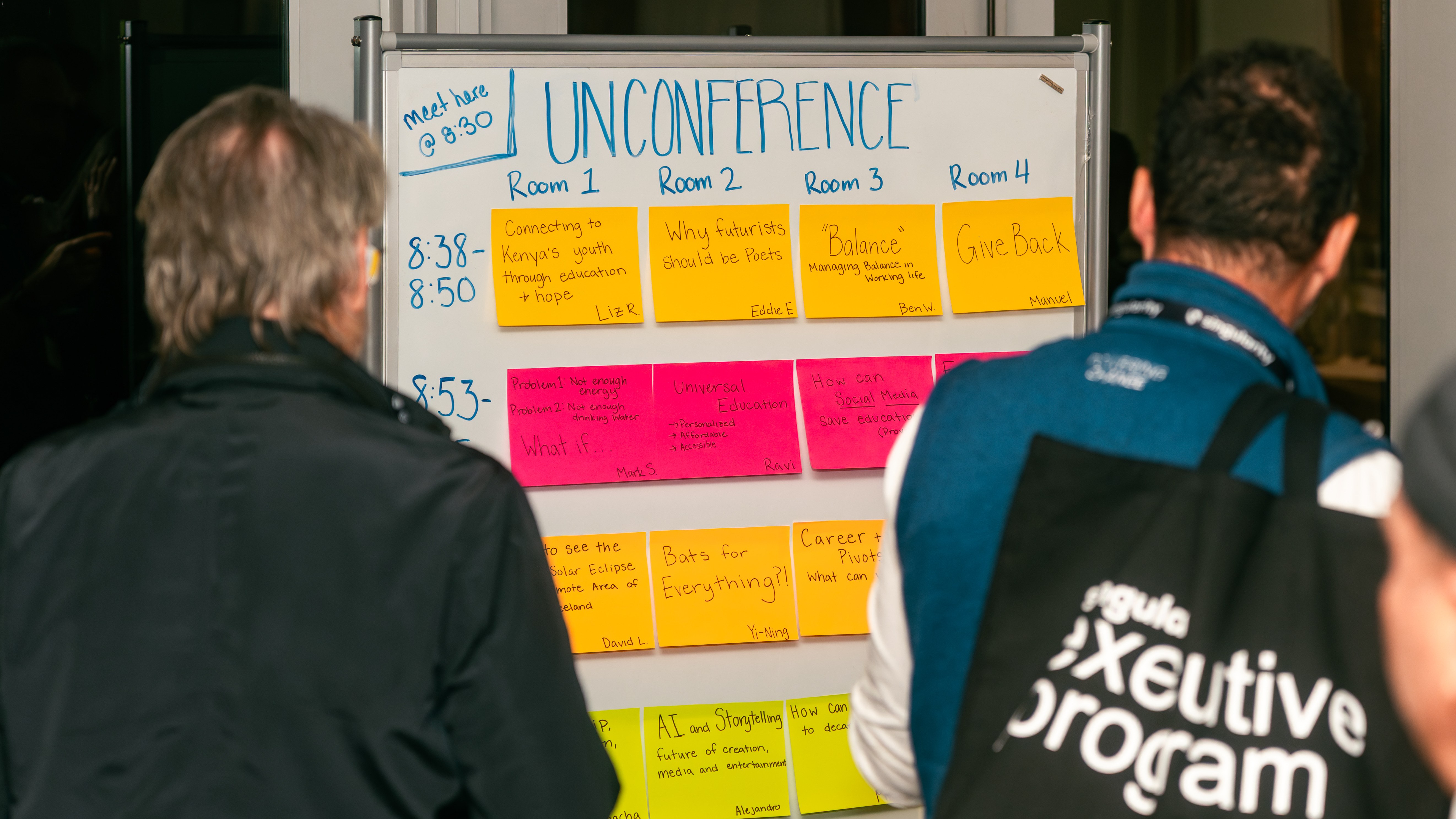
This makes Singularity a different purchase from a degree program or a software subscription. It competes for the executive education budget against business schools, consultancies, in-house academies and conferences. Its case is breadth: bring researchers, founders and policy voices into the same conversation, then make the participants apply what they hear. That breadth can also be its weakness. A week of dazzling examples is easy to applaud. Changing a procurement rule, a product roadmap or an investment threshold is slower work.
The future misbehaved
Singularity’s own history supplies the less glossy case study. Google ended support for a key program in 2017. Bloomberg reported that the graduate program was suspended and that staff were dismissed. The following year, Singularity announced a $32 million Series B financing co-led by WestRiver Group and Boeing. In 2019 Bloomberg reported that the chief executive would step down and the organization planned further staff cuts. Reporting at the time also detailed serious allegations involving people connected with the organization; Singularity disputed parts of the 2018 account.
A model in motion
It would be tidy to claim the company saw all this coming. There is no public basis for that. The more interesting observation is that the seller of adaptation had to adapt. Its current service mix leans on customers willing to pay for leadership education, organizations commissioning their own curriculum, and partners running events. The 2018 investor round gave it capital to expand programs and digital learning. Exactly what caused each later choice is less clear; the sequence is visible, but motive should not be invented to make a neat parable.
A network is a product, too
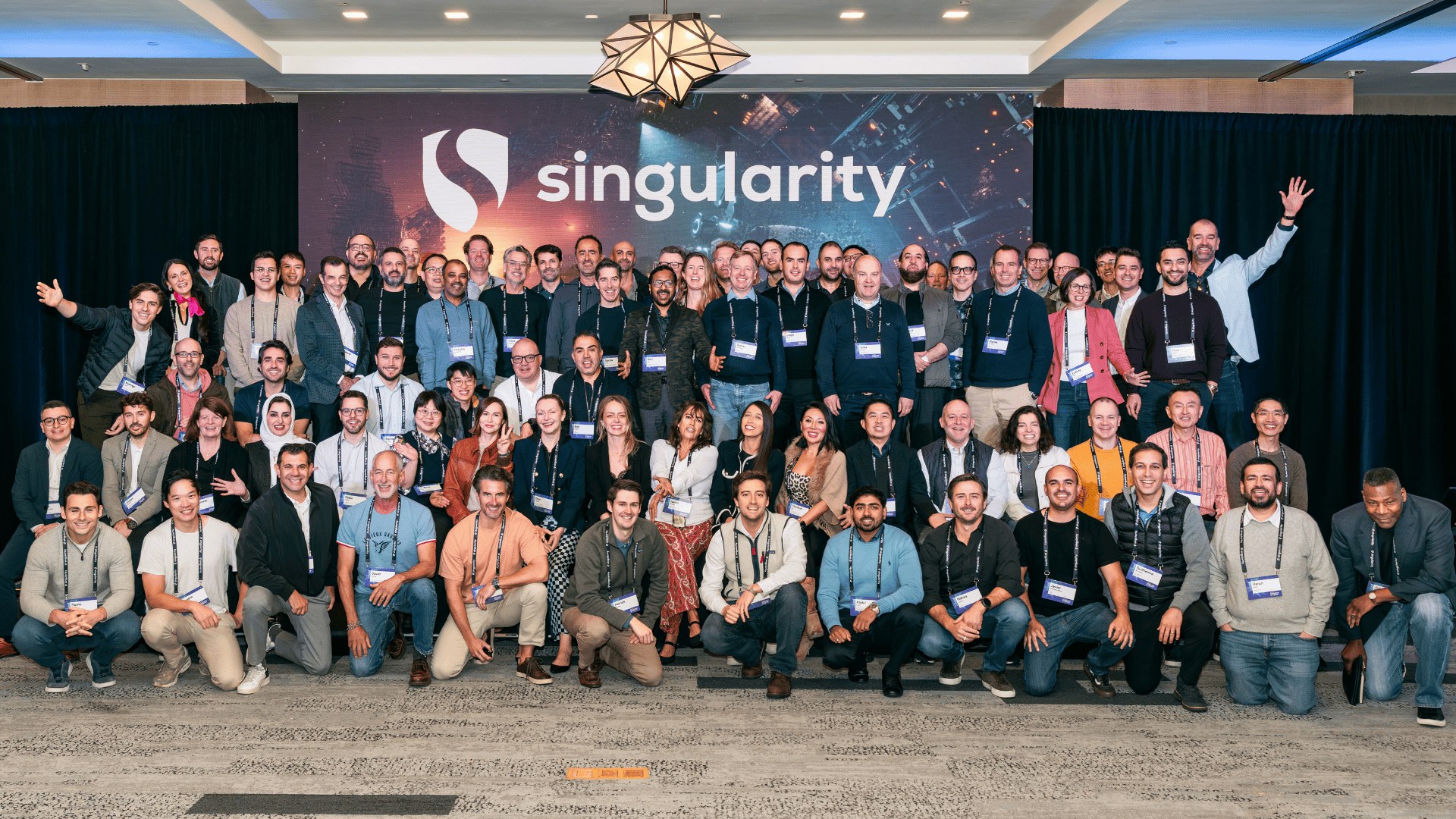
Singularity also trades on who can be found in the room afterward. Its site cites more than 15,000 program alumni from over 100 countries. The community is useful to a founder looking for collaborators, an executive looking outside their sector, or a policymaker trying to hear from builders as well as analysts. In 2024, Singularity and Sync, a digital wellbeing initiative tied to Ithra, ran a Global Impact Challenge around misinformation, cyberbullying and social disconnection. The winning startup, Chat License, received a $250,000 prize and a place in the Executive Program. Here the network did something measurable: it collected applicants, judged a defined problem and backed a winner.
What should a reader copy from this? Start with Singularity’s three lenses. Pick one technology and write down its effects on a person, a team and the public. Then name one decision your organization can make within thirty days. Define the evidence that would change your mind. The method costs far less than a seat in Mountain View, though expert guidance and a varied cohort may help a leadership team ask better questions faster.
Try this on Monday
Choose one emerging technology. List one opportunity, one cost and one second-order effect. Give an owner a small test and a date to review it. If the room leaves only with adjectives, the future has won another meeting.
The approach is least useful when a team has no authority to act, when a technology is governed mainly by hard constraints such as regulation or physical infrastructure, or when the organization mistakes an exciting trajectory for a guaranteed market. Exponential curves do not negotiate with customers, courts or budgets. Singularity’s own story is a reminder of that friction. Its strongest claim is not that it can tell a leader what will happen. It is that a leader can learn to ask better questions before events make the answer embarrassingly obvious.